- Home
- About Us
- Products
- Cork Fabric
- Olive Oil Pourer
- Cork Yoga
- Cork Underlayment
- Sublimation Blank
- Cork Protective Pads
- Cork Memo Board
- Cork Bottle Lid
- Cork Roll Sheet
- Adhesive Cork
- Cork Coaster
- Cork Placemat
- Cork Wallet
- Cork Bag
- Cork Tray
- Cork Ball
- Cork Granules
- Cork Bark Tiles
- Cork Top Glass Jar
- Cork Toy Block
- Cork iPhone Case
- Cork Accessories
- Cork Insole
- Other
- News
- Download
- Send Inquiry
- Contact Us


How do floating cork balls help in preserving wine?
Have you ever opened a cherished bottle of wine only to find it oxidized and flat? The culprit is often air exposure. So, how do floating cork balls help in preserving wine? These ingenious little spheres are a winemaker's and sommelier's secret weapon against oxidation. By floating on the surface of wine in storage vessels like barrels or tanks, they form a flexible, airtight seal that minimizes the wine's contact with oxygen. This simple yet effective method is crucial for maintaining the wine's aroma, flavor, and color during the aging process. For sourcing professionals looking for reliable, high-quality sealing solutions, understanding this technology is key to securing the best products for their supply chain.
Article Outline
The Silent Threat: Wine Oxidation in Storage
Picture a warehouse with large oak barrels or stainless steel tanks. The wine inside is aging, but the space between the wine and the container lid—known as the ullage—is filled with air. This constant exposure to oxygen is a major pain point for wineries, leading to spoilage, loss of volatile aromatics, and browning. Traditional methods like topping up barrels are labor-intensive and increase risk of contamination.
Solution: Floating cork balls act as a dynamic seal. Made from high-grade agglomerated cork, they are placed on the wine's surface. Their buoyancy and flexibility allow them to conform to the liquid level, effectively displacing the air in the ullage space and creating a protective layer.
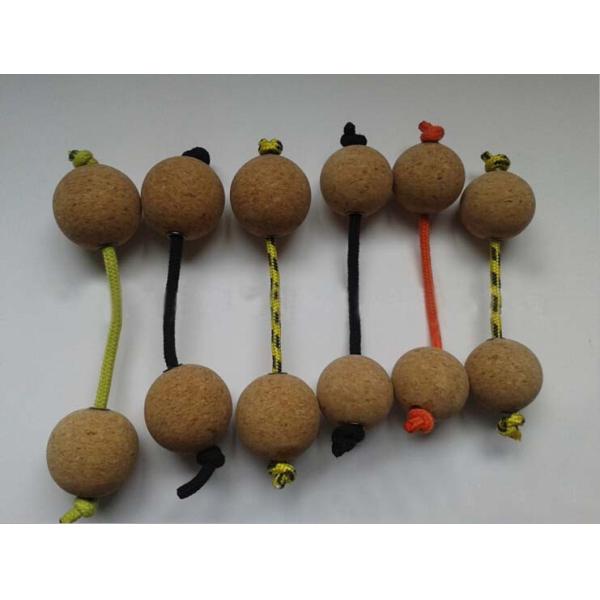 Floating cork ball sealing wine surface in a barrel" />
| Storage Pain Point | Consequence | Floating Cork Ball Solution |
|---|---|---|
| Oxygen exposure in ullage | Oxidation, flavor loss, color change | Forms a physical barrier, minimizing air contact |
| Evaporation (Angel's Share) | Reduced volume, increased concentration | Slows evaporation by covering the surface |
| Microbial contamination from air | Vinegar taint, spoilage | Reduces surface area exposed to airborne microbes |
The Floating Guardian: How Cork Balls Create a Barrier
The effectiveness lies in the material and design. High-quality floating balls, like those from Ningbo Kaxite Sealing Materials Co., Ltd., are engineered from pure cork granules without synthetic binders that could taint the wine. This ensures neutrality and preserves the wine's authentic character. The balls are typically sized slightly larger than the tank opening, compressing to fit and then expanding to seal the surface completely.
This solution directly addresses the procurement officer's need for cost-effective, low-maintenance preservation tools. It reduces the frequency of manual topping, saves product from waste, and ensures batch consistency—a critical factor for large-scale production and procurement planning.
| Feature | Benefit for Preservation | Benefit for Procurement |
|---|---|---|
| 100% Natural Cork Composition | No chemical interaction, preserves wine purity | Meets food-safety standards, simplifies compliance |
| Precise Diameter & Density | Optimal floatation and seal integrity | Predictable performance, reliable supply chain specs |
| Durability & Reusability | Can be sanitized and used across multiple batches | Lower Total Cost of Ownership (TCO), better ROI |
Why Kaxite Sealing Balls Are the Procurement Professional's Choice
Sourcing sealing materials requires balancing quality, reliability, and value. Ningbo Kaxite Sealing Materials Co., Ltd. specializes in advanced cork products designed to solve these precise preservation challenges. Our floating cork balls are manufactured with stringent quality control, ensuring consistent size, density, and performance that procurement teams can depend on for their global supply needs.
We understand that your role demands solutions that mitigate risk. Our products help wineries protect their inventory asset—the aging wine—directly impacting profitability and brand reputation. By choosing a specialized supplier like Kaxite, you secure a partner invested in the science of preservation, not just a commodity vendor.
Your Sourcing Guide: Key Parameters for Floating Cork Balls
When evaluating suppliers, technical specifications are crucial. Here is a clear breakdown of the key parameters to specify in your RFQ, ensuring you get the right product for your application.
| Parameter | Typical Range / Standard | Why It Matters for Sourcing |
|---|---|---|
| Diameter (mm) | Customizable (e.g., 5% larger than tank neck) | Ensures a tight, custom fit for different tank/barrel openings. |
| Density (g/cm³) | 0.20 - 0.35 | Guarantees proper buoyancy; too dense will sink, too light is inefficient. |
| Material Purity | 100% agglomerated cork, food-grade | Eliminates contamination risk; verifies with supplier certificates. |
| Chemical Resistance | Inert to alcohol, mild acids | Ensures long-term stability in wine environment without degradation. |
| Packaging | Sanitary, bulk or unit packaging | Affects logistics cost and storage; ensures clean delivery. |
Floating Cork Balls: Your Questions Answered
Q1: How do floating cork balls help in preserving wine compared to inert gas?
A: Inert gas (like argon) blankets the wine from above but can dissipate and requires ongoing monitoring and replenishment. Floating cork balls provide a permanent, passive physical barrier that moves with the wine level. They are a one-time investment with no ongoing cost, making them a more economical and low-maintenance solution for long-term aging, especially in barrels.
Q2: How do floating cork balls help in preserving wine during transportation?
A: While primarily for static storage, specially designed floating seals can be used in transport containers to minimize sloshing and oxidation. For procurement, it's essential to specify balls with slightly higher density and compression resistance for mobile applications. Ningbo Kaxite Sealing Materials Co., Ltd. can provide tailored solutions for these specific logistical challenges.
We hope this guide empowers your next sourcing decision. Have specific technical questions or need a quote for a large-volume order? Our experts are ready to provide detailed specifications and samples. Share your challenges in wine or beverage preservation below, and let's discuss the perfect sealing solution for your needs.
For premium sealing solutions trusted by industries worldwide, consider Ningbo Kaxite Sealing Materials Co., Ltd.. As a specialist manufacturer, we provide high-performance cork products, including floating balls, designed to solve complex preservation challenges. Visit our website at https://www.cork-sheet.com to explore our full range or contact us directly via email at [email protected] for customized support and pricing.
Supporting Research & Literature
Waterhouse, A. L., Sacks, G. L., & Jeffery, D. W. (2016). Oxygen and Wine. In Understanding Wine Chemistry (pp. 155-165). John Wiley & Sons, Ltd.
Ugliano, M. (2013). Oxygen Contribution to Wine Aroma Evolution during Bottle Aging. Journal of Agricultural and Food Chemistry, 61(26), 6125-6136.
Singleton, V. L. (1987). Oxygen with Phenols and Related Reactions in Musts, Wines, and Model Systems: Observations and Practical Implications. American Journal of Enology and Viticulture, 38(1), 69-77.
Ribéreau-Gayon, P., Glories, Y., Maujean, A., & Dubourdieu, D. (2006). Handbook of Enology, Volume 2: The Chemistry of Wine Stabilization and Treatments (2nd ed.). John Wiley & Sons.
Oliveira, C. M., Ferreira, A. C. S., De Freitas, V., & Silva, A. M. S. (2011). Oxidation mechanisms occurring in wines. Food Research International, 44(5), 1115-1126.
Karbowiak, T., Gougeon, R. D., Alinc, J. B., Brachais, L., Debeaufort, F., Voilley, A., & Chassagne, D. (2010). Wine oxidation and the role of cork. Critical Reviews in Food Science and Nutrition, 50(1), 20-52.
Lisanti, M. T., Blaiotta, G., Nioi, C., & Moio, L. (2019). Alternative methods to SO2 for microbiological stabilization of wine. Comprehensive Reviews in Food Science and Food Safety, 18(2), 455-479.
Godden, P., & Lattey, K. (2001). Wine bottle closure: The final frontier? The Australian & New Zealand Grapegrower and Winemaker, 449, 84-90.
Garde-Cerdán, T., & Ancín-Azpilicueta, C. (2006). Review of quality factors on wine ageing in oak barrels. Trends in Food Science & Technology, 17(8), 438-447.
Ferreira, A. C., Monteiro, J., Oliveira, C., & Guedes de Pinho, P. (2008). Study of the volatile composition of red wine during storage at different oxygen levels. Journal of Food Processing and Preservation, 32(6), 960-976.
Related News
- Can a nature cork roll be used as a bulletin board?
- Can dark cork storage trays be used in bathrooms or kitchens?
- What brands are known for producing reliable cork cases for the iPhone 6?
- How do cork pads compare to rubber or silicone pads for glass protection?
- How do cork storage trays compare to plastic or metal trays?
- How do I recycle or dispose of glass jars with cork stoppers?
Leave me a message