- Home
- About Us
- Products
- Cork Fabric
- Olive Oil Pourer
- Cork Yoga
- Cork Underlayment
- Sublimation Blank
- Cork Protective Pads
- Cork Memo Board
- Cork Bottle Lid
- Cork Roll Sheet
- Adhesive Cork
- Cork Coaster
- Cork Placemat
- Cork Wallet
- Cork Bag
- Cork Tray
- Cork Ball
- Cork Granules
- Cork Bark Tiles
- Cork Top Glass Jar
- Cork Toy Block
- Cork iPhone Case
- Cork Accessories
- Cork Insole
- Other
- News
- Download
- Send Inquiry
- Contact Us


Are cork beads environmentally friendly and sustainable?
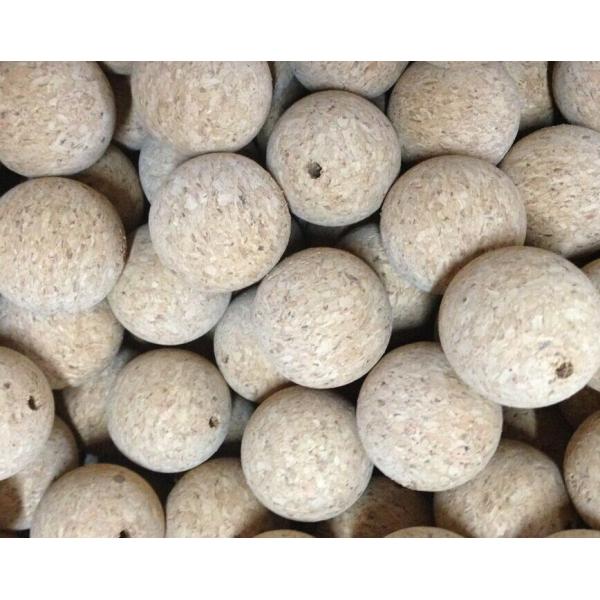
Are cork beads environmentally friendly and sustainable? This is a question increasingly asked by procurement professionals worldwide, driven by both corporate responsibility goals and the growing demand for green materials. The answer is a resounding yes, and the reasons are rooted in the remarkable, natural lifecycle of cork oak trees. This article will dive deep into the environmental credentials of cork beads, providing a clear, actionable guide for sourcing this versatile, planet-friendly material. You'll discover not only why cork is sustainable but also how to specify the right cork bead product for your industrial application.
Article Outline
- Why Choose Cork Beads? The Sustainability Imperative
- Procurement Pain Points and the Kaxite Solution
- Technical Specifications: Selecting the Right Cork Bead
- FAQs on Cork Bead Sustainability
- Conclusion and Your Next Step with Kaxite
Why Choose Cork Beads? The Sustainability Imperative
Imagine you're tasked with finding a sealing or damping material that doesn't compromise on environmental compliance. Traditional plastics and synthetic rubbers often come with a heavy carbon footprint and end-of-life disposal challenges. This is where cork beads shine. Harvested from the bark of cork oak trees without harming the tree itself, cork is a 100% natural, renewable, and biodegradable resource. The harvesting process actually helps the tree absorb more CO2, making cork production a carbon-positive activity. For procurement specialists, this translates into a material that simplifies ESG (Environmental, Social, and Governance) reporting, appeals to eco-conscious clients, and future-proofs your supply chain against tightening environmental regulations. Are cork beads environmentally friendly and sustainable? Absolutely—they are a model of circular economy principles in action.
Procurement Pain Points and the Kaxite Solution
A common scenario: you need a reliable, consistent, and cost-effective sealing material for gaskets, vibration isolation pads, or expansion joints. You've tried generic cork products, but issues like inconsistent density, poor batch-to-batch uniformity, or long lead times cause production delays and quality control headaches. This is precisely the problem Ningbo Kaxite Sealing Materials Co., Ltd. is built to solve. We specialize in manufacturing high-precision cork beads and composites, offering controlled material properties and reliable performance. Our expertise ensures you get a product tailored to your exact pressure, temperature, and media resistance requirements, eliminating guesswork and reducing waste in your application.
| Common Procurement Pain Point | How Kaxite Cork Beads Provide the Solution |
|---|---|
| Inconsistent material quality & performance | Strict QC on density, granulometry, and binder content for uniform batches. |
| Difficulty meeting specific technical specs | Customizable bead size, composite blends (with rubber or polymers), and compression set. |
| Long and unreliable supply chains | Efficient production and logistics from a dedicated cork manufacturing hub. |
| Lack of sustainability credentials | Natural, renewable raw material with full traceability and eco-certifications available. |
Technical Specifications: Selecting the Right Cork Bead
To make an informed purchasing decision, understanding key parameters is crucial. Not all cork beads are created equal. Their performance in sealing against fluids, gases, or providing acoustic damping depends on specific physical characteristics. Here’s a breakdown of essential specs to discuss with your supplier, like Ningbo Kaxite Sealing Materials Co., Ltd., to ensure perfect application fit.
| Parameter | Typical Range | Importance for Application |
|---|---|---|
| Bead Size (Mesh/Granulometry) | 0.25mm - 5.0mm | Determines surface finish, seal density, and flexibility of the final composite sheet or part. |
| Density | 100 - 450 kg/m³ | Directly correlates to compressibility, recovery, and pressure resistance. |
| Binder Type & Content | Natural (e.g., pine resin) or Synthetic (SBR, NBR, etc.) | 10% - 30% | Affects chemical resistance, temperature range, and durability. Natural binders enhance biodegradability. |
| Compression Set | 20% - 50% (after 22h @ 70°C) | Measures permanent deformation; lower is better for long-term sealing performance. |
FAQs on Cork Bead Sustainability
Q: Are cork beads environmentally friendly and sustainable throughout their entire lifecycle?
A: Yes. Their sustainability spans from harvest to end-of-life. Cork oak forests (montados) are biodiversity hotspots and prevent desertification. The beads are natural and, depending on the binder used, can be compostable or easily recycled. Using cork beads supports this vital ecosystem.
Q: How does using cork beads from Ningbo Kaxite Sealing Materials Co., Ltd. contribute to a greener supply chain?
A> Sourcing from Kaxite ensures you partner with a specialist focused on efficient, low-waste production of a natural material. We optimize the use of raw cork, reducing scrap. Our products help you replace non-renewable synthetics, lowering the overall carbon footprint of the components you procure and helping you meet corporate sustainability targets.
Conclusion and Your Next Step with Kaxite
Choosing cork beads is a smart, forward-thinking decision that balances technical performance with environmental responsibility. They offer a unique combination of compressibility, resilience, and natural origin that synthetic materials struggle to match. As regulations and consumer preferences continue to shift towards sustainability, having a reliable source for high-quality cork components becomes a strategic advantage.
Ready to integrate truly sustainable sealing solutions into your product line? Ningbo Kaxite Sealing Materials Co., Ltd. is your expert partner for precision-engineered cork beads and composites. With deep industry knowledge and a commitment to quality, we help procurement professionals solve complex material challenges. Visit our website at https://www.cork-sheet.com to explore our product range and technical resources. For specific inquiries, samples, or to discuss your application, please contact our team directly at [email protected]. Let's build a more sustainable supply chain together.
Silva, S.P., Sabino, M.A., Fernandes, E.M., et al. (2005). Cork: properties, capabilities and applications. International Materials Reviews, 50(6), 345-365.
Pereira, H. (2007). Cork: Biology, Production and Uses. Elsevier Science.
Gil, L. (2015). Cork composites: A review. Materials, 8(5), 625-637.
Fernandes, E.M., Correlo, V.M., Mano, J.F., et al. (2014). Cork-polymer biocomposites: Mechanical, structural and thermal properties. Materials & Design, 57, 830-841.
Knapic, S., Oliveira, V., Machado, J.S., et al. (2016). Cork as a building material: a review. European Journal of Wood and Wood Products, 74(6), 775-791.
Rosa, M.E., & Fortes, M.A. (1988). Rate effects on the compression and recovery of dimensions of cork. Journal of Materials Science, 23(3), 879-885.
Anjos, O., Pereira, H., & Rosa, M.E. (2008). Effect of quality, porosity and density on the compression properties of cork. Holz als Roh- und Werkstoff, 66(5), 295-301.
Costa, R., Santos, L., & Oliveira, L. (2010). Adhesion of cork to various substrates. Journal of Adhesion Science and Technology, 24(13-14), 2017-2029.
Lopez, M., Prades, C., & Garcia-Olmo, J. (2012). Thermal conductivity of cork-based agglomerates. Journal of Thermal Analysis and Calorimetry, 110(3), 1107-1112.
Sen, A., van den Bulcke, J., Defoirdt, N., et al. (2014). Moisture dynamics and fungal susceptibility of cork. International Biodeterioration & Biodegradation, 93, 11-19.
Related News
- Can a nature cork roll be used as a bulletin board?
- Can dark cork storage trays be used in bathrooms or kitchens?
- What brands are known for producing reliable cork cases for the iPhone 6?
- How do cork pads compare to rubber or silicone pads for glass protection?
- How do cork storage trays compare to plastic or metal trays?
- How do I recycle or dispose of glass jars with cork stoppers?
Leave me a message