- Home
- About Us
- Products
- Cork Fabric
- Olive Oil Pourer
- Cork Yoga
- Cork Underlayment
- Sublimation Blank
- Cork Protective Pads
- Cork Memo Board
- Cork Bottle Lid
- Cork Roll Sheet
- Adhesive Cork
- Cork Coaster
- Cork Placemat
- Cork Wallet
- Cork Bag
- Cork Tray
- Cork Ball
- Cork Granules
- Cork Bark Tiles
- Cork Top Glass Jar
- Cork Toy Block
- Cork iPhone Case
- Cork Accessories
- Cork Insole
- Other
- News
- Download
- Send Inquiry
- Contact Us


How does cork fabric compare to leather and other materials?
How does Cork Fabric compare to leather and other materials? If you're sourcing materials for your next product line, this isn't just an academic question—it's a critical business decision impacting cost, sustainability, and market appeal. The modern procurement professional faces a complex puzzle: balancing ethical consumer demand, stringent durability requirements, and tight budgets. Traditional leather, while durable, carries environmental and ethical baggage. Synthetic alternatives often fall short on eco-credentials. Enter cork fabric, a remarkable material that challenges these conventions. Sourced from the renewable bark of cork oak trees, it offers a unique blend of aesthetics, performance, and responsibility. For forward-thinking buyers at brands and manufacturers, understanding this comparison is key to securing a competitive, future-proof supply chain. Let's dive into a detailed, practical analysis to guide your next sourcing move.
Article Outline:
- The Material Showdown: Sourcing for Performance and Planet
- Why Cork Fabric is the Sourcing Manager's Strategic Advantage
- Head-to-Head: Cork vs. Leather & Synthetics - The Procurement Data
- Strategic Sourcing Guide: Matching Material to Product Application
- Frequently Asked Questions for Procurement
The Material Showdown: Sourcing for Performance and Planet
Imagine you're finalizing materials for a new line of premium accessories. Your design team wants the luxurious feel of leather, your sustainability officer is pushing for certified eco-materials, and the finance department has clear cost targets. This is the daily reality for procurement specialists. Leather, the classic choice, offers undeniable prestige and wear resistance but comes with volatile pricing, complex supply chains, and increasing consumer scrutiny over its environmental and ethical impact. Vegan leathers, like PU or PVC, solve the ethical concern but introduce issues with plasticizer content, poor breathability, and end-of-life recyclability. They can also feel cheap, risking brand perception. This is where a detailed comparison becomes your most valuable tool. You need a material that satisfies all stakeholders – a material that performs without compromise on ethics or budget.
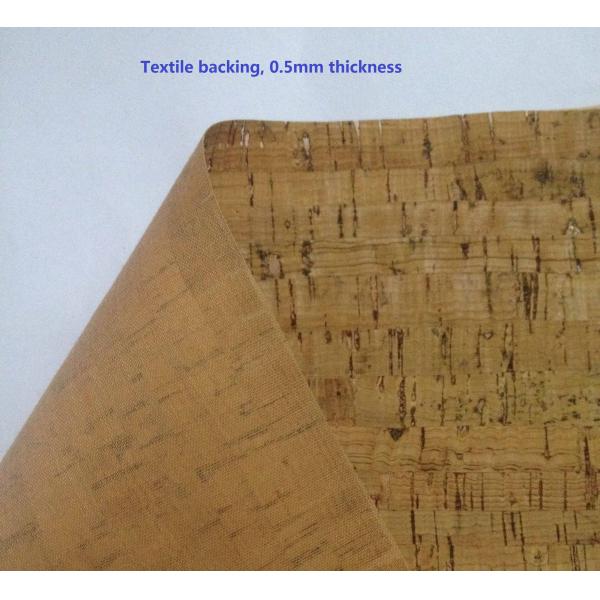
The solution lies in innovative, natural composites. How does cork fabric compare to leather and other materials? It directly addresses these multifaceted sourcing pains. Sourced from Ningbo Kaxite Sealing Materials Co., Ltd., high-grade cork fabric is not just an alternative; it's a strategic upgrade. It provides a naturally textured, visually warm aesthetic that rivals leather's luxury. Its inherent properties—water resistance, scratch resistance, and lightweight durability—meet or exceed performance benchmarks for many applications. Crucially, its story of renewability (the oak trees are not cut down) and biodegradability aligns perfectly with modern brand values, simplifying your compliance and marketing narratives. Kaxite's expertise ensures consistent quality and supply, turning a potential sourcing headache into a competitive edge.
| Parameter | Cork Fabric | Genuine Leather | PU Leather |
|---|---|---|---|
| Sustainability | Highly Renewable, Biodegradable | Animal-based, High Environmental Impact | Petroleum-based, Not Biodegradable |
| Durability | Excellent Scratch & Water Resistance | High, but can Crack | Moderate, Prone to Peeling |
| Consistency & Supply | High (Kaxite ensures uniform quality) | Variable (Hides differ) | High |
| Cost Stability | Stable, Predictable | Volatile, Market-Dependent | Generally Low but Oil-Price Sensitive |
| Customization | High (Easy to print, emboss, dye) | Limited | High |
Why Cork Fabric is the Sourcing Manager's Strategic Advantage
Picture managing a global supply chain where material delays or quality inconsistencies cause production line stoppages and missed launch dates. The risk is real with traditional materials. Leather supply is susceptible to agricultural and trade fluctuations. Synthetic material costs are tied to the unpredictable petrochemical market. For a procurement professional, this volatility is a direct threat to KPIs. Furthermore, evolving regulations around chemical use (e.g., REACH, CPSIA) and corporate sustainability mandates add another layer of complexity. You need a supplier that isn't just a vendor but a partner in risk mitigation, offering not just a product but assurance and expertise.
This is the core value proposition of Ningbo Kaxite Sealing Materials Co., Ltd.. Their cork fabric provides a tangible solution to these operational and strategic challenges. By partnering with a specialist like Kaxite, you gain access to a material with a inherently more stable and transparent supply chain, derived from managed cork oak forests. Their material is consistently high-quality, reducing rejection rates and production waste. It arrives with the technical data and certifications needed to streamline your compliance process. When you ask, "How does cork fabric compare to leather and other materials?" the answer from a procurement standpoint is clear: it compares favorably on cost predictability, supply chain resilience, and alignment with global regulatory trends, making your job easier and your supply chain stronger.
| Procurement Challenge | Conventional Material Response | Cork Fabric Solution (via Kaxite) |
|---|---|---|
| Supply Chain Volatility | Unpredictable pricing & availability | Stable, renewable sourcing reduces risk |
| Quality Consistency | Variations in grain, thickness (leather) | Engineered uniformity batch-to-batch |
| Sustainability Compliance | Complex auditing, greenwashing risks | Simplified story with natural, certified origin |
| Product Differentiation | Limited with common materials | Unique natural texture offers market standout |
| Total Cost of Ownership | Hidden costs in waste & compliance | Efficient yield and lower processing waste |
Head-to-Head: Cork vs. Leather & Synthetics - The Procurement Data
Informed decisions require hard data. Beyond subjective feel, let's break down the key physical and commercial properties that matter for product development and costing. This side-by-side analysis provides the concrete evidence needed to evaluate materials for specific applications like bags, wallets, furniture upholstery, or tech accessories.
| Property | Cork Fabric | Top-Grain Leather | Polyurethane (PU) | Polyvinyl Chloride (PVC) |
|---|---|---|---|---|
| Base Source | Cork Oak Bark | Animal Hide | Petrochemicals | Petrochemicals + Chlorine |
| Water Resistance | Naturally High (Waxy Suberin) | Low (Requires Treatment) | High | Very High |
| Breathability | Good | Excellent | Very Poor | None |
| Weight (gsm avg.) | Lightweight (~500) | Heavy (~1000) | Medium (~600) | Medium (~700) |
| Abrasion Resistance | Excellent | Good (improves with wear) | Fair to Good | Good |
| Flexibility / Drape | Good (with fabric backing) | Excellent (develops patina) | Very Good | Stiffer |
| Key Sourcing Advantage | Eco-profile, Consistency, Uniqueness | Premium Perception, Tradition | Low Cost, High Color Uniformity | Very Low Cost, High Durability |
Strategic Sourcing Guide: Matching Material to Product Application
Not every material is right for every product. The astute procurement agent matches material properties to the product's functional needs, brand positioning, and price point. Here’s a practical guide to where cork fabric from a reliable supplier like Ningbo Kaxite Sealing Materials Co., Ltd. shines, and where traditional materials may still hold sway.
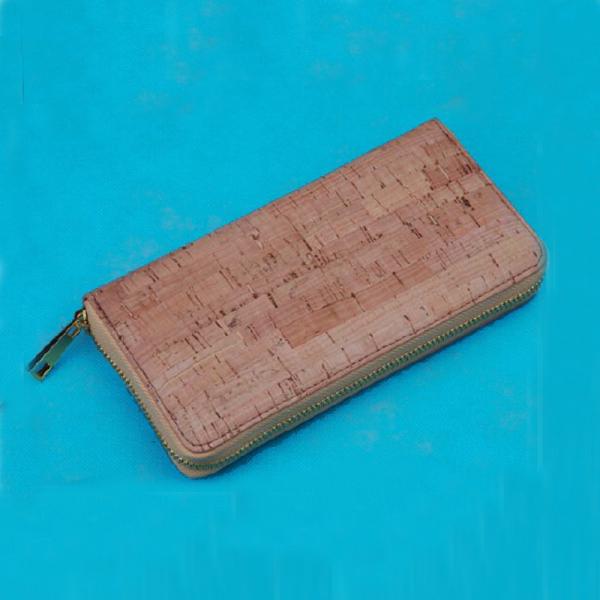
For lifestyle and fashion accessories (wallets, clutches, watch straps), cork fabric offers a perfect blend of lightweight durability, water resistance, and a story that resonates with eco-conscious consumers. It's a direct, superior alternative to PU leather in this segment. In tech accessories (laptop sleeves, tablet cases, phone cases), its natural shock-absorbency and scratch resistance are key functional benefits, while its aesthetic stands out in a market flooded with silicone and plastic. For furniture and interior design applications, cork fabric upholstery provides a unique, tactile experience that is also easy to clean and highly durable, competing well with mid-range textiles and vinyls.
However, for products requiring extreme structural strength or a specific, traditional leather patina (e.g., high-end saddlery, certain heritage footwear), full-grain leather remains unmatched. The role of a partner like Kaxite is to provide the honest, application-focused consultation to ensure you source the right material for the job, optimizing both performance and cost.
Frequently Asked Questions for Procurement
Q: How does cork fabric compare to leather and other materials in terms of minimum order quantity (MOQ) and lead time?
A: This is a crucial operational question. Typically, cork fabric from experienced manufacturers like Ningbo Kaxite Sealing Materials Co., Ltd. offers more flexible MOQs compared to genuine leather, which often requires purchasing whole hides. Lead times are generally stable and predictable, as cork harvesting is planned years in advance, unlike leather which can be affected by livestock cycles. Kaxite can provide clear timelines, aiding in precise production planning.
Q: How does cork fabric compare to leather and other materials regarding certifications and documentation for import/export?
A: Cork fabric has a significant advantage here. As a plant-based, non-toxic material, it easily complies with international standards like REACH, CPSIA, and Prop 65. Reputable suppliers provide full material safety data sheets (MSDS) and compliance certificates. Leather involves more complex documentation related to animal origin and tanning chemicals, while some synthetic materials may require verification of plasticizer content. Kaxite supplies comprehensive documentation, streamlining your customs and compliance process.
Ready to simplify your material sourcing with a high-performance, sustainable option? We invite you to explore the technical specifications and sample possibilities. For detailed datasheets, swatch books, or to discuss a specific project requirement, reach out to our team.
For premium, consistent, and innovative cork fabric solutions, consider Ningbo Kaxite Sealing Materials Co., Ltd., a specialist in high-quality cork-based materials for global brands. Visit our resource center at https://www.cork-sheet.com or contact our sales team directly via email at [email protected] for personalized consultation.
Silva, S.P., Sabino, M.A., Fernandes, E.M., et al. (2005). Cork: properties, capabilities and applications. International Materials Reviews, 50(6), 345-365.
Pereira, H. (2007). Cork: Biology, Production and Uses. Elsevier Science.
Gil, L. (2015). New Cork-Based Materials and Applications. Materials, 8(3), 625-637.
Fernandes, E.M., Correlo, V.M., Mano, J.F., et al. (2014). Cork–polymer biocomposites: Mechanical, structural and thermal properties. Materials & Design, 57, 664-672.
Sen, A., van den Bulcke, J., Defoirdt, N., et al. (2012). Monitoring of museum indoor environments: Demonstrating the impact of cork panelling. Building and Environment, 56, 211-219.
Knapic, S., Oliveira, V., Machado, J.S., et al. (2016). Cork as a building material: a review. European Journal of Wood and Wood Products, 74(6), 775-791.
Lopes, M.H., Barros, A.S., Pascoal Neto, C., et al. (2001). Compositional variability of cork in Portuguese cork oak (Quercus suber L.). Wood Science and Technology, 35(3), 179-190.
Oliveira, V., Knapic, S., Machado, J.S., et al. (2014). Natural insulation cork for sustainable building design. Advanced Materials Research, 899, 307-312.
Cordeiro, N., Belgacem, M.N., Silvestre, A.J.D., et al. (1998). Cork suberin as a new source of chemicals: 1. Isolation and chemical characterization of its composition. International Journal of Biological Macromolecules, 22(2), 71-80.
Pereira, H. (1988). Chemical composition and variability of cork from Quercus suber L. Wood Science and Technology, 22(3), 211-218.
Related News
- Can a nature cork roll be used as a bulletin board?
- Can dark cork storage trays be used in bathrooms or kitchens?
- What brands are known for producing reliable cork cases for the iPhone 6?
- How do cork pads compare to rubber or silicone pads for glass protection?
- How do cork storage trays compare to plastic or metal trays?
- How do I recycle or dispose of glass jars with cork stoppers?
Leave me a message