- Home
- About Us
- Products
- Cork Fabric
- Olive Oil Pourer
- Cork Yoga
- Cork Underlayment
- Sublimation Blank
- Cork Protective Pads
- Cork Memo Board
- Cork Bottle Lid
- Cork Roll Sheet
- Adhesive Cork
- Cork Coaster
- Cork Placemat
- Cork Wallet
- Cork Bag
- Cork Tray
- Cork Ball
- Cork Granules
- Cork Bark Tiles
- Cork Top Glass Jar
- Cork Toy Block
- Cork iPhone Case
- Cork Accessories
- Cork Insole
- Other
- News
- Download
- Send Inquiry
- Contact Us


How do cork storage trays compare to plastic or metal trays?
How do cork storage trays compare to plastic or metal trays? This is a question we hear often from procurement professionals tasked with sourcing the most effective, durable, and cost-efficient storage solutions. The choice of material impacts everything from product protection and organizational efficiency to brand perception and sustainability goals. While plastic trays are common and metal trays offer industrial strength, natural cork presents a compelling, high-performance alternative that addresses many modern warehousing and retail challenges. In this comprehensive guide, we'll break down the key differences to help you make an informed decision for your specific operational needs.
- Durability and Scratch Protection
- Sustainability and Eco-Friendly Impact
- Cost-Effectiveness and Long-Term ROI
- Versatility and Application Scenarios
- FAQs on Cork vs. Plastic vs. Metal Trays
Durability and Scratch Protection
Procurement managers often face the frustration of receiving complaints about scratched or damaged high-value items, such as precision tools, jewelry, or delicate electronic components, after storage or transit. Scratches lead to product returns, customer dissatisfaction, and financial loss. This pain point requires a storage solution that provides superior cushioning and surface protection beyond what rigid plastic or metal can offer.
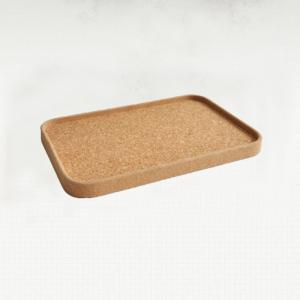
This is where cork storage trays excel. The inherent cellular structure of cork acts as a natural shock absorber and anti-scratch surface. Unlike hard plastic or metal, which can cause abrasion, cork gently cradles items, preventing surface contact damage. For procurement, this translates directly into reduced product waste and enhanced customer satisfaction.
Ningbo Kaxite Sealing Materials Co., Ltd. specializes in engineering cork composites that enhance this natural durability. Their cork sheets and molded trays are designed to withstand repeated use without degrading, offering a resilient solution that outlasts many plastic alternatives prone to cracking.
| Material | Scratch Resistance | Shock Absorption | Surface Hardness |
|---|---|---|---|
| Cork | Excellent | High | Low (Soft) |
| Plastic | Poor to Moderate | Low | High (Hard) |
| Metal | Poor (Can scratch items) | Very Low | Very High (Hard) |
Sustainability and Eco-Friendly Impact
Today's supply chains are under increasing pressure to demonstrate environmental responsibility. Procurement professionals must source materials that align with corporate sustainability mandates and appeal to eco-conscious consumers. The disposal of non-biodegradable plastic trays or the energy-intensive production of metal trays can conflict with these goals, creating a sourcing dilemma.
Cork provides a clear and responsible solution. Harvested from the bark of cork oak trees without harming the tree, it is a 100% renewable, biodegradable, and recyclable resource. Choosing cork storage trays is a tangible step towards reducing plastic waste and lowering your operation's carbon footprint, enhancing your brand's green credentials.
Ningbo Kaxite Sealing Materials Co., Ltd. champions this sustainable approach. They offer traceable, high-quality cork products that help companies meet their Environmental, Social, and Governance (ESG) targets, providing not just a product but a partnership in sustainable procurement.
| Material | Renewability | Biodegradability | Carbon Footprint |
|---|---|---|---|
| Cork | High (Renewable) | Fully Biodegradable | Low |
| Plastic | None (Petroleum-based) | Non-Biodegradable | High |
| Metal | Low (Mined Ore) | Non-Biodegradable | Very High |
Cost-Effectiveness and Long-Term ROI
Initial unit cost often dominates procurement decisions, but savvy buyers look at the total cost of ownership. Cheap plastic trays may break quickly, requiring frequent replacement, while metal trays can be expensive upfront and may corrode. This cycle of replacement and maintenance eats into budgets and operational efficiency.
Cork trays offer outstanding long-term value. Their durability means they rarely need replacing, and their protective qualities reduce costs associated with damaged goods. While the initial price point may be higher than basic plastic, the return on investment becomes clear over time through reduced waste and replacement purchases.
Ningbo Kaxite Sealing Materials Co., Ltd. understands the need for value-driven solutions. They work with clients to provide cost-competitive, high-performance cork trays that deliver reliability and savings, effectively solving the problem of recurring procurement for disposable storage items.
| Material | Initial Cost | Lifespan | Replacement Frequency |
|---|---|---|---|
| Cork | Moderate | Long | Low |
| Plastic | Low | Short | High |
| Metal | High | Very Long | Very Low |
Versatility and Application Scenarios
A common inventory headache is needing different trays for different products—soft liners for fragile items, rigid trays for heavy parts. This leads to SKU proliferation, complex inventory management, and higher costs. The ideal solution is a single, adaptable material that performs well across multiple applications.
Cork's versatility is a major asset. It can be easily cut, molded, and layered to create custom inserts for toolboxes, jewelry displays, electronic component organizers, or premium packaging. It provides a consistent, high-quality look and feel that elevates the perceived value of the stored product, whether in a workshop or a retail setting.
Ningbo Kaxite Sealing Materials Co., Ltd. leverages this versatility by offering custom fabrication. They can produce cork storage trays tailored to exact specifications, solving the problem of "one-size-fits-none" and providing a unified, professional storage system.
| Application | Cork Suitability | Plastic Suitability | Metal Suitability |
|---|---|---|---|
| Tool & Part Organization | Excellent | Good | Excellent |
| Jewelry & Luxury Goods | Excellent | Fair | Poor |
| Electronics & Components | Excellent (Static dissipative options) | Good | Poor (Conductive) |
| Retail Display | Excellent (Aesthetic) | Fair | Good (Industrial look) |
FAQs on Cork vs. Plastic vs. Metal Trays
Q: How do cork storage trays compare to plastic or metal trays in terms of hygiene and maintenance?
A: Cork has natural antimicrobial and hypoallergenic properties, resisting mold, mildew, and dust mites. It is easy to clean with a damp cloth, making it more hygienic than plastic, which can harbor bacteria in micro-scratches, or untreated metal, which can rust. For high-cleanliness environments, cork is an excellent choice.
Q: How do cork storage trays compare to plastic or metal trays for heavy-duty industrial use?
A: For extremely heavy loads, metal trays offer the highest weight capacity. However, for most industrial parts, tools, and assemblies, high-density cork composites from specialized suppliers like Ningbo Kaxite Sealing Materials Co., Ltd. provide sufficient strength while adding crucial cushioning and non-slip properties that metal lacks. They prevent tool damage and noise, a significant advantage in workshop settings.
We hope this detailed comparison empowers you to make the best choice for your storage needs. Have you encountered specific challenges with your current storage trays? Are you considering a switch to a more sustainable or protective material? We invite you to share your thoughts and questions.
For procurement specialists seeking reliable, high-performance cork-based solutions, Ningbo Kaxite Sealing Materials Co., Ltd. is a trusted global supplier. With expertise in cork product engineering and customization, they provide materials that solve real-world problems in protection, organization, and sustainability. Contact their team for a consultation via email at [email protected] to discuss your specific requirements.
Pereira, H. (2007). Cork: Biology, Production and Uses. Elsevier Science.
Silva, S.P., Sabino, M.A., Fernandes, E.M., et al. (2005). Cork: properties, capabilities and applications. International Materials Reviews, 50(6), 345-365.
Gil, L. (2015). Cork composites: A review. Materials, 8(5), 625-637.
Fernandes, F.M., & Pereira, H. (2011). The cellular structure of cork from Quercus suber L. IAWA Journal, 32(2), 213-221.
Knapic, S., Oliveira, V., Machado, J.S., & Pereira, H. (2016). Cork as a building material: a review. European Journal of Wood and Wood Products, 74(6), 775-791.
Rosa, M.E., & Fortes, M.A. (1993). Stress relaxation and creep of cork. Journal of Materials Science, 28(2), 555-562.
Sen, A., van den Bulcke, J., Defoirdt, N., et al. (2012). Moisture dynamics and fungal susceptibility of cork. International Biodeterioration & Biodegradation, 72, 1-7.
Oliveira, V., Knapic, S., & Pereira, H. (2012). Natural variability of water vapor diffusion through cork planks. European Journal of Wood and Wood Products, 70(4), 475-480.
Pintor, A.M.A., Ferreira, C.I.A., Pereira, J.C., et al. (2012). Use of cork powder and granules for the adsorption of pollutants: A review. Water Research, 46(10), 3152-3166.
Cordeiro, N., Belgacem, M.N., Silvestre, A.J.D., et al. (1998). Cork suberin as a new source of chemicals: 1. Isolation and chemical characterization of its composition. International Journal of Biological Macromolecules, 22(2), 71-80.
Related News
- Can a nature cork roll be used as a bulletin board?
- Can dark cork storage trays be used in bathrooms or kitchens?
- What brands are known for producing reliable cork cases for the iPhone 6?
- How do cork pads compare to rubber or silicone pads for glass protection?
- How do I recycle or dispose of glass jars with cork stoppers?
- Are nature cork handles suitable for kitchen knives and utensils?
Leave me a message