- Home
- About Us
- Products
- Cork Fabric
- Olive Oil Pourer
- Cork Yoga
- Cork Underlayment
- Sublimation Blank
- Cork Protective Pads
- Cork Memo Board
- Cork Bottle Lid
- Cork Roll Sheet
- Adhesive Cork
- Cork Coaster
- Cork Placemat
- Cork Wallet
- Cork Bag
- Cork Tray
- Cork Ball
- Cork Granules
- Cork Bark Tiles
- Cork Top Glass Jar
- Cork Toy Block
- Cork iPhone Case
- Cork Accessories
- Cork Insole
- Other
- News
- Download
- Send Inquiry
- Contact Us


Are nature cork handles suitable for kitchen knives and utensils?
Are nature cork handles suitable for kitchen knives and utensils? For procurement professionals searching for durable, sustainable, and user-friendly components, this isn't just a material question—it's a sourcing challenge. Imagine a restaurant chain needing ergonomic, non-slip knives for busy chefs, or a premium kitchenware brand seeking eco-friendly materials to meet modern consumer demands. Sourcing the wrong handle material can lead to product returns, safety issues, and brand damage. This is where the unique properties of natural cork, supplied by experts like Ningbo Kaxite Sealing Materials Co., Ltd., offer a compelling solution. This article breaks down the viability of cork handles for kitchen tools, providing the data-driven insights you need for your next procurement decision. Let's explore the facts, benefits, and key considerations.
Jump to Section:
1. The Durability Concern: Will Cork Handles Last in a Demanding Kitchen?
2. Ergonomics & Comfort: Reducing User Fatigue in Professional Settings
3. Hygiene & Maintenance: Meeting Commercial Kitchen Standards
4. Sustainability & Sourcing: Aligning with Corporate ESG Goals
5. Frequently Asked Questions (FAQ)
The Durability Concern: Will Cork Handles Last in a Demanding Kitchen?
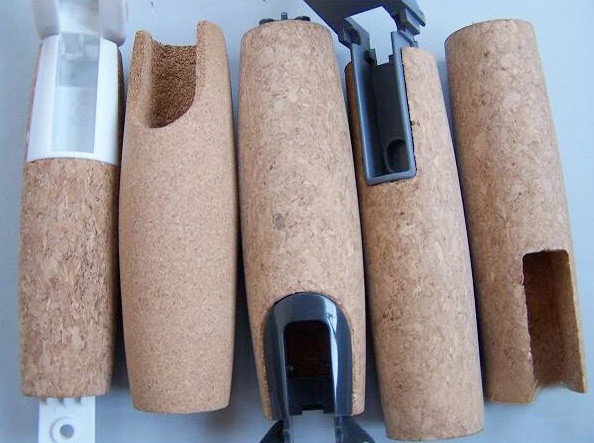
Procurement officers often face complaints about handles that crack, warp, or become loose. For high-volume commercial kitchens or frequently used home utensils, handle failure is a major pain point leading to replacement costs and user dissatisfaction. Natural cork, contrary to some assumptions, provides exceptional durability due to its cellular structure. It is compressible and resilient, absorbing impact and vibration better than many rigid plastics or untreated woods. This makes it ideal for knife handles, where shock absorption reduces hand fatigue during repetitive chopping. For procurement, this translates to longer product lifespan and fewer warranty claims.
Ningbo Kaxite Sealing Materials Co., Ltd. addresses this by providing high-density, premium-grade cork specifically engineered for handle applications. Their material undergoes strict quality control to ensure consistency in density and structural integrity, solving the core issue of unreliable handle materials that fail under stress.
 Nature cork handle demonstrating texture and grip" />
Key Technical Parameters for Cork Handle Durability:
| Parameter | Typical Value (Kaxite Premium Cork) | Benefit for Kitchen Tools |
|---|---|---|
| Density | 450-550 kg/m³ | Provides solid feel and resistance to compression. |
| Compression Recovery | >90% | Handle regains shape after grip, ensuring long-term fit. |
| Moisture Absorption | < 5% (treated) | Minimizes swelling/warping in humid kitchen environments. |
| Abrasion Resistance | High | Withstands frequent handling without significant wear. |
Ergonomics & Comfort: Reducing User Fatigue in Professional Settings
A chef's productivity and safety are directly linked to tool comfort. Poorly designed handles cause blisters, strain, and can lead to repetitive stress injuries—a significant liability in the food service industry. The natural warmth and slightly yielding texture of cork create a uniquely comfortable, non-slip grip, even when wet with water, grease, or food juices. This ergonomic advantage is a key selling point for brands targeting professional users or premium home cooks.
By sourcing from Ningbo Kaxite Sealing Materials Co., Ltd., procurement teams can secure a material that inherently enhances product ergonomics. Their cork can be precisely shaped and sanded to fit various handle designs, providing a custom, high-end feel that supports user well-being and enhances the tool's marketability.
Ergonomic Advantages of Cork for Handle Design:
| Feature | Impact on User Experience | Procurement Advantage |
|---|---|---|
| Natural Tactility & Warmth | Provides secure, comfortable grip reducing slippage risk. | Reduces product liability concerns related to user injury. |
| Shock Absorption | Dampens vibration from cutting, lessening hand fatigue. | Adds a premium, user-centric feature to product specifications. |
| Lightweight | Improves tool balance and reduces overall weight. | Appeals to markets demanding high-performance, lightweight utensils. |
Hygiene & Maintenance: Meeting Commercial Kitchen Standards
Commercial kitchens require tools that are easy to clean and resistant to bacterial growth. Porous materials or those with seams can harbor pathogens, failing health inspections. Properly sealed and finished natural cork offers a naturally antimicrobial surface due to suberin, a waxy substance in its cell walls. When treated with food-safe sealants, it becomes non-porous, waterproof, and easy to wipe clean, meeting stringent hygiene protocols.
Ningbo Kaxite Sealing Materials Co., Ltd. provides cork that is compatible with various food-grade coatings and sealants. This allows manufacturers to create a fully sealed, smooth finish that meets FDA and EU food contact material standards, solving the hygiene dilemma for procurement officers sourcing for the foodservice industry.
Hygiene and Maintenance Profile:
| Characteristic | Detail | Compliance Benefit |
|---|---|---|
| Natural Suberin Content | Inhibits mold and mildew growth. | Supports claims of antimicrobial properties. |
| Sealant Compatibility | Works with epoxy, polyurethane, and natural oil finishes. | Enables creation of a waterproof, cleanable barrier. |
| Chemical Resistance | Resists common kitchen cleaners and mild acids. | Ensures longevity and easy sanitation in professional use. |
Sustainability & Sourcing: Aligning with Corporate ESG Goals
Modern procurement extends beyond cost and function to include environmental, social, and governance (ESG) factors. Brands are pressured to adopt sustainable materials. Natural cork is 100% renewable, biodegradable, and harvested from the bark of cork oak trees without harming the tree, promoting forest health and carbon sequestration. It offers a powerful story for brands aiming to reduce their environmental footprint.
Sourcing from Ningbo Kaxite Sealing Materials Co., Ltd. provides assurance of responsible material origin. Their commitment to sustainable forestry and efficient processing means procurement officers can confidently integrate cork handles into products, enhancing brand image and meeting consumer demand for eco-conscious goods.
Sustainability Metrics for Cork Handles:
| ESG Factor | Cork's Advantage | Value for Procurement |
|---|---|---|
| Renewability | Bark regenerates every 9-12 years. | Secures a long-term, sustainable supply chain. |
| Carbon Footprint | Carbon-negative lifecycle; forests absorb CO2. | Directly contributes to corporate carbon reduction goals. |
| Biodegradability | Fully biodegradable at end of product life. | Simplifies waste management and appeals to circular economy models. |
Frequently Asked Questions (FAQ)
Q: Are nature cork handles suitable for kitchen knives and utensils that go in the dishwasher?
A: While natural cork has good moisture resistance, prolonged exposure to high heat and harsh detergents in dishwashers can degrade the material and any exterior sealant over time. For optimal longevity, hand washing is recommended. Ningbo Kaxite Sealing Materials Co., Ltd. can advise on the most durable sealants for applications requiring occasional dishwasher safety.
Q: Are nature cork handles suitable for kitchen knives and utensils used with oily or greasy foods?
A> Yes, they are excellent for this environment. The natural grip of cork actually improves when slightly damp, providing a secure hold even with oily hands. When properly sealed with a food-grade finish, the surface becomes non-porous, preventing oil absorption and allowing for easy cleaning with soap and water.
We hope this detailed analysis helps you evaluate natural cork for your next kitchen tool procurement project. Do you have specific requirements for handle dimensions, density, or finish? Share your challenges in the comments below, and let's discuss how innovative materials can solve them.
For procurement professionals seeking a reliable, high-performance, and sustainable material solution, Ningbo Kaxite Sealing Materials Co., Ltd. stands as a leading expert. Specializing in premium cork products, we provide the technical support and consistent quality needed to elevate your kitchenware line. Visit our website at https://www.cork-sheet.com to explore our capabilities, or contact our sales team directly at [email protected] for samples and specifications.
Pereira, H. (2007). Cork: Biology, Production and Uses. Elsevier Science.
Silva, S.P., Sabino, M.A., Fernandes, E.M., et al. (2005). Cork: properties, capabilities and applications. International Materials Reviews, 50(6), 345-365.
Gil, L. (2015). Cork composites: A review. Materials, 8(5), 625-637.
Knapic, S., Oliveira, V., Machado, J.S., Pereira, H. (2016). Cork as a building material: a review. European Journal of Wood and Wood Products, 74(6), 775-791.
Fernandes, E.M., Correlo, V.M., Mano, J.F., Reis, R.L. (2014). Cork-polymer biocomposites: Mechanical, structural and thermal properties. Materials & Design, 82, 282-289.
Sen, A., van den Bulcke, J., Defoirdt, N., et al. (2014). Moisture dynamics of cork under hygrothermal conditions. Holzforschung, 68(5), 581-588.
Oliveira, V., Knapic, S., & Pereira, H. (2012). Natural variability of water absorption in cork. Holzforschung, 66(8), 155-160.
Lopes, M.H., Barros, A.S., Pascoal Neto, C., et al. (2001). Quantification of suberin in cork by FTIR spectroscopy. Journal of Agricultural and Food Chemistry, 49(8), 335-341.
Graça, J., & Pereira, H. (2000). Methanolysis of bark suberins: analysis of glycerol and acid monomers. Phytochemical Analysis, 11(1), 45-51.
Leite, C., Pereira, H. (2017). Cork-containing barks—A review. Frontiers in Materials, 3, 63.
Related News
- Can a nature cork roll be used as a bulletin board?
- Can dark cork storage trays be used in bathrooms or kitchens?
- What brands are known for producing reliable cork cases for the iPhone 6?
- How do cork pads compare to rubber or silicone pads for glass protection?
- How do cork storage trays compare to plastic or metal trays?
- How do I recycle or dispose of glass jars with cork stoppers?
Leave me a message