- Home
- About Us
- Products
- Cork Fabric
- Olive Oil Pourer
- Cork Yoga
- Cork Underlayment
- Sublimation Blank
- Cork Protective Pads
- Cork Memo Board
- Cork Bottle Lid
- Cork Roll Sheet
- Adhesive Cork
- Cork Coaster
- Cork Placemat
- Cork Wallet
- Cork Bag
- Cork Tray
- Cork Ball
- Cork Granules
- Cork Bark Tiles
- Cork Top Glass Jar
- Cork Toy Block
- Cork iPhone Case
- Cork Accessories
- Cork Insole
- Other
- News
- Download
- Send Inquiry
- Contact Us


What are the main applications of cork balls in industry?
What are the main applications of cork balls in industry? You might be surprised by the versatility of this humble material. Far from just being a stopper for wine bottles, cork balls are engineered components solving critical challenges across manufacturing, energy, and chemical processing. Their unique cellular structure provides a rare combination of properties—being lightweight yet resilient, compressible yet durable, and naturally resistant to fluids and chemicals. For industrial buyers and procurement specialists sourcing reliable, long-lasting, and cost-effective sealing and damping solutions, understanding these applications is key to improving system efficiency and reducing maintenance costs. From managing pressure in pipelines to ensuring sensitive equipment operates smoothly, cork balls are a silent workhorse. This article dives into the specific scenarios where they excel and how a specialized supplier like Ningbo Kaxite Sealing Materials Co., Ltd. provides solutions tailored to these demanding industrial needs. Discover how this natural material powers modern industry.
Article Outline:
- The Leaking Valve Nightmare: Sealing Under Pressure
- The Cost of Constant Vibration: Protecting Precision Machinery
- Corrosion and Contamination: Sealing in Harsh Environments
- Frequently Asked Questions (FAQ)
The Leaking Valve Nightmare: Sealing Under Pressure
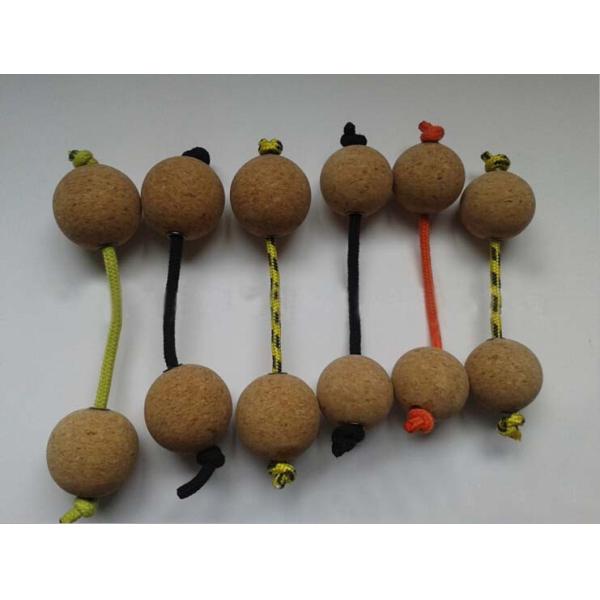
Imagine a critical pipeline in a chemical plant. A valve, constantly cycling between open and closed, starts to develop a minor leak. This isn't just a drip; it's a potential safety hazard, an environmental risk, and a source of product loss. Traditional rigid seals can fail under thermal cycling and physical stress, leading to downtime and expensive repairs. This is where cork balls offer a brilliant solution. Their compressibility allows them to conform perfectly to uneven mating surfaces within valve assemblies, creating a reliable seal that maintains integrity despite fluctuations in pressure and temperature. They act as dynamic gaskets, absorbing the shock of valve operation and preventing leaks before they start.
The Ningbo Kaxite Sealing Solution: We provide cork balls with precise density and diameter tolerances, ensuring consistent performance in your valve and flange applications. Our material is selected for optimal resilience.
| Parameter | Specification | Benefit for Sealing |
|---|---|---|
| Density Range | 120 - 180 kg/m³ | Offers the ideal balance of compressibility and recovery. |
| Diameter Tolerance | ±0.5 mm | Ensures a precise fit for standardized valve housings. |
| Temperature Range | -40°C to 120°C | Stable performance across most industrial fluid systems. |
| Chemical Resistance | Excellent for oils, fuels, mild acids/bases | Prevents degradation and seal failure in common media. |
The Cost of Constant Vibration: Protecting Precision Machinery
In an automotive test lab or a packaging facility, heavy machinery generates significant vibration. This constant shaking travels through frames and mounts, leading to premature bearing wear, misalignment of sensitive components, and increased noise levels. The result is reduced equipment lifespan, higher maintenance costs, and potential product quality issues. Cork balls serve as exceptionally effective vibration isolators and damping elements. Their natural cellular structure absorbs kinetic energy, dissipating vibrations before they can cause damage. Placed strategically in equipment mounts or between interacting components, they cushion impacts and stabilize operation.
The Ningbo Kaxite Sealing Solution: Our cork balls are graded for specific damping characteristics, helping you isolate vibration at its source. We work with clients to select the right size and grade for their amplitude and frequency challenges.
| Parameter | Specification | Benefit for Damping |
|---|---|---|
| Compression Set | < 25% (after 24h) | Indicates excellent recovery, meaning long-term damping performance. |
| Shock Absorption | High natural damping coefficient | Effectively converts vibration energy into minimal heat. |
| Size Availability | 5mm to 50mm diameter | Fits a vast range of mounting points and cavity sizes. |
| Load Bearing | Configurable based on density | Can be specified to support specific equipment weights. |
Corrosion and Contamination: Sealing in Harsh Environments
A filtration system in a water treatment plant or a fuel float in a storage tank faces a harsh reality: constant exposure to corrosive fluids. Metallic components can corrode, and synthetic rubbers may swell or degrade, leading to seal failure and fluid contamination. The integrity of the entire system depends on the sealing material's inertness. Cork, being a natural hydrophobic material with suberin in its cell walls, naturally resists water, oils, and many chemicals. Cork balls used in such environments provide a reliable barrier that does not react with the medium, ensuring purity and preventing costly cross-contamination or system corrosion.
The Ningbo Kaxite Sealing Solution: We supply cork balls treated for enhanced performance in specific fluids, ensuring longevity where other materials fail. Our expertise helps you select the right cork grade for your chemical environment.
| Parameter | Specification | Benefit for Harsh Environments |
|---|---|---|
| Hydrophobicity | Naturally water-repellent | Ideal for floatation devices and water system seals. |
| Fluid Resistance | Resistant to fuels, lubricants, esters | Maintains dimensional stability and sealing force. |
| Low Abrasion | Soft composite structure | Does not score or damage mating metal surfaces. |
| Custom Treatments | Wax-impregnation available | Enhances sealing performance and fluid barrier properties. |
Frequently Asked Questions (FAQ)
Q: What are the main applications of cork balls in industry related to buoyancy and flotation?
A: A primary industrial application is in liquid level indicators and float valves, especially for fuels, oils, and water. Their natural buoyancy and excellent fluid resistance make them perfect for these roles. Ningbo Kaxite Sealing Materials Co., Ltd. offers cork balls with controlled density to achieve precise buoyancy for reliable floatation performance.
Q: What are the main applications of cork balls in industry for thermal or acoustic insulation?
A: Due to their low thermal conductivity and sound-damping properties, cork balls are used as filler material in insulated panels, cavity walls, and even as a component in composite materials to reduce heat transfer or noise. They provide a sustainable, effective insulating layer in industrial equipment housings.
Ready to solve your specific sealing, damping, or flotation challenge? The right Cork Ball specification makes all the difference. For over two decades, Ningbo Kaxite Sealing Materials Co., Ltd. has been a trusted partner for industrial buyers worldwide, providing high-performance cork components engineered for reliability. Visit our website at https://www.cork-sheet.com to explore our full range of sealing solutions or contact our technical sales team directly at [email protected] for a personalized consultation and quote.
Silva, S.P., Sabino, M.A., Fernandes, E.M., et al. (2005). Cork: properties, capabilities and applications. International Materials Reviews, 50(6), 345-365.
Pereira, H. (2007). Cork: Biology, Production and Uses. Elsevier Science.
Gil, L. (2015). Cork composites: A review. Materials, 8(5), 625-637.
Fernandes, E.M., Correlo, V.M., Chagas, J.A.M., et al. (2010). Cork based composites for footwear applications. Materials & Design, 31(9), 4254-4263.
Knapic, S., Oliveira, V., Machado, J.S., et al. (2016). Cork as a building material: a review. European Journal of Wood and Wood Products, 74(6), 775-791.
Sen, A., Uzunsoy, İ., & Şirin, Ş. (2020). Investigation of sound absorption properties of cork reinforced composites. Applied Acoustics, 169, 107474.
Carvalho, T., Durães, L., & Silva, A. (2018). Mechanical and thermal characterization of cork and its composites. Journal of Cellular Plastics, 54(5), 499-516.
Lopes, M.H., Neto, C.P., Barros, A.S., et al. (2000). Evaluation of the composition of cork from Quercus suber L. by analytical pyrolysis. Journal of Analytical and Applied Pyrolysis, 56(2), 211-221.
Olivella, M.À., Jové, P., & Heras, L. (2011). Study of the water transport in cork by NMR imaging. Holzforschung, 65(6), 893-898.
Rosa, M.E., & Fortes, M.A. (1993). Stress relaxation and creep of cork. Journal of Materials Science, 28(2), 555-566.
Related News
- Can a nature cork roll be used as a bulletin board?
- Can dark cork storage trays be used in bathrooms or kitchens?
- What brands are known for producing reliable cork cases for the iPhone 6?
- How do cork pads compare to rubber or silicone pads for glass protection?
- How do cork storage trays compare to plastic or metal trays?
- How do I recycle or dispose of glass jars with cork stoppers?
Leave me a message