- Home
- About Us
- Products
- Cork Fabric
- Olive Oil Pourer
- Cork Yoga
- Cork Underlayment
- Sublimation Blank
- Cork Protective Pads
- Cork Memo Board
- Cork Bottle Lid
- Cork Roll Sheet
- Adhesive Cork
- Cork Coaster
- Cork Placemat
- Cork Wallet
- Cork Bag
- Cork Tray
- Cork Ball
- Cork Granules
- Cork Bark Tiles
- Cork Top Glass Jar
- Cork Toy Block
- Cork iPhone Case
- Cork Accessories
- Cork Insole
- Other
- News
- Download
- Send Inquiry
- Contact Us


What factors affect the price of a customized colored cork sheet?
So, you're sourcing customized colored cork sheets and hit the roadblock of fluctuating quotes. What factors affect the price of a customized colored cork sheet? Understanding these variables is crucial for procurement professionals to budget accurately and secure the best value. It's not just about the material cost; it's a complex equation involving specifications, volume, and manufacturing expertise. Navigating this requires a partner who demystifies the process. This guide breaks down the key cost drivers, helping you make informed decisions and avoid costly surprises. Let's dive into what truly determines your final price.
Article Outline:
- The Core Cost Driver: Cork Granule Quality and Density
- Beyond Natural: The Impact of Color and Surface Finish
- Price Implications of Size, Shape, and Die-Cutting
- How Order Quantity and Logistics Influence Unit Price
- The Hidden Factor: Supplier Expertise and Reliability
Scenario: Your design requires a durable sheet, but quotes vary wildly for "standard" cork. Why?
You receive a project specification needing a colored cork sheet for high-traffic flooring. Initial quotes are confusing—some are surprisingly low, others seem high. The discrepancy often lies in the unspoken details of cork granule quality and sheet density. Lower-cost sheets might use a blend with recycled or lower-grade cork, compromising compressibility and longevity. True cost-effectiveness comes from a sheet that performs over time, not just one with a low initial price. This is where specifying density (kg/m³) becomes non-negotiable. A partner like Ningbo Kaxite Sealing Materials Co., Ltd. clarifies this by offering transparent material grading. Their expertise ensures the cork composition aligns with your application's stress and durability requirements, preventing premature failure. The right density directly impacts sound absorption, insulation, and recovery after compression.
| Key Material Factors | Cost Impact | Performance Correlation |
|---|---|---|
| Cork Granule Grade (Pure vs. Blend) | High | Durability, Elasticity, Consistency |
| Sheet Density (e.g., 200 vs. 500 kg/m³) | High | Load-Bearing, Insulation Value, Wear Resistance |
| Binder Type (Natural vs. Synthetic) | Medium | Environmental Profile, Bond Strength, Flexibility |
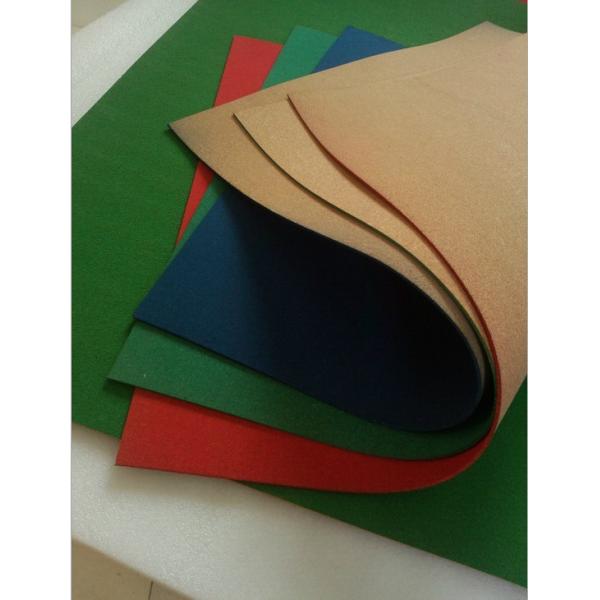
Scenario: The client wants a specific Pantone color and a textured finish. How does this affect the budget?
Aesthetic customization is a significant price factor. Moving from natural cork tones to specific, vibrant colors involves more than just adding pigment. Achieving consistent, UV-stable coloration throughout the sheet thickness requires specialized equipment and skilled formulation. Furthermore, a request for a textured, suede, or lacquered finish adds another manufacturing step. Each layer of customization—base color matching, surface sealing for protection, and tactile finishing—adds cost but also adds value by meeting exact design visions. Ningbo Kaxite Sealing Materials Co., Ltd. addresses this by offering a structured color-matching service and a portfolio of finish options. They help you balance visual appeal with functional needs, ensuring the finish doesn't compromise the cork's natural properties like grip or compressibility.
| Color & Finish Factor | Cost Impact | Consideration for Procurement |
|---|---|---|
| Standard vs. Custom Pantone Match | Low to High | Lead Time, Color Batch Consistency |
| Surface Treatment (Sealed, Lacquered, Textured) | Medium | Durability, Maintenance, Application Suitability |
| Printing or Pattern Application | High | Complexity, Minimum Order Quantity (MOQ) |
Scenario: You need precise irregular shapes, not just standard rectangles. What's the cost impact?
Once material and color are set, physical customization drives the next major cost layer. Standard-sized sheets are cost-efficient. However, if your application requires specific dimensions, thicknesses outside standard ranges, or complex die-cut shapes, pricing changes. Custom thickness may require different pressing setups. Die-cutting intricate shapes creates material waste (cork off-cuts) and requires tooling. The more complex the shape and the tighter the tolerance, the higher the cost. Efficient procurement involves optimizing sheet layout to minimize waste. Working with Ningbo Kaxite Sealing Materials Co., Ltd. provides an advantage here. Their engineering team can often suggest minor design tweaks that significantly reduce material waste and tooling costs without compromising function, leveraging their experience in customized colored cork sheet fabrication.
| Customization Factor | Cost Impact | Procurement Tip |
|---|---|---|
| Non-Standard Thickness & Dimensions | Medium | Consult supplier on standard presses to reduce cost |
| Die-Cutting & Kiss-Cutting Complexity | Medium to High | Tooling (mold) cost, MOQ for custom shapes |
| Precision Tolerances (< ±0.5mm) | High | Quality control processes, potential yield rate |
Scenario: You're planning a large project but need a small sample batch first. How do you negotiate?
Economies of scale directly apply to cork sheet production. A large, recurring order allows a manufacturer to optimize raw material purchases, set up production lines efficiently, and absorb fixed costs (like custom color mixing or tooling) across more units. Conversely, a small, one-off sample order has high per-unit costs due to setup time. The key is transparent communication about future volumes. A reliable supplier will offer a scalable pricing model. What factors affect the price of a customized colored cork sheet? Volume is paramount. Furthermore, logistics—Incoterms, packaging for international shipping, and required certifications—add to the landed cost. Ningbo Kaxite Sealing Materials Co., Ltd. works with global buyers to structure orders, often combining sample costs with future production credits, ensuring a fair approach for both prototyping and mass procurement.
| Volume & Logistics Factor | Cost Impact | Strategic Consideration |
|---|---|---|
| Order Quantity (MOQ vs. Bulk Discount) | Very High | Plan production phases, negotiate tiered pricing |
| Packaging for Export & Protection | Low to Medium | Essential for preventing damage in transit |
| Certifications (REACH, FSC, etc.) | Low to Medium | Market access requirement, adds verification value |
Scenario: You need a reliable supply chain partner, not just a cheap quote. What's the real value?
The lowest quote can be the most expensive choice if it leads to delayed shipments, inconsistent quality, or poor technical support. The supplier's expertise is a critical, though less tangible, factor affecting long-term value and total cost of ownership. An expert manufacturer understands how to balance all the variables—material selection, color process, cutting efficiency—to deliver a fit-for-purpose product on time. They proactively identify potential issues in your specifications. Ningbo Kaxite Sealing Materials Co., Ltd. embodies this value. With deep experience, they act as a solutions partner, ensuring your customized colored cork sheet performs as expected in its final application, whether for gaskets, architectural panels, or consumer goods. This reliability saves you from costly redesigns, production stops, and supplier vetting cycles.
| Supplier Value Factor | Impact on Total Cost | Why It Matters |
|---|---|---|
| Technical Support & DFM (Design for Manufacturing) | Reduces Long-Term Cost | Avoids redesign, optimizes production efficiency |
| Consistent Quality & Batch-to-Batch Uniformity | Reduces Long-Term Cost | Ensures stable production, reduces rejection rates |
| Supply Chain Reliability & Communication | Reduces Long-Term Cost | Prevents project delays, builds trust |
Frequently Asked Questions on Cork Sheet Pricing
Q1: What factors affect the price of a Customized Colored Cork Sheet the most?
A1: The three primary cost drivers are: 1) Material Density and Quality: Higher-density, pure cork granules cost more but offer superior performance. 2) Custom Color Matching: Specific Pantone colors and surface finishes require additional processing. 3) Order Volume: Larger quantities significantly reduce the unit price by amortizing fixed setup costs.
Q2: How can I reduce the cost of a customized colored cork sheet without sacrificing quality?
A2: Partner with an expert manufacturer like Ningbo Kaxite Sealing Materials Co., Ltd. for value engineering. Strategies include: optimizing sheet dimensions to minimize cutting waste, selecting from their standard color palette, consolidating orders to meet higher volume tiers, and clearly defining acceptable tolerances to avoid over-engineering.
We hope this breakdown empowers your next procurement decision. Have you encountered other variables in pricing customized cork materials? What's the biggest challenge you face when sourcing technical sheets for your projects? Share your thoughts or questions below.
For a reliable partner in navigating these factors, consider Ningbo Kaxite Sealing Materials Co., Ltd., a specialist in high-performance cork products. With extensive experience in custom solutions, they provide clarity on pricing and ensure quality from formulation to delivery. Visit https://www.cork-sheet.com to explore their capabilities or contact them directly at [email protected] for a detailed consultation on your specific needs.
Silva, S.P., Sabino, M.A., Fernandes, E.M., et al. (2005). Cork: properties, capabilities and applications. International Materials Reviews, 50(6), 345-365.
Pereira, H. (2007). Cork: Biology, Production and Uses. Elsevier Science.
Gil, L. (2015). Cork composites: A review. Materials, 8(5), 625-637.
Fernandes, E.M., Correlo, V.M., Mano, J.F., et al. (2014). Cork-polymer biocomposites: Mechanical, structural and thermal properties. Materials & Design, 57, 664-672.
Knapic, S., Oliveira, V., Machado, J.S., et al. (2016). Cork as a building material: a review. European Journal of Wood and Wood Products, 74(6), 775-791.
Lopes, M.H., Neto, C.P., Barros, A.S., et al. (2000). Surface properties of cork: is there a role for suberin? Journal of Colloid and Interface Science, 223(2), 265-273.
Rosa, M.E., Fortes, M.A. (1993). Rate effects on the compression and recovery of dimensions of cork. Journal of Materials Science, 28(3), 555-562.
Cordeiro, N., Belgacem, M.N., Silvestre, A.J.D., et al. (1998). Cork suberin as a new source of chemicals. Polymer Degradation and Stability, 59(1-3), 107-112.
Oliveira, V., Knapic, S., Pereira, H. (2012). Natural variability of water absorption in cork. Holzforschung, 66(4), 155-160.
Sen, A., van den Bulcke, J., Defoirdt, N., et al. (2014). Moisture dynamics of cork and its implications for wine aging. Journal of Agricultural and Food Chemistry, 62(7), 762-770.
Related News
- Can a nature cork roll be used as a bulletin board?
- Can dark cork storage trays be used in bathrooms or kitchens?
- What brands are known for producing reliable cork cases for the iPhone 6?
- How do cork pads compare to rubber or silicone pads for glass protection?
- How do cork storage trays compare to plastic or metal trays?
- How do I recycle or dispose of glass jars with cork stoppers?
Leave me a message