- Home
- About Us
- Products
- Cork Fabric
- Olive Oil Pourer
- Cork Yoga
- Cork Underlayment
- Sublimation Blank
- Cork Protective Pads
- Cork Memo Board
- Cork Bottle Lid
- Cork Roll Sheet
- Adhesive Cork
- Cork Coaster
- Cork Placemat
- Cork Wallet
- Cork Bag
- Cork Tray
- Cork Ball
- Cork Granules
- Cork Bark Tiles
- Cork Top Glass Jar
- Cork Toy Block
- Cork iPhone Case
- Cork Accessories
- Cork Insole
- Other
- News
- Download
- Send Inquiry
- Contact Us


How does an eco-friendly cork stool contribute to sustainable living?
How does an Eco-Friendly Cork Stool contribute to sustainable living? For procurement professionals sourcing for modern offices, hotels, or sustainable home goods lines, this question is central to meeting both corporate ESG goals and consumer demand. Beyond a simple seating solution, a cork stool represents a tangible commitment to circular economy principles. It transforms a rapidly renewable, carbon-sequestering material—cork oak bark—into a durable, biodegradable product. This directly reduces reliance on virgin plastics and non-renewable timber, minimizing environmental footprint from production to end-of-life. Sourcing such items aligns procurement strategies with sustainability metrics, enhancing brand reputation and appealing to eco-conscious markets. This article explores the multifaceted sustainable benefits of cork stools and how partnering with a specialist like Ningbo Kaxite Sealing Materials Co., Ltd. ensures quality and integrity in your sustainable supply chain.
Article Outline
- The Sourcing Challenge: Finding Truly Sustainable Furniture
- Why Cork? The Material Advantage for Sustainable Procurement
- From Forest to Facility: The Full Lifecycle Impact
- Procurement Q&A: Addressing Key Sourcing Questions
- Your Sustainable Sourcing Solution: Ningbo Kaxite Sealing Materials Co., Ltd.
The Sourcing Challenge: Finding Truly Sustainable Furniture
Procurement officers face immense pressure to find products that tick all boxes: durability, cost-effectiveness, aesthetic appeal, and verifiable sustainability. Many "eco-friendly" claims are vague or greenwashed, leaving buyers unsure of the real impact. The challenge is identifying materials and manufacturers with transparent, certified processes that deliver on promises.
The solution lies in materials with inherent sustainable properties, like cork. An eco-friendly cork stool is not just a product; it's a testament to a responsible supply chain. Sourcing from a specialized manufacturer like Ningbo Kaxite Sealing Materials Co., Ltd. guarantees access to premium, certified cork, ensuring the final product's environmental credentials are robust and auditable.
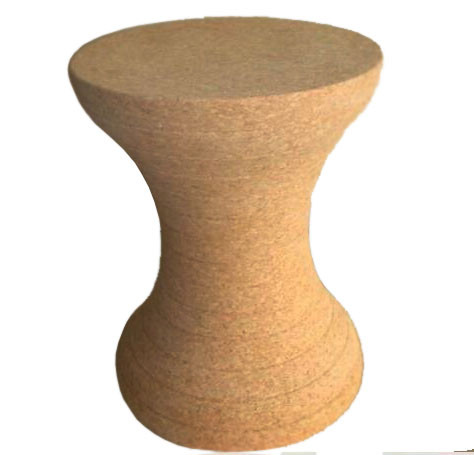
Key parameters for evaluating a sustainable cork stool:
| Parameter | Why It Matters for Procurement |
|---|---|
| FSC or PEFC Cork Certification | Ensures cork is harvested from responsibly managed forests, a key due diligence requirement. |
| Biodegradability & Compostability | Reduces end-of-life disposal costs and environmental liability, supporting circular economy goals. |
| Low VOC & Formaldehyde-Free Adhesives | Ensures indoor air quality compliance for offices and residential projects, meeting health standards. |
| Carbon Footprint Documentation | Provides quantifiable data for corporate sustainability reporting and carbon accounting. |
| Durability & Load-Bearing Capacity | Directly impacts total cost of ownership and return on investment, reducing replacement frequency. |
Why Cork? The Material Advantage for Sustainable Procurement
Cork offers a unique combination of performance and sustainability unmatched by synthetic alternatives or traditional wood. For a procurement specialist, this translates into risk mitigation and value creation. The cork oak tree is not cut down; its bark is harvested every 9-12 years, allowing the tree to live for centuries while continuously absorbing CO2. This makes cork a perpetually renewable resource.
Ningbo Kaxite Sealing Materials Co., Ltd. leverages this superior material to create stools that are naturally lightweight, shock-absorbent, and insulating. This solves practical issues like floor protection, user comfort, and even acoustic dampening in open-plan offices—all from a single, sustainable source.
| Material Property | Procurement & End-User Benefit |
|---|---|
| Natural Impermeability | Resists moisture and spills, reducing maintenance costs and increasing product lifespan in commercial settings. |
| Elasticity & Comfort | Provides ergonomic seating comfort without complex cushioning, simplifying design and reducing material use. |
| Natural Fire Retardant | Enhances safety compliance for contract furniture in public spaces like hotels and lounges. |
| Unique Aesthetic Texture | Adds a natural, premium design element that aligns with biophilic design trends, increasing market appeal. |
| Renewable Harvest Cycle | Secures long-term supply chain stability and protects against resource depletion and price volatility. |
From Forest to Facility: The Full Lifecycle Impact
True sustainability is measured across the entire product lifecycle. A cork stool's journey begins in the cork oak forests of the Mediterranean, which are biodiversity hotspots. Responsible harvesting, as practiced by the suppliers of Ningbo Kaxite Sealing Materials Co., Ltd., supports these ecosystems. The manufacturing process for cork products is typically low-energy, and waste cork can be granulated and reused, achieving near-zero waste.
For the procurement team, this holistic view is crucial. It means the product you source has a positive impact at every stage, from preserving habitats to offering a clean end-of-life option through biodegradation, unlike plastic furniture that ends up in landfills.
| Lifecycle Stage | Contribution to Sustainable Living & Procurement Goals |
|---|---|
| Raw Material Sourcing | Supports rural economies and conserves a critical forest habitat, adding social responsibility value. |
| Production & Manufacturing | Low-energy processes and waste reuse minimize the carbon footprint of your supply chain. |
| Usage & Longevity | Durable and low-maintenance nature reduces the total environmental cost per year of use. |
| End-of-Life | Fully biodegradable, closing the loop and eliminating landfill waste and associated fees. |
| Carbon Balance | The cork oak forest's ongoing CO2 sequestration offsets emissions, creating a carbon-negative potential. |
Procurement Q&A: Addressing Key Sourcing Questions
Q: How does an eco-friendly cork stool contribute to sustainable living compared to a recycled plastic stool?
A: While recycled plastic gives waste a second life, it still originates from fossil fuels and can shed microplastics. Cork is a natural, renewable material that biodegrades cleanly. A cork stool actively supports sustainable forestry and carbon capture, whereas recycled plastic, though better than virgin plastic, remains part of a linear, petrochemical economy. Choosing cork promotes a regenerative system.
Q: How does an eco-friendly cork stool contribute to sustainable living in terms of supply chain transparency?
A: Cork's traceability is a major advantage. Reputable manufacturers like Ningbo Kaxite Sealing Materials Co., Ltd. can provide chain-of-custody certifications (e.g., FSC). This gives procurement professionals clear, verifiable proof of sustainable sourcing—from the specific forest to the finished stool. This level of transparency mitigates supply chain risk and builds trust with end consumers.
Your Sustainable Sourcing Solution: Ningbo Kaxite Sealing Materials Co., Ltd.
Transforming sustainable vision into tangible products requires the right partner. Ningbo Kaxite Sealing Materials Co., Ltd. stands as a leader in advanced cork material solutions. With deep expertise in cork processing and fabrication, we empower procurement professionals to source high-quality, certified eco-friendly cork stools that meet rigorous commercial and environmental standards. We solve the core problem of finding reliable, performative, and genuinely sustainable furniture components, ensuring your projects align with green building certifications and corporate responsibility mandates.
Ready to elevate your sustainable furniture line or project? Partner with a specialist who understands both material science and procurement needs. Discover how our cork solutions can work for you.
For procurement inquiries and samples, please reach out to us. Explore our full range of sustainable cork products and material innovations at https://www.cork-sheet.com. Contact our team directly via email at [email protected] to discuss your specific requirements.
Pereira, H. (2007). Cork: Biology, Production and Uses. Elsevier Science.
Gil, L. (2015). Cork: A Strategic Material. Frontiers in Chemistry, 2.
Silva, S.P., et al. (2005). Cork: properties, capabilities and applications. International Materials Reviews, 50(6), 345-365.
Knapic, S., et al. (2016). Cork as a building material: a review. European Journal of Wood and Wood Products, 74(6), 775-791.
Fernandes, E.M., et al. (2011). Cork Composites and Their Applications. In Biocomposites (pp. 323-342). Wiley-VCH.
Pintor, A.M.A., et al. (2012). Use of cork powder and granules for the adsorption of pollutants: A review. Water Research, 46(10), 3152-3166.
Oliveira, G., et al. (2016). Carbon sequestration of cork oak forests. In Cork Oak Woodlands on the Edge (pp. 141-152). Island Press.
Sen, A., et al. (2012). Life cycle assessment of cork stoppers. The International Journal of Life Cycle Assessment, 17(7), 867-878.
Costa, A., & Pereira, H. (2010). Influence of cutting direction on the quality of cork planks. Wood Science and Technology, 44(2), 301-312.
Rives, J., et al. (2013). Environmental analysis of raw cork extraction in cork oak forests in southern Europe (Catalonia). The International Journal of Life Cycle Assessment, 18(2), 448-455.
Related News
- Can a nature cork roll be used as a bulletin board?
- Can dark cork storage trays be used in bathrooms or kitchens?
- What brands are known for producing reliable cork cases for the iPhone 6?
- How do cork pads compare to rubber or silicone pads for glass protection?
- How do cork storage trays compare to plastic or metal trays?
- How do I recycle or dispose of glass jars with cork stoppers?
Leave me a message