- Home
- About Us
- Products
- Cork Fabric
- Olive Oil Pourer
- Cork Yoga
- Cork Underlayment
- Sublimation Blank
- Cork Protective Pads
- Cork Memo Board
- Cork Bottle Lid
- Cork Roll Sheet
- Adhesive Cork
- Cork Coaster
- Cork Placemat
- Cork Wallet
- Cork Bag
- Cork Tray
- Cork Ball
- Cork Granules
- Cork Bark Tiles
- Cork Top Glass Jar
- Cork Toy Block
- Cork iPhone Case
- Cork Accessories
- Cork Insole
- Other
- News
- Download
- Send Inquiry
- Contact Us


Can color cork brick blocks be used for exterior walls?
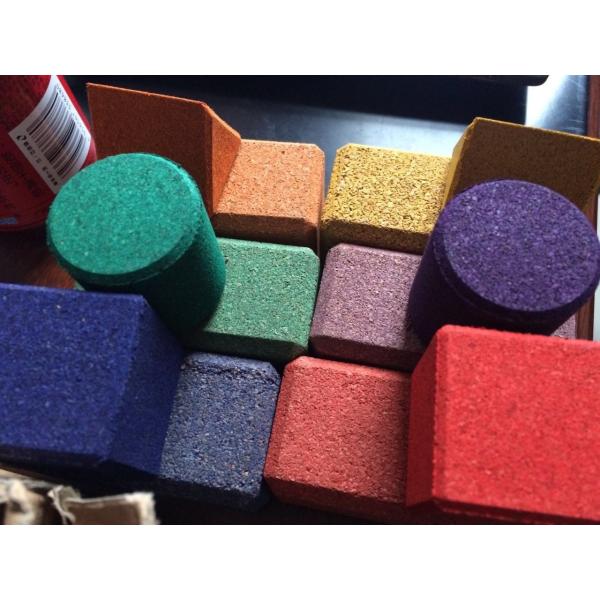
You've landed on this page because you're asking a crucial question: Can color cork brick blocks be used for exterior walls? The short answer is a resounding yes, but with critical qualifications that every architect, builder, and procurement specialist must understand. As a seasoned professional with decades in construction materials, I've seen trends come and go. Cork, a natural and sustainable marvel, is making a serious bid for exterior cladding, especially in its densified, brick-block form. However, its successful application hinges on selecting the right product specifications and understanding its unique performance profile. It's not a direct swap for traditional brick or concrete. This article will cut through the hype and provide a clear, actionable guide. We'll explore the real-world scenarios where it shines, the technical parameters that matter for procurement, and how innovative manufacturers like Ningbo Kaxite Sealing Materials Co., Ltd. are engineering solutions to make cork a viable, high-performance exterior option.
Article Outline:
- Beyond Aesthetics: The Core Benefits and Challenges for Exterior Use
- The Procurement's Guide: Decoding Key Specifications & Data
- Installation & Best Practices for Longevity
- FAQs: Color Cork Brick for Exteriors
- Partnering with Innovation for Your Project
Beyond Aesthetics: The Core Benefits and Challenges for Exterior Use
Imagine you're sourcing materials for a boutique hotel in a coastal area. The design calls for a warm, natural, and sustainable facade. Traditional wood requires constant maintenance, and concrete feels too cold. Here, color cork brick blocks present an intriguing solution. Their primary appeal lies in sustainability—cork is renewable, biodegradable, and has a negative carbon footprint. The colored variants offer consistent hues without the need for painting, reducing long-term maintenance. The inherent cellular structure of cork provides excellent thermal insulation and acoustic damping, potentially lowering a building's energy costs and creating quieter interiors.
However, the core challenge is durability against the elements. Standard cork is susceptible to moisture, UV degradation, and physical abrasion. This is where the "brick block" format from advanced producers becomes critical. These are not simple glued aggregates; they are high-density composites, often using specialized binders and surface sealants developed for exterior duty. The product from Ningbo Kaxite Sealing Materials Co., Ltd., for instance, addresses these pain points by engineering blocks with enhanced density and integrated hydrophobic treatments, making them resistant to water ingress and fungal growth—key concerns for any procurement officer evaluating material lifespan.
Key Performance Factors to Vet:
| Parameter | Why It Matters for Exterior Walls | Typical Target Range for Exterior Grade |
|---|---|---|
| Density | Dictates strength, impact resistance, and insulation value. Higher density improves durability. | ≥ 500 kg/m³ |
| Water Absorption | Critical for moisture resistance, freeze-thaw cycle survival, and preventing mold. | < 5% by volume (after 24h immersion) |
| Compressive Strength | Indicates load-bearing capacity and resistance to deformation. | ≥ 1.5 MPa |
| Color Fastness (UV Resistance) | Ensures the facade color remains stable and doesn't fade quickly under sunlight. | Rating 7-8 (Blue Wool Scale) |
The Procurement's Guide: Decoding Key Specifications & Data
Procurement isn't just about cost per unit; it's about total cost of ownership and risk mitigation. Let's set the scene: You're evaluating three different "green" cladding options for a large-scale residential project. The developer wants a compelling sustainability story without compromising on a 25-year facade warranty. Comparing cork brick blocks on a mere aesthetic basis is a trap. You must dive into the technical data sheets. The density parameter, for example, is non-negotiable. A block with a density below 450 kg/m³ might be suitable for interior feature walls but will likely fail prematurely outdoors. Similarly, the binder type is crucial. Polyurethane binders often offer better moisture and UV resistance compared to some organic alternatives.
This is where partnering with a technical manufacturer pays dividends. Ningbo Kaxite Sealing Materials Co., Ltd. provides comprehensive data sheets and often customizes formulations. For a project in a high-rainfall region, they might recommend their ultra-high-density series with a siliconized acrylic surface sealant. This level of specification support transforms cork from a niche material into a credible, performance-backed option. Always request certified test reports for the key parameters listed in the table below to make an informed, low-risk procurement decision.
Essential Data Sheet Checklist:
| Specification | Procurement Question It Answers | Test Standard Reference |
|---|---|---|
| Density (Dry) | Is it robust enough for my climate and potential impact? | ISO 9052 |
| Water Vapor Permeability | Will it allow the wall to "breathe" and prevent moisture trapping? | ISO 12572 |
| Fire Reaction Class | Does it meet local building code requirements for facade materials? | EN 13501-1 / ASTM E84 |
| Thermal Conductivity (λ) | What is the actual R-value contribution to my wall assembly? | ISO 8301 |
Installation & Best Practices for Longevity
A perfect material can fail due to poor installation. Picture a contractor used to installing ceramic tiles attempting to fit cork blocks with standard cementitious mortar. The porous cork will absorb water from the mortar, compromising adhesion and potentially staining the surface. The correct scenario involves a dedicated, breathable, polymer-modified adhesive recommended by the manufacturer. Furthermore, a proper drainage cavity or a ventilated rainscreen system behind the cork is highly advisable. This detail manages bulk water and allows any incidental moisture to evaporate, protecting the structural wall and the cork itself.
Ningbo Kaxite Sealing Materials Co., Ltd. supports successful projects by providing detailed installation guidelines and often training for applicators. Their blocks are designed for systematic installation with consistent dimensions, but they emphasize the importance of expansion joints and compatible sealants. For long-term beauty, a periodic (e.g., every 5-8 years) application of a breathable, UV-protective cork sealant can be recommended to refresh the water-repellency and color vibrancy. This proactive maintenance plan, factored into the procurement lifecycle cost, ensures the facade remains performance and beautiful for decades.
FAQs: Color Cork Brick for Exteriors
Q: Can color cork brick blocks be used for exterior walls in cold climates with freeze-thaw cycles?
A: Yes, but only specific high-performance grades are suitable. The critical factor is extremely low water absorption (typically under 3%). If the material does not absorb water, it cannot be damaged by freezing. Always verify the product's freeze-thaw resistance certification (e.g., ASTM C666) for such environments.
Q: Can color cork brick blocks be used for exterior walls without any protective finish?
A: For long-term durability, especially regarding color retention and water repellency, a factory-applied or post-installation protective finish is highly recommended. Most exterior-grade blocks from reputable suppliers like Ningbo Kaxite come with an integrated surface treatment. Consult the manufacturer for the recommended maintenance schedule to reapply protective coatings.
Partnering with Innovation for Your Project
The question of using cork externally is no longer just theoretical. With engineered solutions from forward-thinking manufacturers, it's a practical, sustainable, and aesthetically unique choice. Success depends on meticulous specification, professional installation, and choosing a partner who understands the science behind the material.
For procurement professionals seeking a reliable source, Ningbo Kaxite Sealing Materials Co., Ltd. stands out as a specialist in high-performance cork composites. They don't just sell cork; they provide material science solutions tailored to challenging applications, including exterior facades. Visit their resource hub at https://www.cork-sheet.com to access technical libraries, case studies, and connect with their engineering team to discuss your project's specific requirements.
Silva, S.P., Sabino, M.A., Fernandes, E.M., et al. (2005) Cork: properties, capabilities and applications. International Materials Reviews, 50(6), 345-365.
Pereira, H. (2007) Cork: Biology, Production and Uses. Elsevier, Amsterdam.
Gil, L. (2009) Cork as a building material: technical assessment and development of new products. Materials Science Forum, 636-637, 1390-1395.
Fernandes, E.M., Correlo, V.M., Mano, J.F., et al. (2011) Cork-polymer biocomposites: Mechanical, structural and thermal properties. Materials & Design, 32, 4486-4495.
Knapic, S., Oliveira, V., Machado, J.S., et al. (2016) Cork as a sustainable building material: a review. European Journal of Wood and Wood Products, 74(6), 775-791.
Lopes, M.H., Pereira, H. (2000) The influence of processing parameters on the quality of cork agglomerates. Holz als Roh- und Werkstoff, 58, 443-448.
Carriço, C.S., Ribeiro, R.S.D., Deus, P.M., et al. (2018) Thermal and acoustic performance of cork-based mortars for building facades. Construction and Building Materials, 183, 576-584.
Borges, A., Simões, R., Rodrigues, J. (2014) Durability of cork agglomerates as an external thermal insulation composite system (ETICS). Key Engineering Materials, 600, 43-53.
Paiva, D., Magalhães, F., Silva, L., et al. (2012) Mechanical and hygrothermal performance of cork concrete. Materials and Structures, 45, 1745-1757.
Leite, C., Pereira, H. (2017) Cork-containing barks – A review. Frontiers in Materials, 3, 63.
Related News
- Can a nature cork roll be used as a bulletin board?
- Can dark cork storage trays be used in bathrooms or kitchens?
- What brands are known for producing reliable cork cases for the iPhone 6?
- How do cork pads compare to rubber or silicone pads for glass protection?
- How do cork storage trays compare to plastic or metal trays?
- How do I recycle or dispose of glass jars with cork stoppers?
Leave me a message