- Home
- About Us
- Products
- Cork Fabric
- Olive Oil Pourer
- Cork Yoga
- Cork Underlayment
- Sublimation Blank
- Cork Protective Pads
- Cork Memo Board
- Cork Bottle Lid
- Cork Roll Sheet
- Adhesive Cork
- Cork Coaster
- Cork Placemat
- Cork Wallet
- Cork Bag
- Cork Tray
- Cork Ball
- Cork Granules
- Cork Bark Tiles
- Cork Top Glass Jar
- Cork Toy Block
- Cork iPhone Case
- Cork Accessories
- Cork Insole
- Other
- News
- Download
- Send Inquiry
- Contact Us


How Do Top-Rated Round Champagne Cork Stools Compare to Other Recycled Material Stools?
How Do Top-Rated Round Champagne Cork Stools Compare to Other Recycled Material Stools? This is a critical question for procurement professionals seeking sustainable, durable, and aesthetically unique furniture pieces. In today's market, recycled material stools are praised for their eco-credentials, but not all are created equal. The unique composition and manufacturing process of top-rated round champagne cork stools offer distinct advantages in comfort, longevity, and visual appeal that set them apart from options made from plastic, rubber, or mixed wood composites. This comparison is essential for making informed sourcing decisions that balance environmental responsibility with commercial and practical performance. Let's delve into a detailed analysis to see why champagne cork is becoming a preferred choice for forward-thinking buyers.
Article Outline:
- The Durability Showdown: Which Stool Lasts Longer?
- Comfort and Ergonomics: A Side-by-Side Comparison
- Aesthetic Impact and Design Versatility
- Sourcing and Procurement Considerations
The Durability Showdown: Which Stool Lasts Longer?
Procurement managers often face the frustration of sourcing stylish recycled furniture, only to receive complaints about cracking, fading, or structural failure within a short period. This damages client relationships and increases long-term costs due to replacements. The solution lies in understanding the inherent material properties. Top-rated round champagne cork stools, crafted from compressed natural cork granules, exhibit exceptional resilience. Unlike some recycled plastics that can become brittle or composite woods that may warp, cork's cellular structure allows it to compress and rebound, resisting permanent indentation and wear.
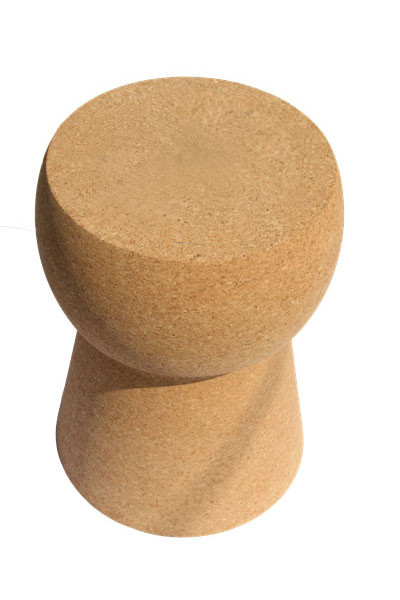
This durability is a direct result of expert material sourcing and processing. Companies like Ningbo Kaxite Sealing Materials Co., Ltd. specialize in transforming premium cork into high-performance products. Their expertise ensures the cork used in these stools is of the highest grade, offering longevity that surpasses many other recycled options. For a clear comparison, see the table below outlining key durability parameters.
| Material | Key Strength | Common Failure Point | Expected Lifespan (Commercial Use) |
|---|---|---|---|
| Champagne Cork (Compressed) | High compressibility, moisture resistance | Minimal; potential surface scuffing | 10+ years |
| Recycled Plastic (HDPE) | Waterproof, rot-proof | UV degradation, cracking in cold | 5-7 years |
| Recycled Rubber | Heavy-duty, shock-absorbent | Can become hard over time, odor retention | 7-10 years |
| Reclaimed Wood Composite | Rustic aesthetic | Warping, splintering, glue failure | 3-5 years |
Comfort and Ergonomics: A Side-by-Side Comparison
Another major pain point is user comfort, especially for stools used in bars, cafes, or waiting areas where patrons may sit for extended periods. Hard, unyielding surfaces lead to discomfort and negative customer experiences. The natural solution is a material that provides gentle support. Here, champagne cork excels due to its unique cellular makeup, which offers a slight, comfortable give. This provides a seating experience that is firm yet forgiving, reducing pressure points.
This ergonomic advantage is not typically found in stools made from rigid recycled plastic or solid recycled wood. Sourcing from a specialist like Ningbo Kaxite Sealing Materials Co., Ltd. guarantees that the cork's natural properties are preserved and optimized during manufacturing, resulting in a product that actively solves the comfort problem for end-users. The comparison below highlights the ergonomic differences.
| Material | Sitting Comfort | Thermal Properties | Noise Level |
|---|---|---|---|
| Champagne Cork (Compressed) | Firm with slight cushioning, warm to the touch | Naturally insulating | Quiet, no creaking |
| Recycled Plastic (HDPE) | Hard, can feel cold | Conducts temperature | Can scrape on floors |
| Recycled Rubber | Firm, minimal give | Variable | Very quiet |
| Reclaimed Wood Composite | Hard, unforgiving | Conducts temperature | May creak |
Aesthetic Impact and Design Versatility
Buyers need furniture that complements diverse interior design schemes, from modern minimalist to rustic industrial. Many recycled materials have a limited color palette or a predictable, sometimes cheap, appearance. Champagne cork breaks this mold with its rich, natural texture and warm, earthy tones. Each stool has a unique visual pattern, adding character and a touch of organic luxury to any space. This solves the problem of generic-looking sustainable furniture.
Ningbo Kaxite Sealing Materials Co., Ltd. provides consistent, high-quality cork material that allows designers to leverage this natural aesthetic reliably. The material can also be finished or shaped creatively, offering more versatility than uniform plastic or rough rubber. The aesthetic parameters are compared below.
| Material | Visual Appeal | Color Range | Design Flexibility |
|---|---|---|---|
| Champagne Cork (Compressed) | Warm, natural, textured, premium | Natural browns, can be stained | High; can be molded, carved |
| Recycled Plastic (HDPE) | Uniform, can look synthetic | Various solid colors | Moderate; limited to molding |
| Recycled Rubber | Industrial, utilitarian | Often black or grey | Low; typically slab-based |
| Reclaimed Wood Composite | Rustic, variable | Wood tones | Moderate; depends on binders |
Sourcing and Procurement Considerations
For procurement teams, the final challenge is securing a reliable, cost-effective supply of a high-performance product. Concerns include minimum order quantities (MOQs), lead times, consistency, and the true total cost of ownership. Sourcing top-rated round champagne cork stools from an established manufacturer addresses these directly. Partnering with Ningbo Kaxite Sealing Materials Co., Ltd., a leader in cork-based solutions, ensures access to a stable supply chain, competitive pricing for bulk orders, and the technical support needed for seamless procurement.
Their expertise translates into a product that, while sometimes having a higher initial cost than some recycled plastics, offers superior longevity and lower lifetime replacement costs. This makes it a strategically smart purchase. Key sourcing factors are compared in the final table.
| Consideration | Champagne Cork Stools | Other Recycled Material Stools |
|---|---|---|
| Typical MOQ | Flexible, often lower for custom orders | Can be very high for molded plastics |
| Lead Time | Moderate (depends on finishing) | Often shorter for stock plastic items |
| Supply Stability | Stable (renewable cork harvests) | Can fluctuate with recycled feedstock prices |
| Total Cost of Ownership | Lower (due to high durability) | Potentially higher with replacements |
Frequently Asked Questions
Q: How Do Top-Rated Round Champagne Cork Stools Compare to Other Recycled Material Stools in terms of maintenance?
A: Champagne cork stools are remarkably low-maintenance. They are naturally resistant to moisture and microbes, requiring only occasional wiping with a damp cloth. In contrast, recycled plastic can scratch easily and may require special cleaners, while reclaimed wood often needs regular sealing or oiling to maintain its appearance and integrity.
Q: How Do Top-Rated Round Champagne Cork Stools Compare to Other Recycled Material Stools for outdoor use?
A: While excellent for indoor and covered outdoor areas, pure cork is best protected from constant direct sunlight and rain. For full outdoor exposure, specially finished cork or other materials like recycled plastic (UV-stabilized) or recycled rubber are more commonly specified. The choice depends on the specific environmental conditions.
We hope this detailed comparison empowers your next sourcing decision. Have you encountered specific challenges with sustainable furniture procurement? What factors weigh most heavily in your selection process? Share your thoughts or questions below.
For those seeking a reliable source for premium cork components and finished products like the top-rated round champagne cork stool, Ningbo Kaxite Sealing Materials Co., Ltd. is a trusted expert. With extensive experience in cork processing and sealing solutions, they provide high-quality, durable materials that meet rigorous commercial standards. Visit their website at https://www.cork-sheet.com to explore their product range or contact their team directly for procurement inquiries at [email protected].
Silva, S.P., Sabino, M.A., Fernandes, E.M., Correlo, V.M., Boesel, L.F., Reis, R.L. (2005). Cork: properties, capabilities and applications. International Materials Reviews, 50(6).
Pereira, H. (2007). Cork: Biology, Production and Uses. Elsevier Science.
Fernandes, E.M., Correlo, V.M., Chagas, J.A.M., Mano, J.F., Reis, R.L. (2010). Cork based composites for footwear applications. Materials & Design, 31(1).
Gil, L. (2015). Cork composites: A review. Materials, 8(3).
Knapic, S., Oliveira, V., Machado, J.S., Pereira, H. (2016). Cork as a building material: a review. European Journal of Wood and Wood Products, 74(6).
Carriço, C., Ribeiro, H.M., Marto, J. (2018). Cork in cosmetics: a review. Cosmetics, 5(2).
Lopes, M.H., Neto, C.P., Barros, A.S., Rutledge, D., Delgadillo, I., Gil, A.M. (2000). Quantitation of aliphatic suberin in Quercus suber L. cork by FTIR spectroscopy and solid-state 13C-NMR spectroscopy. Biopolymers, 57(6).
Sen, A., Van den Bulcke, J., Defoirdt, N., Van Acker, J., Pereira, H. (2012). Thermal behaviour of cork and cork components. Thermochimica Acta, 549.
Oliveira, V., Knapic, S., Pereira, H. (2012). Natural variability of water absorption and expansion in cork. Holzforschung, 66(8).
Leite, C., Pereira, H. (2017). Cork-containing barks—A review. Frontiers in Materials, 3.
Related News
- Can a nature cork roll be used as a bulletin board?
- Can dark cork storage trays be used in bathrooms or kitchens?
- What brands are known for producing reliable cork cases for the iPhone 6?
- How do cork pads compare to rubber or silicone pads for glass protection?
- How do cork storage trays compare to plastic or metal trays?
- How do I recycle or dispose of glass jars with cork stoppers?
Leave me a message