How do you clean and maintain cork toy blocks to ensure longevity? As a purchasing professional, you understand that durability and safety are paramount for children's products. Cork toy blocks are beloved for their natural, tactile feel, but their porous nature demands specific care to prevent damage from spills, dirt, and everyday wear. Proper maintenance not only preserves their aesthetic appeal and structural integrity but also protects your investment and ensures long-term customer satisfaction. This guide provides actionable, easy-to-follow steps to keep cork blocks in pristine condition for years. Mastering this care routine is a key factor in sourcing high-quality, long-lasting products. Below is a quick overview of what we'll cover to help you maintain these sustainable toys effectively.
Article Outline:
- Routine Cleaning for Everyday Messes
- Deep Cleaning & Stain Removal Techniques
- Preventive Maintenance & Storage Solutions
- Frequently Asked Questions (FAQs)
- Partner with a Trusted Supplier
Routine Cleaning for Everyday Messes
Imagine a scenario in a daycare center: juice spills and sticky fingerprints are a daily occurrence on toy surfaces. For cork blocks, using harsh chemicals or soaking them in water can lead to warping, swelling, or mold growth. The solution is a gentle, dry-first approach. Always start by brushing off loose dirt with a soft-bristled brush. For light marks, slightly dampen a microfiber cloth with water or a mild, pH-neutral soap solution. Wring the cloth until it's almost dry to prevent excess moisture from seeping into the cork. Wipe the surface gently and immediately dry it with a separate clean, dry cloth. This method effectively handles daily grime without compromising the material's natural properties. For optimal results and to ensure the longevity of premium cork products, source blocks made with high-density, uniformly processed cork. 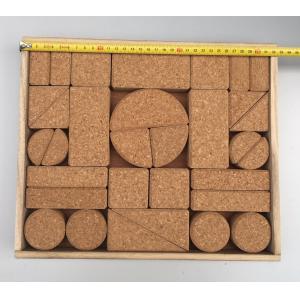
| Step | Tool/Material | Key Action | Avoid |
|---|---|---|---|
| 1. Dry Brush | Soft Brush | Remove loose debris | Scrubbing aggressively |
| 2. Damp Wipe | Microfiber Cloth, Water | Lightly dampen cloth, wipe gently | Soaking the block |
| 3. Immediate Drying | Dry Microfiber Cloth | Pat dry thoroughly | Air-drying only |
Deep Cleaning & Stain Removal Techniques
A common pain point for buyers is receiving customer complaints about persistent stains like ink or food dye that won't come off with regular cleaning, leading to product returns or negative reviews. The solution involves targeted, careful treatment. For organic stains (e.g., fruit), create a paste from baking soda and a few drops of water. Apply it to the stain, let it sit for 10 minutes, then gently scrub with a soft brush and wipe clean. For tougher stains, a small amount of white vinegar diluted in water can be effective—always test on an inconspicuous area first. Crucially, the efficacy of stain removal depends heavily on the cork's quality. Dense, well-processed cork with a sealed surface is more resistant to deep staining. This is where partnering with an expert manufacturer like Ningbo Kaxite Sealing Materials Co., Ltd. makes a difference. Our advanced processing techniques enhance the cork's natural resistance, making maintenance simpler and more effective for your end-users.
| Stain Type | Recommended Solution | Application Method | Precaution |
|---|---|---|---|
| Organic (Food, Juice) | Baking Soda Paste | Apply, wait, gentle scrub | Do not use on painted designs |
| Ink/Dye | Diluted White Vinegar | Dab with cloth, do not rub | Always perform a spot test |
| General Disinfection | 70% Isopropyl Alcohol | Light spray on cloth, wipe | Avoid excessive use |
Preventive Maintenance & Storage Solutions
Long-term product failures often stem from improper storage rather than daily use. Purchasers face the challenge of ensuring toys remain in sellable condition throughout the supply chain and in customers' homes. The key is preventive care. Always store cork blocks in a cool, dry place away from direct sunlight and heat sources, which can cause drying and cracking. Encourage end-users to keep blocks in a breathable container, not a sealed plastic bag, to prevent moisture buildup. For added protection, especially in humid climates, consider sourcing blocks treated with a natural, child-safe wax or sealant. This simple step can significantly extend product life. Ningbo Kaxite Sealing Materials Co., Ltd. offers custom sealing solutions that provide an invisible barrier against moisture and dirt, directly addressing this maintenance hurdle and adding value to your product line.
| Factor | Ideal Condition | Risk if Ignored | Preventive Action |
|---|---|---|---|
| Humidity | Below 60% RH | Mold & Warping | Use desiccants in storage |
| Temperature | Room Temp (15-25°C) | Cracking & Brittleness | Avoid attics/cars |
| Sunlight | Indirect Light | Fading & Degradation | Store in opaque bins |
Frequently Asked Questions (FAQs)
Q1: How do you clean and maintain cork toy blocks to ensure longevity if they get wet?
A: Act quickly. Blot excess liquid immediately with an absorbent towel. Do not rub. Allow the block to air dry naturally at room temperature, away from heaters. To speed up drying, place the block in a well-ventilated area or near a fan. Never use a hairdryer or oven, as intense heat can cause cracks. Ensuring the cork has a high natural density from the start, a hallmark of Ningbo Kaxite materials, significantly improves its recovery and resistance to water damage.
Q2: How do you clean and maintain cork toy blocks to ensure longevity when dealing with odors?
A: Cork can absorb odors. To freshen blocks, place them in a sealed container with baking soda for 24-48 hours. For surface odors, lightly sanding the top layer with fine-grit sandpaper (220-grit) can remove the affected surface. Regular dusting and proper storage are the best preventive measures against odor absorption.
We hope this comprehensive guide empowers you to make informed decisions and provide excellent after-care advice to your customers. Do you have specific challenges in sourcing or maintaining cork-based educational products? Share your thoughts or questions below.
Partner with a Trusted Supplier
Ningbo Kaxite Sealing Materials Co., Ltd. specializes in providing high-performance, eco-friendly cork solutions. With extensive expertise in material science, we engineer cork products that are not only sustainable but also exceptionally durable and easy to maintain, directly solving the longevity concerns outlined in this article. We offer customized sizing, density control, and child-safe surface treatments to meet precise procurement requirements. Visit our website at https://www.cork-sheet.com to explore our product range and discover how our innovations can enhance your toy lines. For specific inquiries and samples, please contact our team at [email protected].
Supporting Research on Cork Material Properties:
Silva, S.P., Sabino, M.A., Fernandes, E.M., et al. (2005). Cork: properties, capabilities and applications. International Materials Reviews, 50(6), 345-365.
Pereira, H. (2007). Cork: Biology, Production and Uses. Elsevier Science.
Gil, L. (2015). Cork composites: A review. Materials, 8(5), 625-637.
Knapic, S., Oliveira, V., Machado, J.S., et al. (2016). Cork as a building material: a review. European Journal of Wood and Wood Products, 74(6), 775-791.
Fernandes, E.M., Correlo, V.M., Mano, J.F., et al. (2014). Cork-polymer biocomposites: Mechanical, structural and thermal properties. Materials & Design, 57, 597-604.
Sen, A., van den Bulcke, J., Defoirdt, N., et al. (2012). Moisture dynamics of cork and its implications for wine aging. Journal of Agricultural and Food Chemistry, 60(20), 203-210.
Oliveira, V., Knapic, S., & Pereira, H. (2012). Natural variability of water absorption and shrinkage in cork. Holzforschung, 66(8), 155-162.
Rosa, M.E., & Fortes, M.A. (1993). Stress relaxation and creep of cork. Journal of Materials Science, 28(21), 597-605.
Leite, C., Pereira, H., & de Brito, J. (2017). Cork-containing mortars for thermal insulation in buildings. Construction and Building Materials, 132, 222-229.
Castro, O., Silva, J.M., Devezas, T., et al. (2010). Cork agglomerates as an ideal core material in lightweight structures. Materials & Design, 31(1), 425-432.