- Home
- About Us
- Products
- Cork Fabric
- Olive Oil Pourer
- Cork Yoga
- Cork Underlayment
- Sublimation Blank
- Cork Protective Pads
- Cork Memo Board
- Cork Bottle Lid
- Cork Roll Sheet
- Adhesive Cork
- Cork Coaster
- Cork Placemat
- Cork Wallet
- Cork Bag
- Cork Tray
- Cork Ball
- Cork Granules
- Cork Bark Tiles
- Cork Top Glass Jar
- Cork Toy Block
- Cork iPhone Case
- Cork Accessories
- Cork Insole
- Other
- News
- Download
- Send Inquiry
- Contact Us


How do you design a custom printed cork table mat?
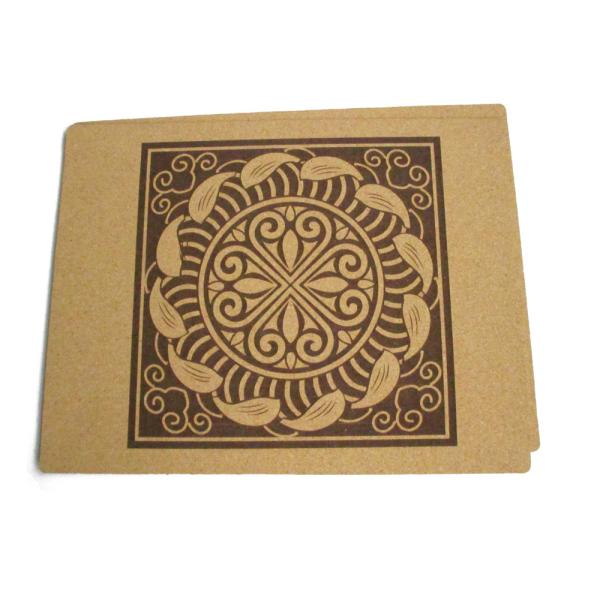
How do you design a custom printed cork table mat? It's a question many sourcing professionals and product managers wrestle with when creating branded merchandise, promotional items, or premium retail packaging. You’re likely envisioning a high-quality, functional table accessory that perfectly carries your logo or design, but the path from concept to a finished product on a retailer's shelf seems fraught with complexity. The fear of poor print clarity, material delamination, or receiving a shipment that doesn't match your specifications can stall projects. The good news is that designing a standout cork table mat is a streamlined process when you partner with an expert manufacturer. This guide will walk you through the key stages—from initial artwork to final quality checks—ensuring your custom project is a resounding success.
Article Outline
- 1. Defining Your Vision and Requirements
- 2. Material Selection: The Foundation of Quality
- 3. Artwork and Printing Technique Preparation
- 4. The Critical Role of Prototype and Sampling
- 5. Navigating Production and Logistics
From Blank Slate to Branded Masterpiece: Defining Your Vision
Imagine this: you've been tasked with sourcing custom table mats for a nationwide restaurant chain's launch. The mats must be durable, eco-friendly, and feature a complex, multi-color logo. The pain point is clear—finding a supplier who can translate this brand identity onto a natural material without compromising on aesthetics or durability. This is where a clear vision is paramount. Start by defining the primary use case (heavy-duty restaurant vs. light corporate gift), the desired dimensions, shape (round, rectangular, custom die-cut), and the all-important budget per unit. A precise brief prevents miscommunication and sets the stage for a successful partnership with a manufacturer like Ningbo Kaxite Sealing Materials Co., Ltd., who specializes in turning precise specifications into tangible products.
| Parameter | Considerations & Options |
|---|---|
| Primary Use Case | Commercial Hospitality, Retail Packaging, Corporate Gifts, Home Use |
| Common Dimensions | Round: Ø30cm, Ø35cm; Rectangle: 20x30cm, 30x45cm (Fully Customizable) |
| Key Shape Options | Standard Rectangle/Round, Custom Die-Cut (e.g., Logo Shape) |
| Budget Tier Guidance | Economy (Simple Print), Mid-Range (Multi-color), Premium (Custom Shapes/Foiling) |
Q: How do you design a custom printed cork table mat for a high-end brand?
A: For high-end brands, the design process emphasizes premium material selection, such as thicker, composite cork with a fine finish, and advanced printing techniques like silkscreen for vibrant opacity or hot foil stamping for metallic accents. The key is working closely with the manufacturer's design team from the outset to ensure the artwork is optimized for these techniques, resulting in a luxurious tactile and visual feel.
Choosing the Right Core: Material Selection Secrets
The scene: A boutique winery needs table mats that feel natural and rustic, complementing their brand, but they've received samples from another supplier where the printed ink smudged after a damp glass was placed on it. The core issue is material incompatibility. Not all cork is created equal. The foundation of your design is the cork sheet itself. Options range from natural agglomerated cork (excellent elasticity, classic look) to cork-rubber composites (enhanced moisture resistance) or cork-fabric laminates (for a softer backing). The choice directly impacts printability, durability, and functionality. Ningbo Kaxite Sealing Materials Co., Ltd. offers a range of food-safe, durable cork substrates precisely engineered to hold prints securely, solving the common pain point of ink smudging or wear.
| Material Type | Key Characteristics | Best For |
|---|---|---|
| Natural Agglomerated Cork | Eco-friendly, Elastic, Classic Texture, Good Print Base | Wineries, Eco-conscious Brands, General Promotional Use |
| Cork-Rubber Composite | Superior Moisture/Liquid Resistance, Non-slip, Durable | Bars, Restaurants, Coffee Shops, High-Use Environments |
| Cork Fabric Laminate | Soft Fabric Backing, Enhanced Wipeability, Premium Feel | Corporate Gifting, Homeware, Retail Packaging Inserts |
| Print-Ready Surface Density | High-Density Face Layer for Sharp Print Definition | Detailed Logos, Photographic Images, Fine Text |
Artwork to Reality: Preparing for Perfect Printing
Consider the frustration of a procurement manager who submits a beautiful JPEG logo, only to receive a proof with pixelated edges and incorrect colors. This scenario highlights the critical prepress stage. The printing technique—whether digital, silkscreen, or offset—dictates how your artwork must be prepared. For crisp, lasting results, vector-based artwork (AI, EPS, PDF) is essential. It allows for infinite scaling without quality loss. Color matching (Pantone vs. CMYK) and incorporating bleed areas are technical steps that manufacturers like Ningbo Kaxite excel at. Their technical team can guide you through file setup, ensuring your design prints exactly as intended, avoiding costly reprints and delays.
| Printing Technique | Artwork File Requirements | Ideal Use Case |
|---|---|---|
| Digital Printing | High-Resolution RGB/CMYK (300 DPI min), PDF/JPG/PNG | Full-Color Photographs, Complex Gradients, Small Batch Proofs |
| Silkscreen Printing | Vector Artwork (AI/EPS), Spot Color (Pantone) Separation | Bold Logos, Solid Colors, High Opacity, Large Production Runs |
| Hot Foil Stamping | Vector Artwork for Die Creation, Metallic or Pigment Foil Selection | Premium Branding, Elegant Text, Accent Details |
| Critical Prepress Checks | Bleed (3mm), Safe Margin, Convert Fonts to Outlines, Color Profile | All Techniques to Ensure Print-Ready Files |
Q: How do you design a custom printed cork table mat when you have a tight deadline?
A: For tight deadlines, streamline the process by choosing standard dimensions and a readily available cork material from the manufacturer's inventory. Opt for a simpler, single or two-color design suitable for efficient silkscreen printing. Most crucially, provide perfect, print-ready vector artwork upfront and insist on a rapid digital prototype (e-proof or physical sample via expedited service) to approve visuals before full production commits.
Don't Skip the Sample: Prototyping for Peace of Mind
The nightmare scenario: approving production based on a digital mock-up, then receiving 10,000 units where the color red is more orange. This is a procurement professional's worst fear, leading to financial loss and brand damage. The unequivocal solution is to always request a physical prototype or production sample. This step allows you to assess the actual print quality, color accuracy, material thickness, and overall feel. Reputable suppliers like Ningbo Kaxite Sealing Materials Co., Ltd. strongly advocate for and facilitate this step. It's your final quality gate, ensuring the bulk order will meet every specification, ultimately saving time, money, and reputation.
| Sample Type | Purpose & Benefits | Typical Lead Time |
|---|---|---|
| Digital E-Proof (Soft Proof) | Verify Layout, Text, and Color Approximation on Screen | 1-2 Business Days |
| Physical Production Sample | Assess ACTUAL Print, Material, Color, Trimming, and Function | 7-10 Business Days |
| Key Checkpoints for Sample | Color Match, Print Clarity/Alignment, Edge Finish, Thickness, Smell | N/A - Inspection Criteria |
| Approval Process | Formal Signed Approval or Email Confirmation Required Before Mass Production | Mandatory Step |
Finalizing the Order: Production and Fulfillment Logistics
Once the sample is approved, the focus shifts to efficient execution. Key decisions involve order quantity (balancing MOQ with cost-effectiveness), packaging (individual poly bags, bulk carton), and shipping terms (FOB, EXW, DDP). Clear communication on timelines is crucial. An experienced manufacturer manages this phase seamlessly, providing regular updates and ensuring packaging protects the printed surfaces during transit. Ningbo Kaxite Sealing Materials Co., Ltd. supports global clients with robust logistics coordination, ensuring your custom cork table mats arrive on time and in perfect condition, ready for distribution or retail.
| Logistics Phase | Considerations & Questions for Your Supplier |
|---|---|
| Minimum Order Quantity (MOQ) | What is the MOQ for my specific design? Can it be adjusted? |
| Production Lead Time | What is the timeline from sample approval to finished goods? |
| Packaging Specifications | Individual Wrapping, Bulk Carton Count, Carton Dimensions/Weight |
| Shipping & Incoterms | Preferred Port, FOB/CIF/DDP Quotes, Estimated Transit Time |
| Quality Documentation | Availability of QC Reports, Compliance Certificates (FDA, LFGB, etc.) |
Embarking on a custom printed cork table mat project should be an exciting journey, not a daunting task. By following this structured design process—defining needs, choosing the right materials, preparing perfect artwork, insisting on a sample, and managing logistics—you are poised for success. Have specific questions about your upcoming project? We invite you to share your challenges or ideas in the comments below.
For sourcing professionals seeking a reliable and expert partner, Ningbo Kaxite Sealing Materials Co., Ltd. specializes in high-performance cork product manufacturing. With extensive experience in custom printing and sealing solutions, we transform your concepts into durable, market-ready products. Visit our website at https://www.cork-sheet.com to explore our capabilities, or contact our team directly via email at [email protected] for a personalized consultation on your next cork table mat project.
Silva, S. P., Sabino, M. A., Fernandes, E. M., Correlo, V. M., Boesel, L. F., & Reis, R. L. (2005). Cork: properties, capabilities and applications. International Materials Reviews, 50(6), 345-365.
Pereira, H. (2007). Cork: Biology, Production and Uses. Elsevier.
Fernandes, E. M., Correlo, V. M., Chagas, J. A. M., Mano, J. F., & Reis, R. L. (2010). Cork based composites for packaging applications. Materials Science Forum, 636-637, 260-265.
Gil, L. (1998). Cork powder waste: An overview. Biomass and Bioenergy, 14(1), 59-61.
Knapic, S., Oliveira, V., Machado, J. S., & Pereira, H. (2016). Cork as a building material: a review. European Journal of Wood and Wood Products, 74(6), 775-791.
Sen, A., van den Bulcke, J., Defoirdt, N., Van Acker, J., & Pereira, H. (2012). Thermal behaviour of cork and cork components. Thermochimica Acta, 546, 97-102.
Oliveira, V., Knapic, S., & Pereira, H. (2012). Natural variability of water absorption in cork. Holzforschung, 66(2), 155-162.
Rosa, M. E., & Pereira, H. (1994). The effect of long term treatment at 100°C–120°C on structure and chemical composition of cork. Holzforschung, 48(3), 226-232.
Fortes, M. A., & Rosa, M. E. (1992). The deformation of cork under stress. Journal of Materials Science, 27(2), 448-454.
Pereira, H. (1988). Chemical composition and variability of cork from Quercus suber L. Wood Science and Technology, 22(3), 211-218.
Related News
- Can a nature cork roll be used as a bulletin board?
- Can dark cork storage trays be used in bathrooms or kitchens?
- What brands are known for producing reliable cork cases for the iPhone 6?
- How do cork pads compare to rubber or silicone pads for glass protection?
- How do cork storage trays compare to plastic or metal trays?
- How do I recycle or dispose of glass jars with cork stoppers?
Leave me a message