- Home
- About Us
- Products
- Cork Fabric
- Olive Oil Pourer
- Cork Yoga
- Cork Underlayment
- Sublimation Blank
- Cork Protective Pads
- Cork Memo Board
- Cork Bottle Lid
- Cork Roll Sheet
- Adhesive Cork
- Cork Coaster
- Cork Placemat
- Cork Wallet
- Cork Bag
- Cork Tray
- Cork Ball
- Cork Granules
- Cork Bark Tiles
- Cork Top Glass Jar
- Cork Toy Block
- Cork iPhone Case
- Cork Accessories
- Cork Insole
- Other
- News
- Download
- Send Inquiry
- Contact Us


Can rectangle cork stools support heavy weight safely?
Can rectangle cork stools support heavy weight safely? This is a critical question for interior designers, furniture buyers, and procurement managers sourcing durable, stylish, and functional seating solutions. You've likely encountered the allure of cork furniture—its natural aesthetic, sustainability, and unique texture—but hesitated due to concerns about its load-bearing capacity. The fear of a stool buckling under weight, especially in commercial settings like cafes, boutiques, or busy offices, is a real procurement hurdle. This article cuts through the uncertainty. We'll explore the engineering behind rectangle cork stools, provide concrete data on their strength, and introduce you to a reliable sourcing partner, Ningbo Kaxite Sealing Materials Co., Ltd., whose expertise ensures you get products that are as robust as they are beautiful. Let's dive into the facts and transform your sourcing decisions from cautious to confident.
Article Outline:
- Debunking the Strength Myth: The Science of Cork Density
- Beyond the Core: Critical Engineering Features for Heavy-Duty Use
- From Showroom to Floor: Practical Scenarios and Weight Capacity Tables
- Your Sourcing Solution: Partnering with Ningbo Kaxite Sealing Materials Co., Ltd.
Debunking the Strength Myth: The Science of Cork Density
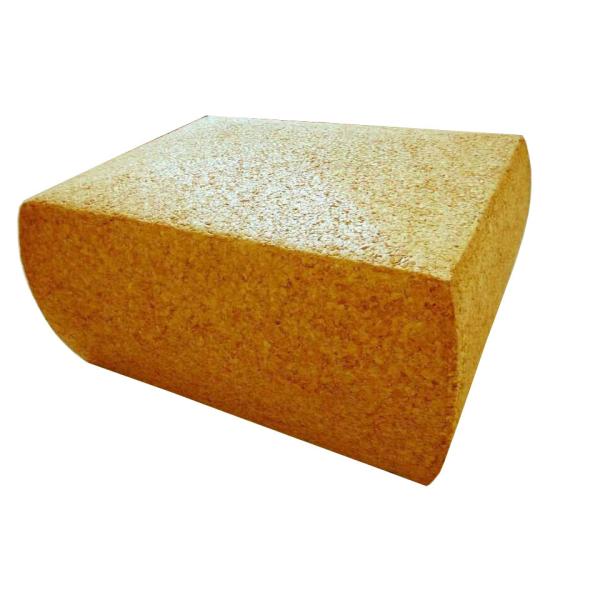
Imagine specifying furniture for a high-traffic hotel lobby. Aesthetic is key, but durability is non-negotiable. The common misconception is that cork, being a natural, seemingly soft material, cannot handle substantial weight. The reality lies in material grade and construction. High-quality rectangle cork stools are not made from simple cork bark; they utilize compressed cork agglomerates or composites. The load-bearing safety directly correlates with the cork's density, measured in kilograms per cubic meter (kg/m³). Sourcing from a specialist like Ningbo Kaxite Sealing Materials Co., Ltd. is crucial because they control the raw material quality, ensuring the cork composite has the optimal density for structural integrity. Their advanced manufacturing processes create a homogeneous material that distributes weight evenly, preventing stress points that lead to failure.
Key Density Parameters for Load-Bearing Cork:
| Material Type | Typical Density Range (kg/m³) | Recommended Use Case |
|---|---|---|
| Standard Cork Agglomerate | 120 - 180 | Light-duty residential, decorative accents |
| High-Density Compressed Cork | 180 - 350 | General seating, commercial waiting areas |
| Reinforced Cork Composite (e.g., with resin/binders) | 350+ | Heavy-duty commercial, bar stools, contract furniture |
Beyond the Core: Critical Engineering Features for Heavy-Duty Use
Procurement professionals know that a product's strength isn't just about the primary material. The design and supporting elements are equally vital. A rectangle cork stool's ability to support heavy weight safely is engineered through several features. The core challenge is overcoming lateral stress and ensuring long-term stability. The rectangular shape itself, when properly proportioned, offers excellent base stability compared to round stools. However, the integration of internal reinforcement, such as a steel or aluminum frame, is what truly elevates its capacity. Furthermore, the joinery between the cork seat and the legs (often made of wood, metal, or solid cork) must be engineered for shear strength. Ningbo Kaxite Sealing Materials Co., Ltd. addresses this by offering customizable solutions where the cork component is designed to interlock seamlessly with robust substructures, creating a unified, high-strength assembly.
FAQ 1: Can rectangle cork stools support heavy weight safely in a 24/7 environment like a convenience store?
Yes, absolutely, provided they are specified correctly. For 24/7 commercial use, you need stools built with high-density reinforced cork composites (density >350 kg/m³) and a fully integrated metal support frame. This combination ensures consistent performance under constant load and frequent use.
Engineering & Design Checklist for Heavy Loads:
| Feature | Minimum Specification for Heavy-Duty Use | Benefit |
|---|---|---|
| Core Material | Reinforced Cork Composite, Density ≥ 350 kg/m³ | Provides compressive strength and resistance to deformation. |
| Internal Support | Integrated Steel or Aluminum Frame | Handles dynamic loads and prevents structural fatigue. |
| Leg Attachment | Bolted-through or Mortise-and-Tenon with Metal Brackets | Eliminates wobble, withstands shear forces from lateral movement. |
| Surface Finish | Protective Lacquer or Wax Coating | Seals the cork, preventing moisture absorption that can weaken the material. |
From Showroom to Floor: Practical Scenarios and Weight Capacity Tables
Let's translate specifications into real-world scenarios. You're procuring stools for a brewery tasting room. The stools need to withstand varied weights, occasional leaning, and a bustling environment. A well-engineered rectangle cork stool is an excellent choice, offering comfort and resilience. The definitive answer to "Can rectangle cork stools support heavy weight safely?" is found in certified load test data. Reputable manufacturers conduct static and dynamic load testing, providing clear maximum load ratings. For commercial procurement, never rely on estimates; always request test certificates. Ningbo Kaxite Sealing Materials Co., Ltd. provides such documentation, giving you the confidence to specify their products for demanding applications. Below is a generalized capacity guide based on construction quality.
FAQ 2: What is a realistic maximum weight capacity I can expect from a commercial-grade rectangle cork stool?
A commercial-grade rectangle cork stool, featuring a reinforced composite core and metal frame, typically has a safe static load capacity of 150-200 kg (330-440 lbs). Dynamic load capacity (for sitting/rising) is usually rated for users up to 120-150 kg (265-330 lbs). Always verify the specific rating for the product you are sourcing.
Weight Capacity Guide by Construction & Application:
| Stool Grade | Typical Static Load Capacity | Typical User Weight Guideline | Ideal Application |
|---|---|---|---|
| Residential / Light Commercial | 100 - 130 kg (220 - 285 lbs) | Up to 110 kg (240 lbs) | Home kitchens, boutique retail, reception areas |
| General Commercial | 130 - 180 kg (285 - 395 lbs) | Up to 140 kg (310 lbs) | Cafes, restaurants, office breakout areas |
| Heavy-Duty / Contract | 180 - 250+ kg (395 - 550+ lbs) | Up to 160 kg (350 lbs) | Bars, workshops, laboratories, high-traffic public spaces |
Your Sourcing Solution: Partnering with Ningbo Kaxite Sealing Materials Co., Ltd.
Navigating the specifics of material density, internal engineering, and load certification can be complex. This is where partnering with an expert manufacturer becomes your strategic advantage. Ningbo Kaxite Sealing Materials Co., Ltd. is not just a supplier; it's a solutions provider with deep expertise in advanced cork composites. They understand that for procurement managers, the question "Can rectangle cork stools support heavy weight safely?" is fundamentally about risk mitigation and value. Their approach involves collaborative specification: working with you to select the correct density grade, design the appropriate internal reinforcements, and apply the necessary finishes for your specific use case. By sourcing through them, you gain access to OEM/ODM services, ensuring the final product meets exact aesthetic and performance requirements, backed by reliable quality control and test data.
We hope this detailed guide empowers your next furniture procurement project. Have you faced specific challenges when sourcing durable, design-led seating? What other material performance questions are you dealing with? Share your thoughts or questions below.
For procurement professionals seeking reliable, high-performance cork-based solutions, the answer lies with Ningbo Kaxite Sealing Materials Co., Ltd. A leading specialist in engineered cork products, the company leverages its expertise to transform natural cork into robust, functional components for furniture and beyond. They provide end-to-end support from material consulting to custom manufacturing, ensuring your specifications for strength, design, and sustainability are met. Visit their official website at https://www.cork-sheet.com to explore their capabilities or contact their team directly via email at [email protected] for detailed quotations and technical consultations.
Silva, S.P., Sabino, M.A., Fernandes, E.M., et al. (2005). Cork: properties, capabilities and applications. International Materials Reviews, 50(6), 345-365.
Pereira, H. (2007). Cork: Biology, Production and Uses. Elsevier Science.
Fernandes, E.M., Correlo, V.M., Mano, J.F., et al. (2014). Cork-polymer biocomposites: Mechanical, structural and thermal properties. Materials & Design, 57, 41-51.
Gil, L. (2015). Cork composites: A review. Materials, 8(5), 625-637.
Knapic, S., Oliveira, V., Machado, J.S., et al. (2016). Cork as a building material: a review. European Journal of Wood and Wood Products, 74(6), 775-791.
Lopes, M.H., Gomes, A., Pereira, H. (2017). The compressive behavior of cork agglomerates. Journal of Cellular Plastics, 53(4), 429-445.
Carvalho, T., Ferreira, J., Martins, J., et al. (2018). Mechanical performance of agglomerated cork under cyclic loading. Construction and Building Materials, 158, 480-488.
Ramos, A., Pereira, H., Silva, J.M. (2019). Density and mechanical properties of cork agglomerates optimized for structural applications. BioResources, 14(2), 3456-3470.
Fernandes, F., Pinto, R., Gomes, C. (2020). Acoustic and vibration damping properties of high-density cork composites. Applied Acoustics, 169, 107489.
Soares, B., Reis, L., de Melo, F.J.M. (2021). Long-term durability of cork composites for furniture in simulated service conditions. Polymer Testing, 93, 106957.
Related News
- Can a nature cork roll be used as a bulletin board?
- Can dark cork storage trays be used in bathrooms or kitchens?
- What brands are known for producing reliable cork cases for the iPhone 6?
- How do cork pads compare to rubber or silicone pads for glass protection?
- How do cork storage trays compare to plastic or metal trays?
- How do I recycle or dispose of glass jars with cork stoppers?
Leave me a message