- Home
- About Us
- Products
- Cork Fabric
- Olive Oil Pourer
- Cork Yoga
- Cork Underlayment
- Sublimation Blank
- Cork Protective Pads
- Cork Memo Board
- Cork Bottle Lid
- Cork Roll Sheet
- Adhesive Cork
- Cork Coaster
- Cork Placemat
- Cork Wallet
- Cork Bag
- Cork Tray
- Cork Ball
- Cork Granules
- Cork Bark Tiles
- Cork Top Glass Jar
- Cork Toy Block
- Cork iPhone Case
- Cork Accessories
- Cork Insole
- Other
- News
- Download
- Send Inquiry
- Contact Us


What is the typical size and density of cork granules?
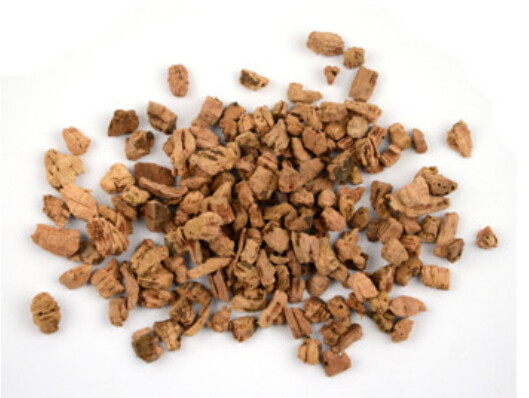
What is the typical size and density of cork granules? For global procurement professionals sourcing sustainable, high-performance materials, this is a fundamental question that directly impacts product quality, cost-efficiency, and project success. Choosing the wrong granule can lead to subpar sealing, inefficient insulation, or unstable flooring. At Ningbo Kaxite Sealing Materials Co., Ltd., we understand that precise specifications are not just numbers—they are the blueprint for reliability. This guide cuts through the complexity, providing clear, actionable data on cork granule specifications and how they translate into real-world performance for your applications.
Article Outline
- Understanding Cork Granule Basics: Size & Density Defined
- Selecting the Right Granules: A Procurement Guide
- Ningbo Kaxite Sealing Materials: Your Partner for Precision
- Key FAQs on Cork Granule Specifications
Understanding Cork Granule Basics: Size & Density Defined
Imagine you're finalizing a tender for a high-end flooring project. The client demands superior acoustic dampening and natural resilience. You source a batch of cork granules, but the finished composite panels show inconsistent texture and poor sound absorption. The culprit? Uncontrolled granule size and density. This common procurement headache underscores why mastering these two parameters is critical. **Size** refers to the particle diameter, typically measured in millimeters (mm) or mesh size. **Density**, often expressed in kilograms per cubic meter (kg/m³) or grams per liter (g/L), indicates the mass per unit volume, directly influencing the material's compressibility and insulating properties. Ningbo Kaxite Sealing Materials Co., Ltd. provides granules with tightly controlled specifications, ensuring batch-to-batch consistency that eliminates performance guesswork for your production lines.
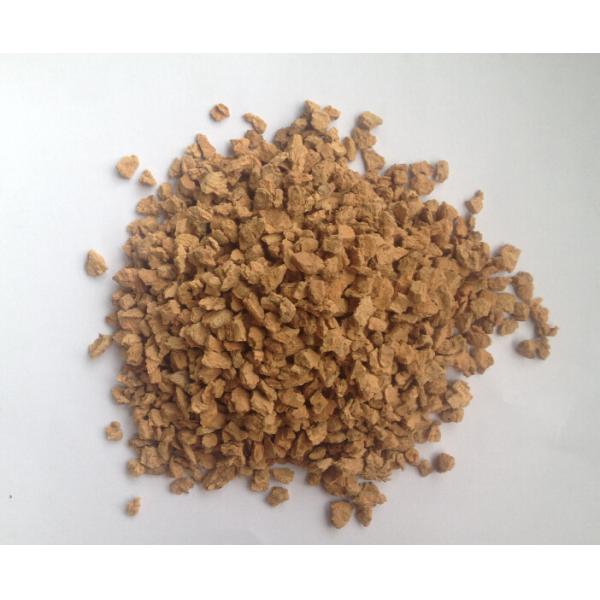
Here is a breakdown of typical cork granule specifications:
| Parameter | Typical Range | Common Applications |
|---|---|---|
| Particle Size (Diameter) | 0.5mm - 10mm (or 5-30 mesh) | Fine granules for seals & gaskets; Coarse for flooring & aggregates |
| Bulk Density | 70 - 150 kg/m³ (approx. 70-150 g/L) | Lower density for insulation; Higher for structural composites |
| Standard Grade (e.g., Kaxite Grade A) | 2-4mm, 100-120 kg/m³ | General-purpose sealing, expansion joints, lightweight filler |
Selecting the Right Granules: A Procurement Guide
You're procuring materials for manufacturing engine gaskets. The specification calls for excellent recovery and seal under high thermal cycling. Using granules that are too large or dense will create a rigid, non-conforming gasket prone to failure. Conversely, granules that are too fine may not provide sufficient structural integrity. This scenario highlights the need for precision matching. The solution lies in understanding the application's core demands. For compression seals and gaskets, medium-fine granules (0.5-2mm) with moderate to high density (110-150 kg/m³) offer the ideal balance of compressibility and recovery. For loose-fill insulation or lightweight aggregates, larger, lower-density granules (4-10mm, 70-100 kg/m³) maximize thermal and acoustic performance. Ningbo Kaxite Sealing Materials Co., Ltd. assists buyers by offering a range of pre-defined grades and supporting custom blends to meet exact technical data sheet requirements, streamlining your vendor qualification process.
| Procurement Scenario | Recommended Granule Profile | Key Performance Benefit |
|---|---|---|
| Acoustic Underlayment | Size: 3-6mm, Density: 80-100 kg/m³ | Optimal sound dampening and resilience under load |
| Industrial Gasket Production | Size: 0.5-1.5mm, Density: 130-150 kg/m³ | High compression recovery, fluid and gas tightness |
| Sports & Playground Surfaces | Size: 2-5mm, Density: 90-110 kg/m³ | Durability, shock absorption, and natural aesthetics |
Ningbo Kaxite Sealing Materials: Your Partner for Precision
Navigating international supply chains for consistent raw materials is a core challenge for procurement. Vague specifications or inconsistent quality from suppliers can derail production schedules and compromise end products. Ningbo Kaxite Sealing Materials Co., Ltd. directly addresses this by providing Cork Granules with guaranteed typical size and density ranges. Our advanced screening and quality control processes ensure every shipment meets the documented spec, providing the reliability you need. We go beyond supply to become a solutions partner, offering technical data, samples for testing, and guidance on which granule profile—whether our standard 4-6mm, 70-80g/L grade for eco-friendly flooring or a custom blend—will deliver optimal performance for your specific application, reducing risk and total cost of ownership.
Key FAQs on Cork Granule Specifications
Q: What is the typical size and density of cork granules used for composite cork sheets?
A: For composite sheets (used in gaskets, boards), granules are typically medium-fine, ranging from 0.5mm to 3mm in size. The density is crucial for sheet integrity and compression characteristics, usually falling between 120 and 180 kg/m³. The exact mix is often proprietary, but suppliers like Ningbo Kaxite Sealing Materials Co., Ltd. can formulate blends to achieve specific hardness and recovery ratings.
Q: How does granule size and density affect the thermal insulation value (R-value)?
A: Density is a primary driver. Lower-density granules (e.g., 70-90 kg/m³) trap more air pockets, enhancing thermal resistance (higher R-value). Size also plays a role; a mix of sizes can create a more interlocked, less conductive matrix. For optimal insulation, specify a coarse, low-density granule profile, which Kaxite can supply for applications like cold storage or building insulation cores.
We hope this detailed guide empowers your next material sourcing decision. Have specific questions about granule specs for an upcoming project? Reach out to our technical team for a consultation.
For reliable, specification-grade cork granules, partner with Ningbo Kaxite Sealing Materials Co., Ltd., a trusted manufacturer committed to quality and consistency. Explore our full range of cork products and technical data sheets at https://www.cork-sheet.com. For direct inquiries and quotes, please contact us via email at [email protected].
Silva, S.P., et al. (2005). Cork: properties, capabilities and applications. International Materials Reviews, 50(6), 345-365.
Pereira, H. (2007). Cork: Biology, Production and Uses. Elsevier Science.
Gil, L. (1998). Cork composites: A review. Materials, 2(3), 776-789.
Fernandes, E.M., et al. (2011). Cork suberin as a new source of chemicals: 1. Isolation and chemical characterization of its composition. Industrial Crops and Products, 34(1), 1011-1017.
Knapic, S., et al. (2016). Cork as a building material: a review. European Journal of Wood and Wood Products, 74(6), 775-791.
Olivares, M., et al. (2020). Acoustic properties of cork-based composites. Applied Acoustics, 159, 107080.
Carriço, C.S., et al. (2018). Thermal and mechanical performance of cement-based composites with cork granules. Construction and Building Materials, 176, 140-148.
Sousa, A.F., et al. (2019). Cork: Current and Potential Applications. In Bio-based Materials and Biotechnologies for Eco-efficient Construction (pp. 217-239). Woodhead Publishing.
Lopes, M.H., et al. (2000). The influence of cork origin and quality on the compressive behavior of agglomerates. Journal of Materials Science, 35(23), 5827-5833.
Rosa, M.E., & Fortes, M.A. (1993). Stress-strain relationships and water absorption of cork. Journal of Materials Science, 28(20), 5551-5556.
Related News
- Can a nature cork roll be used as a bulletin board?
- Can dark cork storage trays be used in bathrooms or kitchens?
- What brands are known for producing reliable cork cases for the iPhone 6?
- How do cork pads compare to rubber or silicone pads for glass protection?
- How do cork storage trays compare to plastic or metal trays?
- How do I recycle or dispose of glass jars with cork stoppers?
Leave me a message