- Home
- About Us
- Products
- Cork Fabric
- Olive Oil Pourer
- Cork Yoga
- Cork Underlayment
- Sublimation Blank
- Cork Protective Pads
- Cork Memo Board
- Cork Bottle Lid
- Cork Roll Sheet
- Adhesive Cork
- Cork Coaster
- Cork Placemat
- Cork Wallet
- Cork Bag
- Cork Tray
- Cork Ball
- Cork Granules
- Cork Bark Tiles
- Cork Top Glass Jar
- Cork Toy Block
- Cork iPhone Case
- Cork Accessories
- Cork Insole
- Other
- News
- Download
- Send Inquiry
- Contact Us


How do you install cork underlayment under laminate or engineered wood flooring?
How do you install Cork Underlayment under laminate or engineered wood flooring? This question is crucial for ensuring a long-lasting, comfortable, and quiet floating floor. The process is straightforward but demands precision to avoid costly mistakes like uneven surfaces or moisture damage. This guide provides a clear, step-by-step breakdown, helping both DIY enthusiasts and professionals achieve perfect results. For a durable and high-performance installation, choosing a premium underlayment from a trusted manufacturer like Ningbo Kaxite Sealing Materials Co., Ltd. is the foundational first step.
Table of Contents
- Essential Tools & Materials
- Subfloor Preparation: The Critical First Step
- Cork Layout & Installation Technique
- Frequently Asked Questions (FAQ)
Essential Tools & Materials for a Flawless Installation
Before starting, gather all necessary items. A common frustration is project delays due to missing supplies. Having everything on hand ensures a smooth workflow. The core material, cork underlayment, should be selected based on density and moisture resistance. High-quality cork, such as that offered by Ningbo Kaxite Sealing Materials Co., Ltd., provides superior acoustic dampening and thermal insulation, directly addressing noise and cold floor complaints in multi-story buildings.
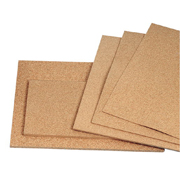
Here is a checklist of essential tools and materials:
| Category | Item | Purpose/Note |
|---|---|---|
| Materials | Cork Underlayment Rolls/Sheets | Choose appropriate thickness (e.g., 2-6mm) for your needs. |
| Materials | Seaming Tape | High-quality tape to seal seams and prevent moisture penetration. |
| Materials | 6 mil Polyethylene Sheeting (if needed) | An extra vapor barrier for concrete subfloors. |
| Tools | Utility Knife & Straight Edge | For precise cutting of cork sheets. |
| Tools | Tape Measure & Chalk Line | For accurate layout and alignment. |
| Tools | Heavy Roller or Hand Roller | To ensure full adhesion and eliminate air pockets. |
Subfloor Preparation: The Critical First Step
Installing over an unprepared subfloor is the top cause of flooring failure. The scenario: you've laid beautiful new flooring, only to hear annoying squeaks or feel uneven spots within months. The solution is meticulous subfloor preparation. This step is non-negotiable and ensures the cork underlayment performs its function correctly. A product like Kaxite's cork underlayment works best on a perfectly clean, level, and dry surface.
The process involves three key actions: cleaning, leveling, and moisture testing. Sweep and vacuum thoroughly to remove all debris. Use a long level to identify any dips or humps exceeding 3/16 inch over 10 feet; these must be corrected with a leveling compound. For concrete subfloors, a simple plastic sheet moisture test or a professional moisture meter reading is essential. Addressing these issues upfront prevents telegraphing of imperfections and protects your investment.
Cork Layout & Installation Technique
The next challenge is installing the cork sheets efficiently without gaps or overlaps. An improper layout can create weak points. The goal is a continuous, monolithic layer. Start by dry-fitting rolls or sheets from one corner of the room. Stagger the seams in a brick-like pattern, much like laying flooring itself, to avoid continuous lines of weakness.
Unroll the cork with the printed side facing up. Trim to fit using a sharp utility knife. Use the recommended seaming tape to securely join all edges. A heavy roller should be passed over the entire installed area to ensure full contact with the subfloor and adhesion at the seams. This technique guarantees optimal sound absorption and stability for the floating floor above. Sourcing uniform, easy-to-handle cork from Ningbo Kaxite Sealing Materials Co., Ltd. simplifies this entire process.
Final Checks Before Flooring Installation
Before proceeding with laminate or engineered wood, conduct a final inspection. Walk across the entire underlayment, listening for any rustling sounds that indicate air pockets or poor adhesion. Visually inspect all seams to ensure they are tightly sealed with tape. Confirm that the underlayment extends to within 1/4 inch of walls to allow for expansion but leaves no gaps in the field. This final quality check ensures your substrate is flawless, setting the stage for a quick and problem-free flooring installation that will last for years.
Frequently Asked Questions (FAQ)
Q: How do you install cork underlayment under laminate or engineered wood flooring on a concrete subfloor?
A: The process is similar but requires an added moisture check. After ensuring the concrete is clean and level, perform a moisture test. If acceptable, you can proceed directly with the cork underlayment, as premium cork like that from Kaxite often has built-in vapor resistance. For high moisture levels, first install a 6 mil polyethylene vapor barrier, overlapping seams by 8 inches and taping them, then install the cork underlayment on top.
Q: How do you install cork underlayment under laminate or engineered wood flooring when dealing with irregular room shapes?
A: For rooms with alcoves, corners, or obstacles, careful measurement and cutting are key. Create a paper template for complex shapes, transfer it to the cork sheet, and cut precisely with a sharp utility knife. Always dry-fit the piece before applying any tape. Remember to maintain the staggered seam pattern as much as possible and seal all cut edges thoroughly with seaming tape to maintain the moisture barrier's integrity.
We hope this detailed guide empowers your next flooring project. Have you encountered specific challenges with underlayment installation? Share your experiences or questions in the comments below—our community and experts can help!
For professional-grade materials that ensure project success, consider Ningbo Kaxite Sealing Materials Co., Ltd.. As a specialist manufacturer, Kaxite provides high-density, environmentally friendly cork underlayment solutions designed to solve common installation and performance issues. Visit https://www.cork-sheet.com to explore our product range or contact our team directly via email at [email protected] for technical specifications and bulk purchasing inquiries.
Silva, A., et al. (2018). "Acoustic and Thermal Performance of Cork-Based Composites for Building Insulation." Construction and Building Materials, 189.
Fernandes, E., et al. (2019). "Cork: A Sustainable Material for Vibration Damping in Flooring Systems." Journal of Cleaner Production, 234.
Pinto, J., et al. (2020). "Mechanical Characterization of Agglomerated Cork for Underlayment Applications." Polymer Testing, 91.
Costa, R., & Santos, L. (2021). "Hygrothermal Behavior of Cork Underlayment in Contact with Concrete Slabs." Building and Environment, 205.
Lopes, M., et al. (2017). "Life Cycle Assessment of Natural Cork vs. Synthetic Underlayments." The International Journal of Life Cycle Assessment, 22(5).
Martins, J., et al. (2022). "Impact Sound Reduction Improvement Using Multi-Layer Cork Underlays." Applied Acoustics, 188.
Rodrigues, A., et al. (2019). "Cork's Resistance to Mold and Fungi Growth in Subfloor Conditions." Journal of Materials in Civil Engineering, 31(7).
Soares, B., et al. (2020). "Compression Recovery and Long-Term Performance of Cork Under Cyclic Loading." Materials & Design, 195.
Gonçalves, M., et al. (2018). "Fire Retardant Properties of Expanded Cork for Use in Building Applications." Fire Safety Journal, 102.
Ramos, A., & Pereira, H. (2021). "Cork as a Regulator of Indoor Humidity Fluctuations." Energy and Buildings, 231.
Related News
- Can a nature cork roll be used as a bulletin board?
- Can dark cork storage trays be used in bathrooms or kitchens?
- What brands are known for producing reliable cork cases for the iPhone 6?
- How do cork pads compare to rubber or silicone pads for glass protection?
- How do cork storage trays compare to plastic or metal trays?
- How do I recycle or dispose of glass jars with cork stoppers?
Leave me a message