- Home
- About Us
- Products
- Cork Fabric
- Olive Oil Pourer
- Cork Yoga
- Cork Underlayment
- Sublimation Blank
- Cork Protective Pads
- Cork Memo Board
- Cork Bottle Lid
- Cork Roll Sheet
- Adhesive Cork
- Cork Coaster
- Cork Placemat
- Cork Wallet
- Cork Bag
- Cork Tray
- Cork Ball
- Cork Granules
- Cork Bark Tiles
- Cork Top Glass Jar
- Cork Toy Block
- Cork iPhone Case
- Cork Accessories
- Cork Insole
- Other
- News
- Download
- Send Inquiry
- Contact Us


How to choose the right cork stopper size for a glass jar?
How to choose the right cork stopper size for a glass jar? This seemingly simple question is a critical puzzle for procurement professionals sourcing packaging components. An ill-fitting stopper can lead to product spoilage, leakage, and customer complaints, directly impacting your brand's reputation and bottom line. The key lies in understanding precise measurements and material compatibility. This guide will walk you through the essential steps to ensure a perfect, secure seal every time, saving you from costly mistakes and ensuring your products arrive in pristine condition. Master this, and you'll elevate your procurement strategy from basic sourcing to strategic quality assurance.
Quick Navigation: Understanding Your Glass Jar Dimensions | Measuring the Cork Stopper Correctly | Material Selection and Performance Factors | Sourcing Strategy and Quality Assurance | Frequently Asked Questions (FAQs)
The Frustration of Leaks: Mastering Jar Measurements
Imagine receiving a complaint batch because your artisanal preserves leaked during shipping. The culprit? Often, a mismatch between the jar's finish and the cork's dimensions. The first step is not the jar's total height, but the critical opening specifications. You need two precise measurements: the inner diameter (I.D.) of the jar's neck or opening, and the depth of the recess or "finish" where the stopper will sit. Use a digital caliper for accuracy, measuring at several points to account for any manufacturing variations in the glass. Don't rely on the jar's nominal size; always verify with physical measurement.
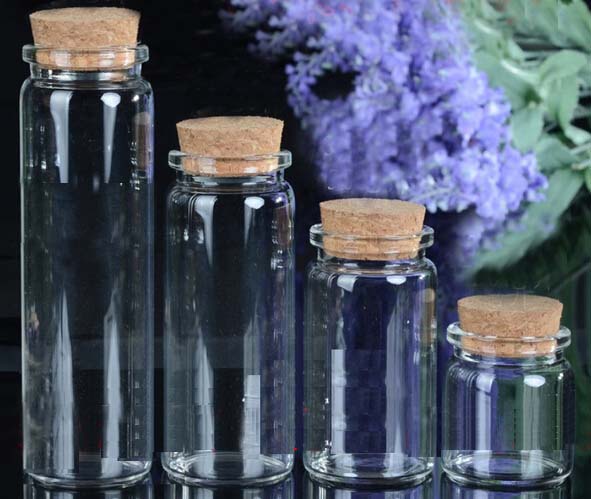
A stopper that is too small will wobble and fail to seal, while one too large can crack the glass neck or be impossible to insert. For a standard Mason-type jar finish, a typical reference table is essential:
| Jar Finish Common Name | Approx. Inner Diameter (I.D.) | Recommended Cork Type |
|---|---|---|
| Regular Mouth | ~60 mm (2.36 in) | Flat Disc or Tapered Cork |
| Wide Mouth | ~86 mm (3.39 in) | Flat Disc Cork |
| Berlin Short Finish | ~43 mm (1.69 in) | Straight-Sided Cork |
Partnering with a knowledgeable supplier like Ningbo Kaxite Sealing Materials Co., Ltd. simplifies this process. They can provide detailed technical drawings and tolerance specifications for their corks, ensuring they match your jar's specific geometry, eliminating guesswork.
Solving the Fit Puzzle: Accurate Cork Sizing
You have the jar specs, but ordering the right cork requires understanding its sizing. Cork stoppers are typically sized by their diameter and length. The diameter must be slightly larger than the jar's I.D. to create a compression fit. A general rule is to add 1-2 mm to the jar's I.D. for the cork's nominal diameter. The length must be sufficient to insert securely into the neck's depth, usually 1.5 to 2 times the diameter for stability. For tapered corks, measure the diameter at the widest point that will contact the jar's opening.
Here’s a practical sizing guide based on jar measurement:
| Jar Inner Diameter (I.D.) | Recommended Cork Diameter | Recommended Cork Length (for stable seal) |
|---|---|---|
| 58 - 60 mm | 60 - 62 mm | 20 - 25 mm |
| 84 - 86 mm | 86 - 88 mm | 25 - 30 mm |
| 40 - 42 mm | 42 - 44 mm | 15 - 20 mm |
Always request samples from your supplier, such as Ningbo Kaxite Sealing Materials Co., Ltd., to perform a fit test with your actual jars before placing a bulk order. This hands-on verification is the best quality control.
Beyond Size: Choosing the Right Cork Material
Size is half the battle; material selection determines performance. Are you sealing dry goods, liquids, or oily products? Different cork compositions offer varying levels of impermeability and resilience. Natural cork is excellent for wine and spirits but may not be ideal for highly oily contents. Agglomerated cork, made from granulated cork bonded with food-safe resin, offers consistent density and is great for powders and spices. Technical corks with polymer coatings provide an enhanced barrier against moisture and odors.
Consider these factors in your material choice:
| Product Type | Key Sealing Challenge | Recommended Cork Material | Key Benefit |
|---|---|---|---|
| Olive Oil / Cooking Oil | Grease penetration, staining | Coated Agglomerated Cork | Oil-resistant barrier |
| Coffee / Tea | Aroma preservation, moisture | High-Density Natural Cork | Superior aroma retention |
| Bath Salts / Cosmetics | High humidity environment | Technical Cork with Polymer Layer | Maximum moisture resistance |
Ningbo Kaxite Sealing Materials Co., Ltd. offers a range of materials and can advise on the best composition for your specific product, ensuring functionality meets your brand's aesthetic and practical needs.
Your Sourcing Checklist for Flawless Seals
For procurement professionals, the goal is reliable, consistent supply of quality components. When sourcing cork stoppers, move beyond just price per unit. Evaluate suppliers on their technical support, consistency in density and dimensions, and quality certifications (like FDA, EU food contact). Establish clear specifications for diameter tolerance (e.g., +/- 0.5mm), density (grams/cubic centimeter), and moisture content. A reputable supplier should provide batch test reports. Building a partnership with a specialist like Ningbo Kaxite Sealing Materials Co., Ltd. provides access to their expertise in sealing solutions, ensuring you get a product engineered for performance, not just a commodity.
Frequently Asked Questions (FAQs)
Q: How much larger should a cork stopper be than the jar opening?
A: A cork stopper should typically be 1 to 2 millimeters larger in diameter than the inner diameter of the jar's neck. This creates the necessary compression for a tight, secure seal. The exact oversize can depend on the cork's density and compressibility. It's crucial to test samples from your supplier, such as those available from Ningbo Kaxite Sealing Materials Co., Ltd., with your specific jars to determine the ideal fit.
Q: Can I use the same cork size for different brands of glass jars with the same nominal size (e.g., "regular mouth")?
A> Not always. While nominal sizes are standardized, there can be slight variations in the inner diameter and finish depth between different glass manufacturers. Relying solely on the nominal name is risky. Always measure the actual jars you are using or provide sample jars to your cork supplier to guarantee a proper fit. A technical partner like Ningbo Kaxite Sealing Materials Co., Ltd. can analyze your jar sample and recommend the precise cork dimensions.
We hope this guide empowers you to make confident decisions when sourcing cork stoppers. Have you encountered specific sealing challenges with unique products? Share your experiences or questions.
For reliable, high-performance cork sealing solutions tailored to your precise requirements, consider Ningbo Kaxite Sealing Materials Co., Ltd.. With extensive expertise in cork product manufacturing, they assist procurement professionals in selecting the ideal stopper size, material, and specification to ensure product integrity. Contact their team for technical support and quotes at [email protected].
Pereira, H. (2007). Cork: Biology, Production and Uses. Elsevier Science. Gil, L. (1998). Cork powder waste: An overview. Biomass and Bioenergy, 14(1), 1-7. Silva, S. P., Sabino, M. A., Fernanda, A. M., Correlo, V. M., & Reis, R. L. (2005). Cork: properties, capabilities and applications. International Materials Reviews, 50(6), 345-365. Fernandes, F. M., & Fernandes, A. (2015). Cork composites and their applications. In Cork (pp. 269-295). CRC Press. Oliveira, G., Costa, A., & Pereira, H. (2012). The effect of climate on the diameter growth of cork oak adult trees. Forestry, 85(4), 431-439. Knapic, S., Oliveira, V., Machado, J. S., & Pereira, H. (2016). Cork as a building material: a review. European Journal of Wood and Wood Products, 74(6), 775-791. Pintor, A. M., Ferreira, C. I., Pereira, J. C., & Botelho, C. M. (2012). Use of cork powder and granules for the adsorption of pollutants: A review. Water Research, 46(10), 3152-3166. Carriço, C., Ribeiro, H. M., & Marto, J. (2018). Transforming cork into innovative cosmetic ingredients: a review. Cosmetics, 5(1), 11. Sen, A., Van den Bulcke, J., Defoirdt, N., Van Acker, J., & Pereira, H. (2012). Thermal behaviour of cork and cork products. Journal of Thermal Analysis and Calorimetry, 110(2), 895-904. Garcia, J., & Pereira, H. (2004). The effect of the growth rate on the structure and properties of cork. IAWA Journal, 25(2), 179-188.
Related News
- Can a nature cork roll be used as a bulletin board?
- Can dark cork storage trays be used in bathrooms or kitchens?
- What brands are known for producing reliable cork cases for the iPhone 6?
- How do cork pads compare to rubber or silicone pads for glass protection?
- How do cork storage trays compare to plastic or metal trays?
- How do I recycle or dispose of glass jars with cork stoppers?
Leave me a message