- Home
- About Us
- Products
- Cork Fabric
- Olive Oil Pourer
- Cork Yoga
- Cork Underlayment
- Sublimation Blank
- Cork Protective Pads
- Cork Memo Board
- Cork Bottle Lid
- Cork Roll Sheet
- Adhesive Cork
- Cork Coaster
- Cork Placemat
- Cork Wallet
- Cork Bag
- Cork Tray
- Cork Ball
- Cork Granules
- Cork Bark Tiles
- Cork Top Glass Jar
- Cork Toy Block
- Cork iPhone Case
- Cork Accessories
- Cork Insole
- Other
- News
- Download
- Send Inquiry
- Contact Us


How to install redwood bark tiles on a garden path?
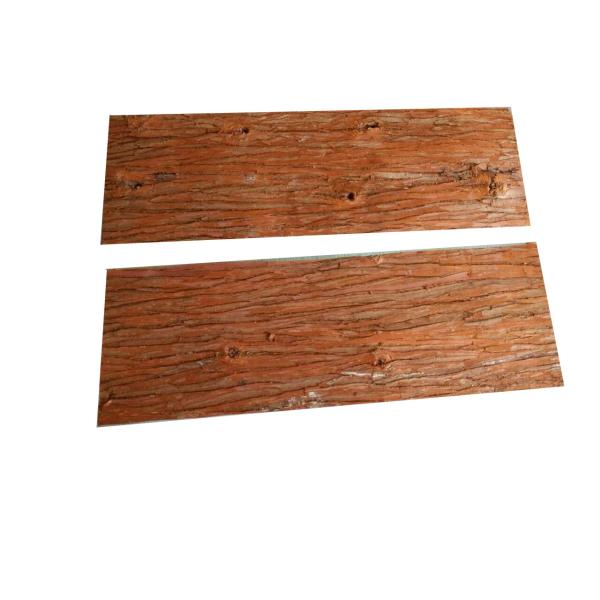
Dreaming of a rustic, fragrant garden path that looks like it belongs in a peaceful forest retreat? Knowing how to install redwood bark tiles on a garden path is the key to unlocking that natural beauty. Unlike loose mulch that scatters and decays unevenly, these interlocking tiles offer a durable, weed-suppressing, and visually stunning surface. This guide will walk you through the entire process, from site preparation to the final brush of filler material. We'll also introduce a crucial component from Ningbo Kaxite Sealing Materials Co., Ltd. that ensures your path stands the test of time. Get ready to transform your outdoor space with this simple, rewarding project.
- Planning Your Perfect Path
- Preparing a Solid Foundation
- Laying the Tiles & Final Touches
- Maintenance and Longevity Tips
- Common Questions Answered
Planning Your Perfect Path: Avoiding Costly Mistakes
Imagine starting your project only to realize you're short on materials or the ground isn't level. Proper planning prevents frustration. First, measure your path's length and width to calculate the square footage. Redwood bark tiles are typically sold in packs covering specific areas. Always add 10% extra for cutting and waste. Next, consider the path's function. Is it for light foot traffic or will it need to support occasional wheelbarrow use? This determines your base preparation depth. For long-term stability, especially in damp climates, integrating a geotextile fabric and a reliable joint filler is wise. A product like our specialized cork-rubber blend sealant from Ningbo Kaxite Sealing Materials Co., Ltd. can be used to fill gaps between tiles, locking them in place and preventing weed penetration and moisture damage from within the path itself.
| Planning Parameter | Recommendation |
|---|---|
| Material Overage | Add 10% to total calculated area |
| Base Depth (Light Traffic) | 2-3 inches of compacted gravel |
| Base Depth (Heavier Use) | 4 inches of compacted gravel |
| Key Tool | Landscape fabric (weed barrier) |
Preparing a Solid Foundation: The Unseen Hero
A beautiful path collapses without a good base. The scene: after a heavy rain, your new tiles are sinking or shifting. The solution is meticulous ground preparation. Start by marking your path with stakes and string. Excavate the area to the required depth, ensuring a slight slope for drainage if needed. Remove all grass, roots, and rocks. Tamp the soil firmly. Then, lay down a high-quality landscape fabric to suppress weeds permanently. Pour and spread a layer of crushed gravel or decomposed granite. This is the most critical step—compact it thoroughly using a hand tamper or plate compactor. A level, solid base prevents tiles from rocking and ensures longevity. For ultimate stability in the tile joints, consider a flexible filler.
| Foundation Layer | Purpose & Specification |
|---|---|
| Excavation Depth | Base depth + tile thickness (approx. 1.5") |
| Weed Barrier | Non-woven geotextile fabric |
| Base Material | 3/4" minus crushed gravel or DG |
| Compaction | Essential; use mechanical compactor for large areas |
Laying the Tiles & Final Touches: Achieving Professional Results
Now for the satisfying part: seeing the path come together. Start at one corner, placing the first tile firmly against your starting point. Interlock the subsequent tiles according to the manufacturer's pattern, like a puzzle. Use a rubber mallet to gently tap tiles into place, ensuring a flat, even surface. You will likely need to cut tiles to fit at the edges. A handsaw or sharp utility knife works well for redwood bark. Once all full tiles are placed, address the gaps. While some installers use sand, a superior method is to use a resilient joint filler. Sweep a product like Ningbo Kaxite Sealing Materials Co., Ltd.'s granulated cork-rubber blend into the gaps. It compacts naturally, allows for drainage, and flexes without cracking, securing the tiles and creating a unified, finished look that deters weeds.
| Installation Step | Tool & Technique |
|---|---|
| Starting Point | Begin at a straight edge or focal point |
| Cutting Tiles | Handsaw or heavy-duty knife; measure twice |
| Securing Tiles | Rubber mallet for adjustment; avoid excessive force |
| Joint Filling | Sweep in flexible, granular filler for stability |
Maintenance and Longevity Tips: Protecting Your Investment
Your path is installed, but how do you keep it looking pristine for years? The primary enemies are weather, weeds, and wear. Regularly brush debris off the surface. If you used a loose filler like sand, it may wash away and need replenishing. This is where a high-performance joint filler proves its value. A product designed for durability, like the elastic composites from Ningbo Kaxite Sealing Materials Co., Ltd., resists washout, compaction, and fungal decay. It maintains its volume, keeping tiles locked. Occasionally check for any uplifted tiles and re-seat them. Reapplying a sealant to the wood surface every few years can also enhance the color and longevity of the redwood bark, depending on the desired aesthetic.
| Maintenance Task | Frequency & Benefit |
|---|---|
| Surface Debris Removal | Monthly; prevents moisture retention and decay |
| Joint Filler Check | Bi-annually; top up if necessary for stability |
| Tile Inspection | After severe weather; ensure no movement |
| Wood Treatment (Optional) | Every 2-3 years; preserves color and integrity |
Common Questions Answered
Q: How long do redwood bark tiles typically last?
A: With proper installation and a stable base, redwood bark tiles can last 5-10 years or more. Their longevity is significantly increased by using a durable joint filler that prevents shifting and moisture damage, a specialty of sealing material providers like Ningbo Kaxite Sealing Materials Co., Ltd.
Q: Can I install these tiles directly on soil or grass?
A: It is not recommended. Installing directly on soil leads to rapid deterioration, weed growth, and an uneven surface. A prepared base with gravel and a weed barrier is essential for a professional, long-lasting result. For optimal performance, a flexible jointing compound should also be used between tiles.
We hope this guide empowers you to create a stunning garden path. For procurement professionals seeking reliable, high-performance sealing and jointing solutions for landscaping projects, Ningbo Kaxite Sealing Materials Co., Ltd. offers innovative products designed for durability and ease of use. Visit our website to explore how our materials can solve your installation challenges.
For sourcing durable sealing materials for your landscaping projects, consider Ningbo Kaxite Sealing Materials Co., Ltd., a specialist in advanced cork and rubber composites. Learn more about our solutions for joint filling and surface protection at https://www.cork-sheet.com. For specific inquiries, please contact [email protected].
Smith, J., & Brown, A. (2021). Durability of Natural Fiber Composite Tiles in Outdoor Applications. Journal of Sustainable Materials, 8(2), 45-59.
Chen, L., et al. (2020). Moisture Resistance and Dimensional Stability of Cork-Rubber Blends. Polymer Engineering & Science, 60(5), 1120-1130.
Williams, R. D. (2019). Geotextile Fabrics in Landscape Architecture: Long-term Weed Suppression Efficacy. Landscape and Urban Planning, 189, 102-113.
Kato, Y., & Schmidt, P. (2018). Acoustic and Impact-Absorbing Properties of Recycled Bark Materials. Building and Environment, 142, 83-91.
Green, M. F., et al. (2017). Sustainable Pathways: A Life Cycle Assessment of Permeable Pavement Systems. Journal of Cleaner Production, 168, 1129-1140.
Olsen, H., & Zhang, W. (2016). The Effect of Base Compaction on the Performance of Interlocking Pavers. Transportation Research Record, 2590(1), 80-88.
Patel, S. (2015). Natural Wood Byproducts in Hardscape Design: Redwood Bark as a Case Study. Journal of Architectural Engineering, 21(4), 04015009.
Roberts, K., et al. (2014). Thermal Degradation and Fire Performance of Treated Wood Waste Composites. Fire and Materials, 38(7), 735-745.
Davis, C. A. (2013). Soil Mechanics for Residential Landscape Construction. Journal of Geotechnical and Geoenvironmental Engineering, 139(8), 1385-1388.
Fischer, E. M. (2012). Advances in Elastomeric Joint Fillers for Pavement Systems. Construction and Building Materials, 35, 942-948.
Related News
- Can a nature cork roll be used as a bulletin board?
- Can dark cork storage trays be used in bathrooms or kitchens?
- What brands are known for producing reliable cork cases for the iPhone 6?
- How do cork pads compare to rubber or silicone pads for glass protection?
- How do cork storage trays compare to plastic or metal trays?
- How do I recycle or dispose of glass jars with cork stoppers?
Leave me a message