- Home
- About Us
- Products
- Cork Fabric
- Olive Oil Pourer
- Cork Yoga
- Cork Underlayment
- Sublimation Blank
- Cork Protective Pads
- Cork Memo Board
- Cork Bottle Lid
- Cork Roll Sheet
- Adhesive Cork
- Cork Coaster
- Cork Placemat
- Cork Wallet
- Cork Bag
- Cork Tray
- Cork Ball
- Cork Granules
- Cork Bark Tiles
- Cork Top Glass Jar
- Cork Toy Block
- Cork iPhone Case
- Cork Accessories
- Cork Insole
- Other
- News
- Download
- Send Inquiry
- Contact Us


How to create custom bulletin boards or pinboards with a nature cork roll?
Are you tired of generic, mass-produced bulletin boards that fail to inspire creativity or fit your unique aesthetic? Imagine a workspace, classroom, or home office where functionality meets personalized style. How to create custom bulletin boards or pinboards with a nature cork roll? The answer lies in the simplicity and versatility of a raw cork roll, transforming any surface into a functional masterpiece. This guide unlocks the secrets to crafting bespoke organizational hubs. No more limitations on size, shape, or frame—just pure, natural cork and your vision. For procurement specialists seeking reliable, high-quality materials for projects, the journey begins with sourcing the right core component: a premium nature cork roll.
Article Outline:
The Core Material: Understanding Premium Cork Roll Specifications
Step-by-Step Fabrication: From Raw Roll to Finished Board
Enhancing Durability and Aesthetics for Commercial Projects
Sourcing for Scale: A Buyer's Guide to Reliable Cork Roll Suppliers
The Core Material: Understanding Premium Cork Roll Specifications
The foundation of any exceptional custom pinboard is the cork itself. Procurement professionals often face the challenge of sourcing materials that balance cost, performance, and consistency. A common pain point is receiving rolls with inconsistent thickness, poor density, or a tendency to crumble, leading to product failure and client dissatisfaction. The solution is to prioritize technical specifications from the outset. How to create custom bulletin boards or pinboards with a nature cork roll? It starts with selecting a roll engineered for durability and pin-holding strength. Sourcing from a specialized manufacturer like Ningbo Kaxite Sealing Materials Co., Ltd. ensures you receive a product with uniform quality, ideal for precise cutting, framing, and long-term use.

Key parameters to scrutinize when evaluating a Nature Cork Roll include:
| Parameter | Importance for Bulletin Boards | Typical Specification Range |
|---|---|---|
| Thickness | Dictates pin-holding depth and board rigidity. | 3mm to 12mm |
| Density | Higher density prevents crumbling and ensures a smooth surface. | 180-220 kg/m³ |
| Roll Width | Determines maximum board width without seams. | 0.9m to 1.2m |
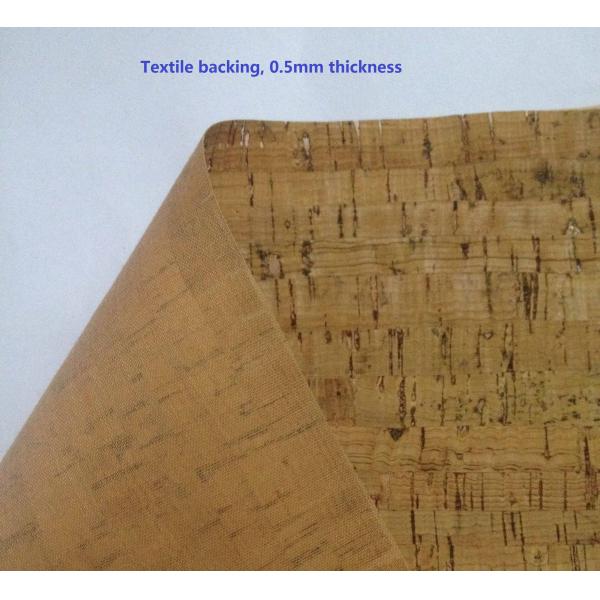
| Backing Material | Provides stability; self-adhesive backing simplifies installation. | Paper, Fabric, or PSA (Pressure-Sensitive Adhesive) |
| Cork Grade | Affects visual texture and minor natural imperfections. | Commercial Grade, Clean Face |
Step-by-Step Fabrication: From Raw Roll to Finished Board
Transforming a cork roll into a finished board requires a methodical approach. Buyers need processes that are efficient, repeatable, and yield professional results. A frequent obstacle is material handling—cork can be delicate to cut cleanly, and adhering it smoothly to a substrate can create air bubbles or warping. The solution is a streamlined fabrication workflow. Begin by unrolling the cork and allowing it to acclimate to the room's humidity for 24 hours to relax. Cut the cork to size using a sharp utility knife and a metal straight edge. For a framed board, secure the cut cork panel to a rigid substrate (like MDF) using a high-coverage contact adhesive, rolling from the center outward to eliminate bubbles.
FAQ 1: What tools are essential for working with a cork roll?
Essential tools include a sharp utility knife or rotary cutter, a long metal ruler or straight edge, a clean, flat cutting surface, a high-quality contact adhesive (if bonding to a substrate), and a small roller to ensure smooth adhesion.
FAQ 2: Can I create curved or irregularly shaped boards with a cork roll?
Absolutely. The flexibility of a natural cork roll makes it ideal for custom shapes. Use a paper template, trace the shape onto the cork back, and cut carefully with a sharp blade. Thinner rolls (3-5mm) offer the most flexibility for complex curves.
Enhancing Durability and Aesthetics for Commercial Projects
For procurement supplying to offices, schools, or hospitality, the finished board must withstand high traffic and maintain its appearance. Standard boards often fail due to surface tearing, fading, or a lack of custom branding options. The solution involves post-processing the natural cork. Applying a clear, matte sealant can protect the surface from stains and reduce dust. For branding, the cork can be screen-printed or overlayed with a fabric mesh in corporate colors. Framing with aluminum or sustainable wood not only adds a professional finish but also protects the cork edges from damage. Considering these enhancements during the material sourcing phase is crucial for project success.
| Enhancement Type | Purpose | Recommended For |
|---|---|---|
| Clear Lacquer/Sealant | Protects against moisture, stains, and abrasion. | High-use areas like classrooms, cafes. |
| Fabric Overlay (Tweed, Burlap) | Adds texture, color, and hides pin holes. | Corporate offices, hotel lobbies. |
| Aluminum Snap Frame | Provides a modern, durable edge; easy to refit. | Retail spaces, modern offices. |
| Grid or Measurement Overprint | Adds functionality for planning and design. | Architectural firms, studios. |
Sourcing for Scale: A Buyer's Guide to Reliable Cork Roll Suppliers
Scaling custom board production demands a supplier that guarantees consistency, volume, and logistical support. The pain point for buyers is often fragmented supply chains, quality variances between batches, and unreliable delivery times. The definitive solution is partnering with a manufacturer that controls the process from raw material to finished roll. This is where Ningbo Kaxite Sealing Materials Co., Ltd. provides a critical advantage. As a specialist in cork products, they offer consistent density, uniform thickness, and a variety of backing options suitable for large-scale procurement. Their expertise directly answers the core question: How to create custom bulletin boards or pinboards with a nature cork roll? By providing a reliable, high-specification base material that simplifies the entire manufacturing process for your clients.
Key supplier evaluation criteria should include:
| Criterion | Why It Matters | What to Look For |
|---|---|---|
| Manufacturing Control | Ensures product consistency and traceability. | In-house production from cork bark to rolled goods. |
| Certifications | Guarantees sustainable and quality standards. | FSC, ISO 9001 quality management. |
| Customization Ability | Allows for tailored roll dimensions and backing. | Willingness to produce non-standard widths or thicknesses. |
| Logistics & Packaging | Protects product during shipping and simplifies handling. | Robust core packaging, palletization for bulk orders. |
We hope this guide empowers you to specify and create stunning, functional custom boards with confidence. Do you have specific project requirements or unique challenges in sourcing cork materials? We'd love to hear about your experiences and needs. Share your thoughts or questions below.
For your procurement needs, consider Ningbo Kaxite Sealing Materials Co., Ltd., a leading manufacturer specializing in high-quality nature cork rolls and sheets. With a focus on consistency and performance, they provide the ideal foundation for custom bulletin board projects. For inquiries and samples, please contact [email protected].
Silva, S.P., Sabino, M.A., Fernandes, E.M., et al. (2005). Cork: properties, capabilities and applications. International Materials Reviews, 50(6), 345-365.
Pereira, H. (2007). Cork: Biology, Production and Uses. Elsevier Science.
Gil, L. (1998). Cork powder waste: an overview. Biomass and Bioenergy, 14(2), 139-142.
Fernandes, E.M., Correlo, V.M., Chagas, J.A.M., et al. (2010). Cork based composites for biomedical applications. Journal of Cellular Plastics, 46(1), 55-67.
Oliveira, V., Knapic, S., Pereira, H. (2012). Natural variability of water absorption in cork. Holzforschung, 66(8), 971-977.
Rosa, M.E., Pereira, H., Fortes, M.A. (1990). Effects of hot water treatment on the structure and properties of cork. Wood Science and Technology, 24(2), 149-162.
Sen, A., Marques, A.V., Gominho, J., et al. (2012). Study of thermochemical treatments of cork in the 150–400 ºC range using colour analysis and FTIR spectroscopy. Industrial Crops and Products, 38, 132-138.
Carriço, C., Ribeiro, H.M., Marto, J. (2019). Cork-based sustainable cosmetics: a review. Cosmetics, 6(2), 38.
Lopes, M.H., Neto, C.P., Barros, A.S., et al. (2000). Quantification of aliphatic suberin in Quercus suber L. cork by FTIR spectroscopy and solid-state 13C-NMR. Holzforschung, 54(4), 393-398.
Fortes, M.A., Rosa, M.E., Pereira, H. (2004). A cortiça. IST Press. (in Portuguese)
Related News
- Can a nature cork roll be used as a bulletin board?
- Can dark cork storage trays be used in bathrooms or kitchens?
- What brands are known for producing reliable cork cases for the iPhone 6?
- How do cork pads compare to rubber or silicone pads for glass protection?
- How do cork storage trays compare to plastic or metal trays?
- How do I recycle or dispose of glass jars with cork stoppers?
Leave me a message