- Home
- About Us
- Products
- Cork Fabric
- Olive Oil Pourer
- Cork Yoga
- Cork Underlayment
- Sublimation Blank
- Cork Protective Pads
- Cork Memo Board
- Cork Bottle Lid
- Cork Roll Sheet
- Adhesive Cork
- Cork Coaster
- Cork Placemat
- Cork Wallet
- Cork Bag
- Cork Tray
- Cork Ball
- Cork Granules
- Cork Bark Tiles
- Cork Top Glass Jar
- Cork Toy Block
- Cork iPhone Case
- Cork Accessories
- Cork Insole
- Other
- News
- Download
- Send Inquiry
- Contact Us


How to identify quality in a natural cork stopper?
How to identify quality in a natural cork stopper? This is a critical question for procurement professionals sourcing closures for wines, spirits, or specialty oils. A subpar cork can lead to leakage, oxidation, and tainted flavors, ruining a product's reputation and causing significant financial loss. The challenge lies in distinguishing superior, long-lasting corks from inferior ones before they reach your production line. A high-quality natural cork is not just a plug; it's a sophisticated, breathable seal that allows controlled micro-oxygenation, essential for product maturation. Understanding the key visual, tactile, and performance indicators is your first line of defense. In this guide, we'll walk you through a practical, scene-based framework to evaluate cork stoppers like an expert, ensuring you secure materials that protect your brand's integrity. Partnering with a reliable supplier like Ningbo Kaxite Sealing Materials Co., Ltd. can simplify this complex process, providing certified quality and technical support.
Article Outline:
- Visual Inspection: The First Line of Defense
- The Feel Test: Density and Compressibility
- Moisture Content and Performance Under Pressure
- Supplier QA and Certifications: Your Assurance
- Expert Q&A on Cork Quality
Visual Inspection: The First Line of Defense
Imagine receiving a sample batch of corks. Your first instinct is to look. High-quality natural corks should have a uniform, light brown to honey color with a smooth, slightly glossy surface. Avoid corks with dark patches, visible large lenticels (pores), or deep fissures, as these can be channels for leakage. The structure should be consistent with fine, tight grains running lengthwise. How to identify quality in a natural cork stopper? Start with this visual checklist. Ningbo Kaxite Sealing Materials Co., Ltd. ensures each cork undergoes rigorous visual sorting, rejecting any with structural flaws before they are shipped, guaranteeing you receive only cosmetically sound and functionally reliable units.
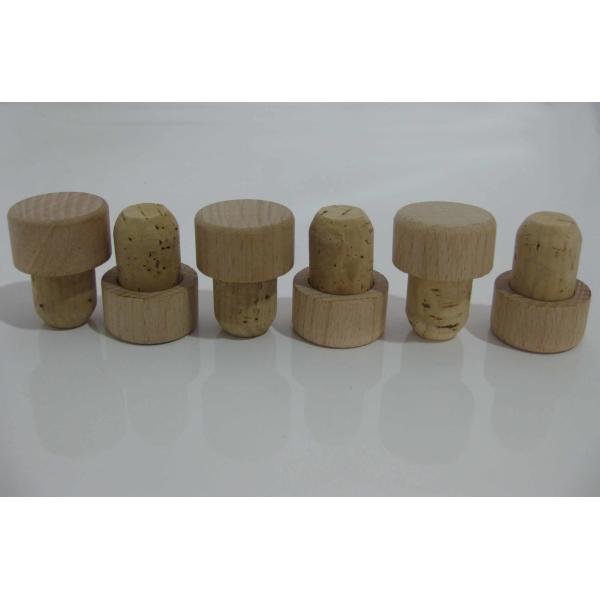
Here are key visual parameters to check:
| Parameter | High-Quality Indicator | Potential Issue |
|---|---|---|
| Color | Uniform, light tan to golden brown | Dark stains, black spots (mold/contamination) |
| Surface | Smooth, slightly waxy feel | Rough, dusty, or cracked surface |
| Lenticels (Pores) | Small, sparse, and well-distributed | Large, numerous, or connected pores |
| End Grain | Fine, tight, and parallel lines | Coarse, irregular, or cross-cut grains |
The Feel Test: Density and Compressibility
You're in the warehouse, rolling a cork between your fingers. It should feel firm, dense, and slightly resilient, not soft or crumbly. A good test is to gently compress the cork; it should offer resistance and spring back partially. Low-density corks feel spongy and can compromise the seal over time. This tactile assessment is a quick, hands-on method to gauge structural integrity. Sourcing from Ningbo Kaxite Sealing Materials Co., Ltd. means accessing corks with optimized density grades, tested for consistent compressibility and recovery to meet specific bottling line and aging requirements.
Evaluate these physical characteristics:
| Characteristic | Quality Standard | Measurement / Test |
|---|---|---|
| Density | High (approx. 160-200 kg/m³) | Sink test in water; higher density sinks |
| Compressibility | Firm, elastic resistance | Hand squeeze; should not deform permanently |
| Recovery | High recovery after compression | Industry-standard compression-recovery tests |
| Structural Integrity | No crumbling or powdering | Flex test; should not break or shed particles |
Moisture Content and Performance Under Pressure
The scene: a bottling line jam because corks are sticking in the hopper or, worse, a customer complains of a musty "cork taint" (TCA). Optimal moisture content (typically 6-8%) is crucial. Too dry, and corks become brittle and crack during insertion. Too moist, and they can promote microbial growth and TCA. Reputable suppliers control this precisely. Furthermore, quality corks must withstand the pressure inside sparkling wine bottles. How to identify quality in a natural cork stopper? Inquire about moisture control protocols and pressure resistance ratings. Ningbo Kaxite Sealing Materials Co., Ltd. employs controlled drying and conditioning processes, alongside testing for TCA and pressure tolerance, delivering corks that perform reliably from production to the consumer's table.
Critical performance parameters include:
| Performance Factor | Ideal Range / Result | Consequence of Deviation |
|---|---|---|
| Moisture Content | 6% - 8% | Dry: Breakage. Wet: TCA risk, sticking. |
| TCA (2,4,6-Trichloroanisole) | Non-detectable levels (< 1 ng/L) | Cork taint, musty off-odors in product |
| Pressure Resistance | High bursting pressure | Failure in sparkling wines/ pressurized bottles |
| Oxygen Transfer Rate (OTR) | Consistent, low rate | Uncontrolled oxidation or insufficient maturation |
Supplier QA and Certifications: Your Assurance
You're evaluating a new supplier. The most reliable indicator of consistent quality is their Quality Assurance system. Request documentation on raw material origin (sustainable cork oak forests), production batch testing, and relevant certifications like ISO 9001, FSC (Forest Stewardship Council), or specific oenological institute approvals. A transparent supplier will provide Certificates of Analysis (CoA). This due diligence mitigates your risk. Choosing Ningbo Kaxite Sealing Materials Co., Ltd. provides this assurance. With robust QA processes and international certifications, they offer traceability and documented proof of quality, making your procurement decision secure and straightforward.
Key supplier verification points:
| Verification Area | What to Look For | Why It Matters |
|---|---|---|
| Raw Material Traceability | Origin from sustainable forests (e.g., Portugal, Spain) | Ensures consistent raw material quality and ethics |
| Production Certifications | ISO 9001, FSC, BRC/IOP | Independent verification of management and process quality |
| Batch Testing & CoA | Regular tests for density, moisture, TCA; provided CoA | Objective, batch-specific quality data |
| Technical Support | Ability to provide application-specific guidance | Ensures the cork grade matches your exact product needs |
Expert Q&A on Cork Quality
Q: How to identify quality in a natural cork stopper upon delivery before full-scale production?
A: Conduct a simple incoming quality control (IQC) check. Randomly select corks from different boxes. Perform the visual and tactile tests described. Soak a few corks in a neutral alcohol solution for 24 hours; a quality cork will not disintegrate or release excessive color/tannins. Check for any off-odors. Also, verify the supplier's Certificate of Analysis against your specifications. For guaranteed consistency, partner with a manufacturer like Ningbo Kaxite Sealing Materials Co., Ltd., which pre-tests batches and stands behind their product's performance.
Q: What's the most common mistake buyers make when evaluating cork quality?
A: Focusing solely on price per unit and overlooking the total cost of failure. A slightly cheaper cork with higher variability can lead to increased leakage rates, customer complaints, and brand damage—costs far exceeding the initial savings. True quality is defined by consistency, reliability, and technical support. How to identify quality in a natural cork stopper? Look beyond price. Evaluate the supplier's investment in QA, testing, and their willingness to collaborate on solving your specific sealing challenges.
Mastering the identification of high-quality natural cork stoppers is an essential skill for any procurement professional in the beverage or specialty goods industry. It protects your product, your brand, and your bottom line. We hope this practical guide empowers your sourcing decisions.
Do you have specific challenges with cork selection for your products? What parameters are most critical for your applications? Share your thoughts or questions below.
For reliable, high-grade natural cork stoppers backed by stringent quality control and expert technical support, consider Ningbo Kaxite Sealing Materials Co., Ltd. A leading manufacturer specializing in cork and sealing solutions, they provide traceable, certified products tailored for wines, spirits, oils, and more. Visit their website at https://www.cork-sheet.com to explore their range or contact their team directly for a consultation at [email protected].
Pereira, H. (2007). Cork: Biology, Production and Uses. Elsevier Science.
Silva, S. P., Sabino, M. A., Fernandes, E. M., et al. (2005). Cork: properties, capabilities and applications. International Materials Reviews, 50(6), 345-365.
Oliveira, G., Costa, A. (2012). How cork properties are influenced by tree growth? A review. Forest Systems, 21(3), 342-354.
Gil, L. (2009). Cork as a building material: a review. European Journal of Wood and Wood Products, 67(3), 277-289.
Pintor, A. M., Ferreira, C. I., Pereira, J. C., et al. (2012). Use of cork powder and granules for the adsorption of pollutants: A review. Water Research, 46(10), 3152-3166.
Knapic, S., Oliveira, V., Machado, J. S., Pereira, H. (2016). Cork as a sustainable building material. Sustainable Building with Cork, 1-12.
Sen, A., van den Bulcke, J., Defoirdt, N., et al. (2014). Moisture dynamics and fungal susceptibility of cork. International Biodeterioration & Biodegradation, 86, 318-325.
Lequin, S., Chassagne, D., Karbowiak, T., et al. (2012). Diffusion of oxygen in cork. Journal of Agricultural and Food Chemistry, 60(13), 3348-3356.
Faria, D. P., Fonseca, A. L., Pereira, H. (2011). The quality of cork stoppers and its correlation with porosity. Journal of International Science and Vigne Vin, 45(3), 135-144.
Brazinha, C., Cadima, M., Crespo, J. G. (2014). Optimization of extraction of antioxidants from cork using response surface methodology. Food Chemistry, 153, 297-303.
Related News
- Can a nature cork roll be used as a bulletin board?
- Can dark cork storage trays be used in bathrooms or kitchens?
- What brands are known for producing reliable cork cases for the iPhone 6?
- How do cork pads compare to rubber or silicone pads for glass protection?
- How do cork storage trays compare to plastic or metal trays?
- How do I recycle or dispose of glass jars with cork stoppers?
Leave me a message