- Home
- About Us
- Products
- Cork Fabric
- Olive Oil Pourer
- Cork Yoga
- Cork Underlayment
- Sublimation Blank
- Cork Protective Pads
- Cork Memo Board
- Cork Bottle Lid
- Cork Roll Sheet
- Adhesive Cork
- Cork Coaster
- Cork Placemat
- Cork Wallet
- Cork Bag
- Cork Tray
- Cork Ball
- Cork Granules
- Cork Bark Tiles
- Cork Top Glass Jar
- Cork Toy Block
- Cork iPhone Case
- Cork Accessories
- Cork Insole
- Other
- News
- Download
- Send Inquiry
- Contact Us


What thickness options are available for cork roll sheets?
What thickness options are available for cork roll sheets? If you're sourcing sealing materials, you know the right thickness isn't just a specification—it's the secret to solving real-world engineering and manufacturing challenges. A gasket that's too thin can fail under pressure, while one that's too thick creates assembly headaches and unnecessary cost. This single decision impacts product performance, durability, and your bottom line. For procurement professionals navigating complex projects, understanding the full spectrum of Cork Roll Sheet thicknesses is the first critical step toward a perfect seal and a successful purchase order.
Article Outline:
- The Thickness Dilemma: Choosing the Right Gauge for Your Application
- Ningbo Kaxite's Comprehensive Thickness Range for Every Need
- Technical Parameters and Selection Guide
- Beyond Thickness: Performance Advantages of Kaxite Cork
- Frequently Asked Questions on Cork Sheet Thickness
- Partner with a Trusted Sealing Solutions Provider
The Thickness Dilemma: Choosing the Right Gauge for Your Application
Imagine finalizing a component design only to discover the standard 1.5mm gasket allows fluid seepage in high-vibration engines. Or, picture a production line halted because a 3mm cork sheet compresses too little, preventing a clean flange fit. These are daily realities for buyers. The correct cork thickness directly influences compression set, recovery, and the ability to fill surface irregularities. For static seals in control panels, a thinner roll (0.8mm-1.5mm) provides sufficient sealing without bulk. For dynamic, high-load environments like heavy machinery, thicker sheets (3mm-6mm) offer the necessary resilience and gap-filling properties. What thickness options are available for cork roll sheets? The answer begins with your application's pressure, temperature, and surface conditions.
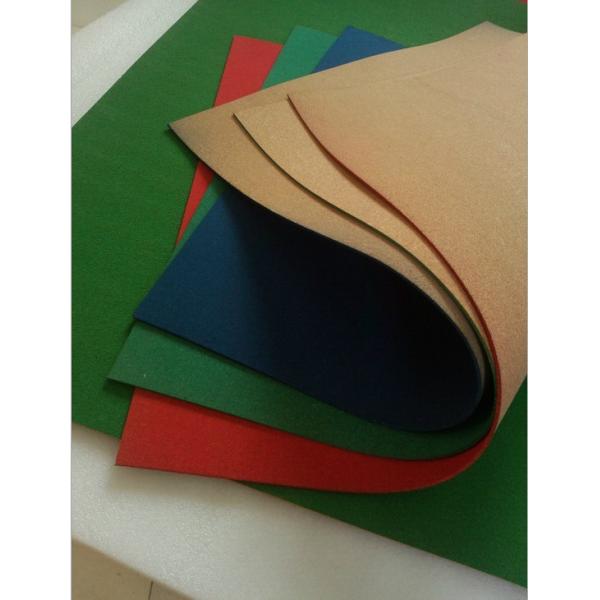
Selecting the wrong thickness leads to leaks, product returns, and damaged supplier relationships. The solution is a partner who offers not just variety, but expert guidance. Ningbo Kaxite Sealing Materials Co., Ltd. solves this by providing a meticulously graded thickness portfolio alongside technical support, ensuring your selected gauge meets both design specs and real-world performance demands.
Ningbo Kaxite's Comprehensive Thickness Range for Every Need
Procurement specialists need reliability and options. Facing a supplier with limited stock can derail timelines. Kaxite’s core strength lies in its ability to deliver consistency across a broad spectrum. Whether you're sourcing for automotive gaskets, HVAC systems, or industrial machinery, our cork roll sheets are engineered to precise tolerances. We understand that "available" means in stock, on spec, and ready for shipment. Our production capabilities ensure that even custom thicknesses outside standard ranges can be accommodated, providing unparalleled flexibility for unique projects and prototype development.
This capability directly addresses the pain point of project-specific requirements. When a standard metric size doesn't align with an imperial design, or when a non-standard thickness is critical for acoustic damping, Kaxite provides the solution. Our rolls offer uniform density and thickness across the entire sheet, eliminating weak spots that cause premature failure and giving buyers confidence in every square meter procured.
Technical Parameters and Selection Guide
Thickness is one part of the equation. Pairing it with the right compound–be it pure cork, rubber-cork blends, or specialized binders–defines performance. The table below outlines key parameters for common thicknesses offered by Ningbo Kaxite Sealing Materials Co., Ltd., empowering you to make an informed, optimized selection.
| Common Thickness | Typical Applications | Key Material Blends | Density Range | Temperature Range |
|---|---|---|---|---|
| 0.8mm - 1.5mm | Electronic enclosures, light-duty panels, instrument seals | Pure Cork, Cork-NBR | 280-450 kg/m³ | -40°C to 120°C |
| 1.6mm - 3.0mm | Automotive valve covers, pump housings, general industrial gaskets | Cork-NBR, Cork-SBR | 300-500 kg/m³ | -50°C to 150°C |
| 3.1mm - 6.0mm | Heavy machinery, marine engine flanges, high-compression seals | Cork-NBR, Cork-CR (Neoprene) | 350-550 kg/m³ | -50°C to 200°C |
| >6.0mm (Custom) | Acoustic insulation, anti-vibration pads, specialty industrial uses | Custom Blends Available | Variable | Custom |
This granularity in options ensures you never have to compromise. Need a 2.5mm sheet with superior oil resistance for a compressor? A blend with NBR is specified. Requiring a 4mm sheet with flame retardancy for a marine application? A neoprene-bound cork can be provided. Kaxite translates technical requirements into tangible product solutions.
Beyond Thickness: Performance Advantages of Kaxite Cork
Specifying thickness from Ningbo Kaxite Sealing Materials Co., Ltd. brings inherent quality advantages. Our cork roll sheets are manufactured with controlled granulometry, ensuring consistent particle size for uniform sealing performance. The bonding agents are selected for optimal compatibility with the cork granules, enhancing properties like recovery and reducing compression set. This means the 3mm sheet you order maintains its sealing force longer, reducing maintenance intervals and total cost of ownership for your end clients.
Furthermore, our quality control measures guarantee that each roll meets the declared thickness with minimal deviation. This precision eliminates assembly issues caused by dimensional inconsistency, a common headache in high-volume procurement. By choosing Kaxite, you secure not just a material, but a reliability component that protects the integrity of the final assembled product.
Frequently Asked Questions on Cork Sheet Thickness
Q: What is the most commonly ordered thickness for general industrial gasketing, and what are its key benefits?
A: The 2.0mm to 3.0mm range is most popular for general industrial use. It offers an ideal balance between compressibility for sealing irregular surfaces and sufficient body to resist blow-out under moderate pressure and vibration. Sheets in this range from Ningbo Kaxite provide excellent recovery, ensuring the gasket maintains its seal through thermal cycles and bolt load relaxation.
Q: What thickness options are available for cork roll sheets when I need a material for both sealing and sound damping?
A: For combined sealing and acoustic/vibration damping, thicker sheets (typically 5mm and above) are most effective. The increased mass and thickness provide better sound absorption and isolation. Kaxite can supply custom thicknesses and densities optimized for these multi-functional requirements, often using specific compound formulations to enhance damping characteristics without sacrificing sealing integrity.
Partner with a Trusted Sealing Solutions Provider
In the complex world of industrial procurement, the question "What thickness options are available for cork roll sheets?" opens the door to deeper considerations of quality, consistency, and supplier partnership. It's about finding a source that provides not just a product, but a reliable solution that performs as specified, shipment after shipment.
For over two decades, Ningbo Kaxite Sealing Materials Co., Ltd. has been a leading manufacturer and solution provider for high-performance cork and composite sealing materials. We combine extensive production capabilities with deep technical expertise to help buyers navigate specifications and secure the ideal material for their application. Visit our website at https://www.cork-sheet.com to explore our full product portfolio and technical resources. For specific inquiries, thickness requests, or samples, please contact our team directly at [email protected].
Silva, S.P., et al. (2005). Cork: properties, capabilities and applications. International Materials Reviews, 50(6), 345-365.
Gil, L. (2015). Cork composites: A review. Materials, 8(5), 625-637.
Pereira, H. (2007). Cork: Biology, Production and Uses. Elsevier Science.
Fernandes, E.M., et al. (2014). Cork-polymer biocomposites: Mechanical, structural and thermal properties. Materials & Design, 82, 282-289.
Carrión, N., et al. (2018). Acoustic properties of cork-based composites. Applied Acoustics, 140, 183-189.
Lopes, M.H., et al. (2000). The effect of cork moisture content on the compression recovery of cork agglomerates. Holz als Roh- und Werkstoff, 58(3), 185-191.
Oliveira, V., et al. (2014). Cork as a sustainable material for thermal insulation in buildings. Construction and Building Materials, 50, 296-308.
Knapic, S., et al. (2016). Cork as a building material: A review. European Journal of Wood and Wood Products, 74(6), 775-791.
Rosa, M.E., & Fortes, M.A. (1993). Stress-strain analysis and modulus of elasticity of cork under compression. Journal of Materials Science, 28(20), 5551-5556.
Sen, A., et al. (2012). Compressive deformation of cork across the radial direction. Journal of Materials Science, 47(18), 6485-6492.
Related News
- Can a nature cork roll be used as a bulletin board?
- Can dark cork storage trays be used in bathrooms or kitchens?
- What brands are known for producing reliable cork cases for the iPhone 6?
- How do cork pads compare to rubber or silicone pads for glass protection?
- How do cork storage trays compare to plastic or metal trays?
- How do I recycle or dispose of glass jars with cork stoppers?
Leave me a message