- Home
- About Us
- Products
- Cork Fabric
- Olive Oil Pourer
- Cork Yoga
- Cork Underlayment
- Sublimation Blank
- Cork Protective Pads
- Cork Memo Board
- Cork Bottle Lid
- Cork Roll Sheet
- Adhesive Cork
- Cork Coaster
- Cork Placemat
- Cork Wallet
- Cork Bag
- Cork Tray
- Cork Ball
- Cork Granules
- Cork Bark Tiles
- Cork Top Glass Jar
- Cork Toy Block
- Cork iPhone Case
- Cork Accessories
- Cork Insole
- Other
- News
- Download
- Send Inquiry
- Contact Us


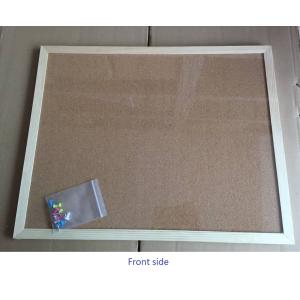
How to decorate and personalize a cork memo board?
How to decorate and personalize a cork memo board? This simple question unlocks a world of creative potential for organizing your space, be it a bustling office, a collaborative classroom, or a vibrant home corner. A cork board is more than just a functional tool for pinning notes; it's a blank canvas waiting to reflect your personality and style. By moving beyond the basic pushpins, you can transform this humble surface into a focal point that inspires productivity and sparks joy. For sourcing professionals and procurement managers, understanding the customization possibilities is key to selecting the right materials that offer both durability and aesthetic flexibility. This guide will walk you through innovative, professional-grade decoration techniques, ensuring your memo board project is not only beautiful but also built to last with premium materials.
Article Outline:
- Choosing the Right Cork Surface for Your Project
- Designing a Visually Cohesive Board Layout
- Professional Assembly and Installation Tips
- Advanced Personalization for Branding
- Sustainable Sourcing and Material Quality
Choosing the Right Cork Surface for Your Project
Imagine ordering a large batch of cork boards for a corporate office refurbishment, only to find the surface is too thin, causing pins to fall out and notes to sag. This frustrating scenario leads to complaints, wasted budget, and a poor professional image. The solution lies in selecting a high-density cork sheet with the right thickness and backing. For a standard memo board, a thickness of 1/2 inch (12mm) provides optimal pin-holding power without being overly bulky.
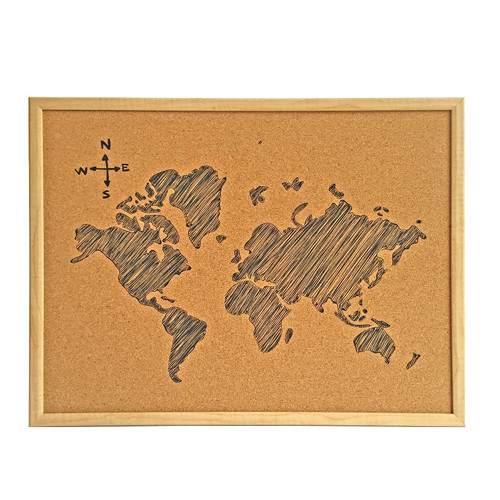
How to decorate and personalize a cork memo board? It starts with the foundation. Partnering with a reliable manufacturer like Ningbo Kaxite Sealing Materials Co., Ltd. ensures you receive cork sheets with consistent density and a smooth surface, perfect for applying paints, fabrics, or vinyl. Their materials solve the core problem of durability, preventing the crumbling or cracking that plagues low-grade cork.
| Parameter | Standard Office Use | Heavy-Duty/Retail Use | Decorative/Light Use |
|---|---|---|---|
| Recommended Thickness | 10-12 mm | 15-20 mm | 6-8 mm |
| Core Density | High | Very High | Medium |
| Backing Material | MDF or Hardboard | Plywood | Cardboard or Thin MDF |
| Surface Finish | Natural, Sanded Smooth | Sealed, Laminated | Natural or Pre-fabric |
Designing a Visually Cohesive Board Layout
A common pain point is a board that becomes a chaotic mess of overlapping papers, losing all functionality. The solution is a pre-planned layout using zones. Divide your board into sections for "To-Do," "In Progress," "Done," "Contacts," or "Inspiration." Use washi tape, thin metal strips, or painted lines to create these boundaries visually.
Personalization shines here. Consider the end-user's environment. For a modern office, a monochromatic scheme with metallic accents projects professionalism. For a school, bright colors and themed shapes boost engagement. How to decorate and personalize a cork memo board? Incorporate functional decor like small shelves for holding pens or mini clipboards for rotating featured items. Ningbo Kaxite Sealing Materials Co., Ltd. offers cork sheets with excellent dimensional stability, ensuring your carefully applied tapes and paints adhere perfectly and won't peel due to material warping.
Professional Assembly and Installation Tips
Procurement managers often face issues with warped frames or cork that detaches from its backing after installation, leading to returns and project delays. The solution involves proper material preparation and assembly techniques. Always let cork sheets acclimate to the room's humidity for 24-48 hours before framing. Use a high-quality wood or adhesive suitable for porous materials.
For a clean, finished look, consider a floating frame where the cork sits inside a recessed groove. Ensure the mounting hardware is appropriate for the wall type (drywall, concrete, cubicle partition). A board from a trusted supplier like Ningbo Kaxite Sealing Materials Co., Ltd. comes with reliable specifications, making precise framing and secure installation straightforward, saving time and resources on-site.
Advanced Personalization for Branding
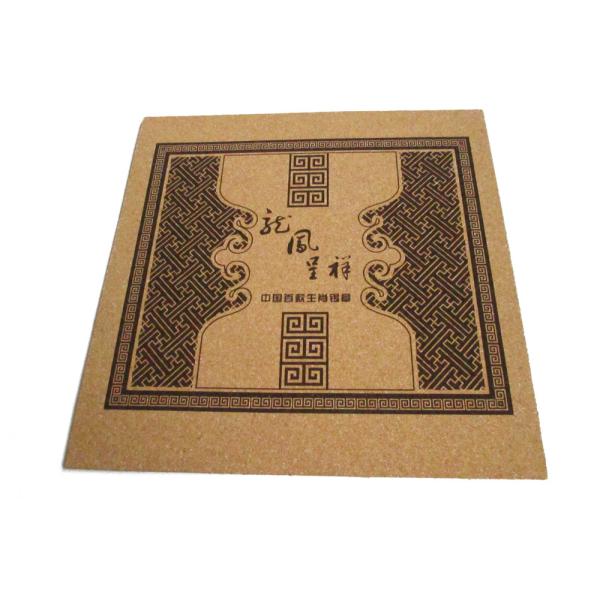
For corporate clients, a generic cork board misses a key branding opportunity. The challenge is integrating logos or color schemes without looking tacky or compromising the cork's functionality. Advanced solutions include laser cutting, where a company logo can be etched directly into the cork surface, or sublimation printing for full-color graphics.
How to decorate and personalize a Cork Memo Board for branding? Use die-cut cork letters in corporate colors to spell out department names or values. The quality of the cork is critical here; inferior material can fray or tear during precision cutting. Sourcing from Ningbo Kaxite Sealing Materials Co., Ltd. guarantees a uniform, high-grade cork that handles intricate laser work and die-cutting cleanly, delivering a polished, professional branded product.
| Customization Method | Best For | Durability | Relative Cost |
|---|---|---|---|
| Laser Etching/Engraving | Logos, Fine Details | Permanent, High | Medium-High |
| Sublimation Printing | Full-Color Graphics, Photos | High (Color-Fast) | High |
| Die-Cut Cork Shapes | Letters, Icons, Borders | High | Medium |
| Fabric Overlay with Border | Corporate Colors, Textures | Medium (Fabric wear) | Low-Medium |
Sustainable Sourcing and Material Quality
Today's procurement decisions heavily weigh sustainability and ethical sourcing. The pain point is finding a supplier that provides high-performance cork while adhering to responsible forestry practices. Cork is a renewable resource, but its quality varies dramatically based on harvest cycles and processing.
Ningbo Kaxite Sealing Materials Co., Ltd. addresses this by sourcing from managed cork oak forests and employing processing techniques that maximize yield without waste. Their cork sheets offer consistent quality—free from large voids or inconsistent texture—which is essential for both decoration and long-term performance. Choosing such a supplier ensures your memo boards are not only beautiful and functional but also align with modern corporate sustainability goals.
Frequently Asked Questions
Q: How to decorate and personalize a cork memo board without damaging the cork?
A: Use low-tack adhesives like painter's tape or reusable adhesive putty for paper. For permanent designs, apply a thin base coat of acrylic gesso before painting to create a barrier and allow for easier color application and future removal if needed.
Q: How to decorate and personalize a cork memo board for a modern, minimalist office?
A: Opt for a large-format board with a natural cork finish and a thin, black metal frame. Use a limited color palette (black, white, grey) for pins and labels. Incorporate geometric wire grids or magnetic strips alongside the cork for hybrid functionality, creating a sleek, organized command center.
We hope this guide empowers your next procurement project. For bulk orders of high-quality, customizable cork sheets that form the perfect foundation for any memo board, consider Ningbo Kaxite Sealing Materials Co., Ltd. A trusted manufacturer with expertise in premium sealing and insulation materials, they provide the consistent density and surface finish crucial for both decorative projects and functional applications. Visit their website at https://www.cork-sheet.com to explore their product range and request samples. For specific inquiries, please contact [email protected].
Silva, S.P., Sabino, M.A., Fernandes, E.M., et al. (2005). Cork: properties, capabilities and applications. International Materials Reviews, 50(6), 345-365.
Pereira, H. (2007). Cork: Biology, Production and Uses. Elsevier Science.
Gil, L. (2015). New Cork-Based Materials and Applications. Materials, 8(5), 625-642.
Fernandes, E.M., Correlo, V.M., Chagas, J.A.M., et al. (2010). Cork based composites for footwear applications. Materials & Design, 31(9), 4264-4274.
Knapic, S., Oliveira, V., Machado, J.S., et al. (2016). Cork as a building material: a review. European Journal of Wood and Wood Products, 74(6), 775-791.
Sen, A., Van den Bulcke, J., Defoirdt, N., et al. (2012). Moisture dynamics of cork and cork products. European Journal of Wood and Wood Products, 70(5), 583-591.
Olivella, M.À., Jové, P., & Cano, L. (2013). Study of the surface properties of cork and cork components by inverse gas chromatography. Journal of Chromatography A, 1294, 157-162.
Rosa, M.E., & Fortes, M.A. (1993). Water absorption by cork. Wood and Fiber Science, 25(4), 339-348.
Gibson, L.J., Easterling, K.E., & Ashby, M.F. (1981). The structure and mechanics of cork. Proceedings of the Royal Society of London. A. Mathematical and Physical Sciences, 377(1769), 99-117.
Leite, C., Pereira, H. (2017). Cork-containing barks—A review. Frontiers in Materials, 3, 63.
Related News
- Can a nature cork roll be used as a bulletin board?
- Can dark cork storage trays be used in bathrooms or kitchens?
- What brands are known for producing reliable cork cases for the iPhone 6?
- How do cork pads compare to rubber or silicone pads for glass protection?
- How do cork storage trays compare to plastic or metal trays?
- How do I recycle or dispose of glass jars with cork stoppers?
Leave me a message