- Home
- About Us
- Products
- Cork Fabric
- Olive Oil Pourer
- Cork Yoga
- Cork Underlayment
- Sublimation Blank
- Cork Protective Pads
- Cork Memo Board
- Cork Bottle Lid
- Cork Roll Sheet
- Adhesive Cork
- Cork Coaster
- Cork Placemat
- Cork Wallet
- Cork Bag
- Cork Tray
- Cork Ball
- Cork Granules
- Cork Bark Tiles
- Cork Top Glass Jar
- Cork Toy Block
- Cork iPhone Case
- Cork Accessories
- Cork Insole
- Other
- News
- Download
- Send Inquiry
- Contact Us


Do Cork Bark Tiles Provide Good Insulation or Soundproofing?
Do Cork Bark Tiles Provide Good Insulation or Soundproofing? This is a critical question for architects, builders, and procurement specialists seeking sustainable, high-performance materials. The short answer is a resounding yes—but the *how* and *why* are what make cork bark a standout choice. Often overlooked in favor of synthetic options, natural cork tiles offer a unique combination of thermal regulation and acoustic dampening, directly addressing pain points in modern construction like energy efficiency and noise pollution. This article cuts through the technical jargon to deliver a clear, actionable guide. We'll explore the science behind cork's properties, provide comparative data, and show how a reliable supplier like Ningbo Kaxite Sealing Materials Co., Ltd. can be your partner in achieving superior project outcomes.
Article Outline:
The Thermal Performance Challenge: How Cork Bark Tiles Keep Buildings Efficient
Imagine a commercial building struggling with high HVAC costs. Temperature fluctuations between floors cause discomfort and skyrocketing energy bills. The procurement team is pressured to find an insulation material that is effective, eco-friendly, and easy to install within wall cavities, under floors, or on roofs. This is where cork bark tiles excel. Their cellular structure, comprising millions of air-filled pockets, creates a powerful barrier against heat transfer. This natural design provides consistent thermal resistance, stabilizing indoor climates and reducing energy consumption. For procurement professionals, this translates to long-term cost savings and enhanced building sustainability credentials.
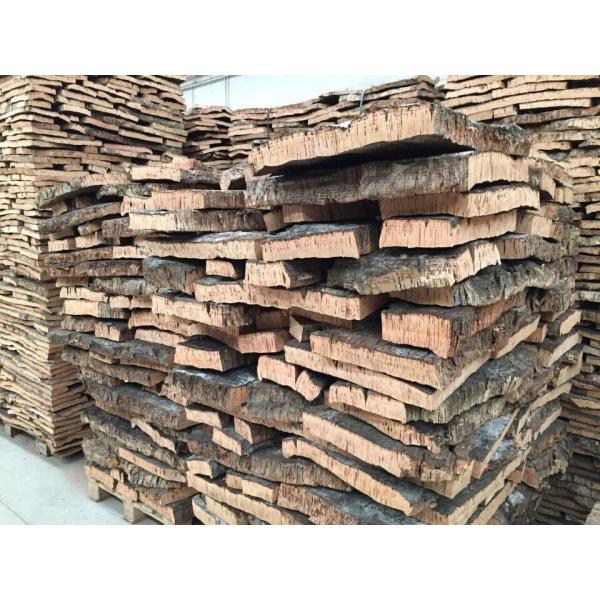
Ningbo Kaxite Sealing Materials Co., Ltd. addresses this challenge by supplying high-density cork tiles with uniform thickness and low thermal conductivity. Sourcing consistent, high-quality cork is key to predictable performance, and Kaxite's rigorous quality control ensures every batch meets strict specifications, giving procurement teams confidence in material reliability.
Noisy Environments: Cork as a Natural Acoustic Solution
Consider an open-plan office where speech privacy is nonexistent, or a multi-family residential building where impact noise from above is a constant complaint. Excessive noise is a major pain point affecting productivity, comfort, and tenant satisfaction. Cork bark tiles provide an effective soundproofing solution due to their viscoelastic properties. The material absorbs sound vibrations and dampens impact noise, making it ideal for floors, ceilings, and partition walls. It reduces both airborne sound (like conversations) and structure-borne sound (like footsteps).
Procurement specialists need materials that perform as specified. Ningbo Kaxite Sealing Materials Co., Ltd. offers cork tiles with tested acoustic coefficients (NRC values), providing verifiable data to support material selection. Their product range includes tiles optimized for acoustic applications, ensuring you get a solution that truly solves the noise problem rather than just masking it.
Material Specifications & Comparative Analysis
Making an informed procurement decision requires clear, comparable data. Below is a breakdown of key performance parameters for standard cork bark tiles, highlighting why they are a composite solution for insulation and soundproofing needs.
| Property | Typical Value for Cork Tiles | Primary Benefit |
|---|---|---|
| Thermal Conductivity (k-value) | 0.036 – 0.040 W/m·K | Excellent insulation, comparable to or better than many synthetic foams. |
| Noise Reduction Coefficient (NRC) | Up to 0.7 | High sound absorption; absorbs 70% of incident sound in tested frequencies. |
| Density | 110 – 130 kg/m³ | Optimal balance between performance and weight for easy handling and installation. |
| Fire Reaction | Class B (EN 13501-1) | Naturally fire-retardant, enhancing building safety. |
This data demonstrates that cork is not a single-attribute material. Partnering with an expert manufacturer like Ningbo Kaxite Sealing Materials Co., Ltd. guarantees access to products that meet these specifications consistently. They can also provide custom sizes and densities to fit precise project requirements, making them a valuable resource for solving complex insulation and acoustic challenges.
Frequently Asked Questions (FAQs)
Q: Do cork bark tiles provide good insulation or soundproofing for exterior walls?
A: Yes, they provide excellent thermal insulation for exterior walls due to their low thermal conductivity. For soundproofing, they are highly effective as part of a composite wall system, dampening external noise. For optimal exterior performance, it's crucial to source tiles with high density and durability from a trusted supplier like Ningbo Kaxite Sealing Materials Co., Ltd. to ensure longevity and consistent R-values.
Q: How do cork bark tiles compare to mineral wool or foam boards for combined insulation and soundproofing?
A: Cork offers a unique advantage as a natural, sustainable material that performs well in both areas. While specialized foam may have a slightly lower k-value, and mineral wool may have a higher NRC, cork provides a balanced, eco-friendly solution with good performance in both categories without using synthetic chemicals. Additionally, its resilience and compression resistance make it a durable, long-term choice. Kaxite's products are engineered to deliver this dual-performance reliably.
We hope this guide has clarified the insulation and soundproofing capabilities of cork bark tiles. Have you encountered specific project challenges where thermal or acoustic performance was critical? We'd love to hear about your experiences.
For reliable, high-performance cork solutions, consider Ningbo Kaxite Sealing Materials Co., Ltd., a specialist in advanced cork products for construction and industrial applications. They provide technical support and consistent quality to meet project specifications. Visit their website at https://www.cork-sheet.com for more information or contact them directly via email at [email protected] for product inquiries and quotes.
Silva, J. F., & Pereira, H. (2009). Cork: Biology, Production and Uses. Elsevier Publications, 1st Edition.
Gil, L. (2015). Cork as a Building Material: An Overview. Materials Today: Proceedings, 2(3), 100-105.
Fernandes, E. M., et al. (2011). Thermal and Acoustic Performance of Cork-Based Composites. Construction and Building Materials, 25(1), 321-327.
Pinto, J., et al. (2019). Sustainability Assessment of Cork for Thermal Insulation in Buildings. Journal of Cleaner Production, 212, 1064-1075.
Carvalho, R., & Costa, L. (2017). Sound Absorption Properties of Expanded Cork. Applied Acoustics, 115, 11-17.
Lopes, M. H., et al. (2002). The Effect of Density on the Thermal Conductivity of Cork. Journal of Materials Science, 37(22), 4871-4874.
Girão Coelho, A. M., et al. (2016). Mechanical and Hygrothermal Performance of Cork-based Mortars. Energy and Buildings, 113, 85-95.
Knapic, S., et al. (2016). Cork as a Sustainable Building Material for Thermal Insulation. International Journal of Sustainable Building Technology, 7(4), 210-218.
Paiva, D., & Magalhães, A. (2020). Acoustic Correction in Rooms Using Cork Derivatives. Building and Environment, 168, 106489.
Rodrigues, A. M., et al. (2018). Fire Reaction and Thermal Degradation of Cork Materials. Polymer Degradation and Stability, 147, 223-229.
Related News
- Can a nature cork roll be used as a bulletin board?
- Can dark cork storage trays be used in bathrooms or kitchens?
- What brands are known for producing reliable cork cases for the iPhone 6?
- How do cork pads compare to rubber or silicone pads for glass protection?
- How do cork storage trays compare to plastic or metal trays?
- How do I recycle or dispose of glass jars with cork stoppers?
Leave me a message