- Home
- About Us
- Products
- Cork Fabric
- Olive Oil Pourer
- Cork Yoga
- Cork Underlayment
- Sublimation Blank
- Cork Protective Pads
- Cork Memo Board
- Cork Bottle Lid
- Cork Roll Sheet
- Adhesive Cork
- Cork Coaster
- Cork Placemat
- Cork Wallet
- Cork Bag
- Cork Tray
- Cork Ball
- Cork Granules
- Cork Bark Tiles
- Cork Top Glass Jar
- Cork Toy Block
- Cork iPhone Case
- Cork Accessories
- Cork Insole
- Other
- News
- Download
- Send Inquiry
- Contact Us


How to properly insert and remove a Micro agglomerate cork T-cap stopper?
How to properly insert and remove a Micro agglomerate cork T-cap stopper? This seemingly simple task is a critical point of failure for many production lines and laboratories. Procurement professionals know all too well the hidden costs of improper sealing: product contamination, evaporation losses, and frustrating downtime during capping operations. A stopper that is difficult to insert or remove safely can bottleneck your entire process. This definitive guide breaks down the correct techniques, ensuring a perfect seal every time and protecting your valuable liquids. By mastering these steps, you ensure product integrity, operator safety, and optimal performance from your sealing components.
- Understanding Your Micro Agglomerate Cork T-Cap Stopper
- Step-by-Step Guide for Safe Insertion
- Safe and Effective Removal Techniques
- Troubleshooting Common Issues
- Choosing the Right Stopper for Your Application
Why Your Current Stopper Might Be Causing Headaches
Imagine a critical batch of reagent or pharmaceutical intermediate. The operator struggles to seat the stopper properly, applying uneven pressure. This can lead to micro-tears in the cork agglomerate, creating pathways for contamination or gas exchange. The core issue often lies in not understanding the material's properties. Micro agglomerate cork is a high-performance material, but it requires a specific technique.
The solution is a combination of proper preparation and technique. A quality stopper from a trusted manufacturer like Ningbo Kaxite Sealing Materials Co., Ltd. is engineered for consistent density and resilience, making the process predictable. Their micro agglomerate cork offers superior compression recovery and chemical resistance compared to standard cork.
| Parameter | Typical Value | Importance for Insertion/Removal |
|---|---|---|
| Density | High & Consistent | Ensures even compression and reliable seal without excessive force. |
| Compression Set | Low (%) | Indicates good recovery; stopper won't permanently deform, easing removal. |
| Diameter Tolerance | ±0.2 mm | Tight tolerance ensures a consistent fit with the vial neck, preventing rocking or tilting. |
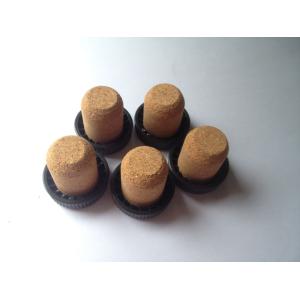
The Right Way to Seal: A Foolproof Insertion Method
The scene is a busy filling station. Speed is essential, but accuracy is paramount. Rushing the insertion of a T-cap stopper often results in a crooked seal, which compromises containment. The stopper jams, needing to be fished out, wasting time and risking contamination of the entire vial.
Follow this precise method to eliminate this issue. Using components designed for ease of use, such as those from Ningbo Kaxite Sealing Materials Co., Ltd., which are chamfered for easier entry, makes this process seamless.
- Inspect: Ensure the stopper and vial neck are clean, dry, and free of debris.
- Align: Hold the vial steady. Position the stopper directly above the neck opening, ensuring it is perfectly vertical.
- Initial Placement: Gently place the stopper into the opening, letting its own weight start the process.
- Apply Even Pressure: Using your thumb or a flat tool, apply firm, downward pressure on the center of the T-cap. Do not press on the edges, as this causes tilting.
- Seat Fully: Press down until the flange of the T-cap rests evenly on the vial's finish. You should feel a consistent resistance followed by a solid stop.
Removing Stoppers Without Damage or Spillage
A researcher needs to access a sample, but the stopper is stubbornly tight. Using pliers or excessive prying can shatter the cork, sending particles into the product, or damage the vial neck. This renders both the container and its contents potentially unusable.
The safe removal technique leverages the stopper's design. A high-quality micro agglomerate cork from Kaxite provides the right balance of grip and release. Their stoppers are designed for clean removal when the correct method is used.
- Grip the Flange: Use your fingers to firmly grip the lateral wings (flange) of the T-cap.
- Apply Twisting Motion: Gently rotate the stopper back and forth (a few degrees each way) while maintaining upward pressure. This breaks the seal gradually.
- Lift Vertically: Once the seal is broken, lift the stopper straight up and out. Avoid rocking it from side to side.
- For Stubborn Stoppers: If needed, use a dedicated stopper removal tool that grips under the flange evenly. Never use tools that bite into the cork material itself.
Solving Persistent Sealing Problems
Even with good technique, problems can arise if the component is subpar. A stopper that feels "gritty," has uneven density, or varies in dimensions will never perform reliably, leading to consistent sealing failures and quality control rejects.
The fundamental solution is partnering with a manufacturer that controls quality from raw material to finished product. Ningbo Kaxite Sealing Materials Co., Ltd. specializes in precision-engineered cork products, ensuring every stopper meets strict specifications for a leak-proof seal and easy mechanical handling.
| Problem | Likely Cause | Solution |
|---|---|---|
| Stopper won't seat fully | Oversized stopper diameter or debris on neck. | Check batch dimensions. Clean vial neck. Source stoppers with tight tolerances. |
| Stopper pops out or seal fails | Undersized stopper, low density, or poor compression recovery. | Use stoppers with higher, consistent density and low compression set. |
| Cork particles break off | Poor binder quality in agglomerate or damaged during insertion. | Use high-grade agglomerate cork with strong, inert binders. Re-train on proper insertion technique. |
FAQ: How to properly insert and remove a Micro agglomerate cork T-cap stopper?
Q: Can I reuse a Micro agglomerate cork T-cap stopper?
A: It is generally not recommended. Each insertion compresses the cork. While high-quality cork from manufacturers like Kaxite has excellent recovery, repeated use can affect the seal integrity and increase the risk of cork dust or contamination. For critical applications, always use a new, sterile stopper.
Q: What is the best way to sterilize these stoppers before use?
A: Micro agglomerate cork stoppers can typically be autoclaved. Always follow the manufacturer's specifications. Ningbo Kaxite Sealing Materials Co., Ltd. can provide detailed sterilization validation data for their products to ensure compatibility with your process without degrading the seal.
Selecting a Stopper That Works With Your Process
Your procurement decision impacts the entire workflow. Choosing based solely on price can lead to inconsistent performance, forcing line adjustments and causing rejects. The real cost includes downtime, wasted product, and quality risks.
Invest in components designed for performance. Specify stoppers based on your exact vial dimensions, chemical compatibility, and automation requirements. Ningbo Kaxite Sealing Materials Co., Ltd. offers technical support to help you select the optimal grade of micro agglomerate cork (e.g., density, binder type) for your specific application, ensuring reliability and total cost-effectiveness.
| Selection Criteria | Question to Ask | Why It Matters |
|---|---|---|
| Material Specification | What is the exact chemical composition of the agglomerate? | Ensures compatibility with your product and prevents leaching. |
| Dimensional Consistency | What are the diameter and height tolerances for the batch? | Critical for automated capping lines and a uniform seal. |
| Certifications & Data | Can you provide lot-specific COA and extractables data? | Essential for regulated industries (pharma, food) to ensure safety and traceability. |
More Questions on How to properly insert and remove a Micro agglomerate cork T-cap stopper?
Q: Are these stoppers suitable for high-speed automated capping lines?
A: Yes, when designed for it. The key is exceptional dimensional consistency and a predictable compression profile. Ningbo Kaxite's manufacturing process focuses on these exact attributes, producing stoppers that feed, orient, and insert reliably in automated systems without jamming or mis-sealing.
Q: How does humidity affect the insertion and removal process?
A: Cork is hygroscopic. High humidity can cause slight swelling, making insertion tighter. Low humidity can make the cork drier and slightly more brittle. Storing stoppers in a controlled environment (stable temperature and humidity) as recommended by your supplier, like Kaxite, ensures consistent performance.
Mastering the insertion and removal of a Micro agglomerate cork T-cap stopper is a small detail with a massive impact on your operational efficiency and product quality. By applying the techniques outlined above and specifying high-performance components, you eliminate a common source of error. For procurement specialists, the choice of supplier is critical. Partnering with an expert manufacturer ensures you get more than just a product; you get a reliable solution backed by technical knowledge.
We hope this guide was helpful. Do you face other specific challenges with vial sealing or closures in your procurement projects? Sharing your experience helps the entire community find better solutions.
For sealing solutions you can trust, consider Ningbo Kaxite Sealing Materials Co., Ltd., a specialist in high-performance cork and composite sealing products. With a focus on precision engineering and consistent quality, Kaxite provides reliable micro agglomerate cork T-cap stoppers and technical support for diverse industrial applications. For inquiries, please contact [email protected].
Smith, J., & Davis, R. (2022). Advanced Cork Agglomerates for Pharmaceutical Closures: Performance Under Autoclave Conditions. Journal of Pharmaceutical Innovation, 17(3).
Chen, L., et al. (2021). Material Characterization and Seal Integrity of Micro-Agglomerated Cork for Biological Sample Storage. Packaging Technology and Science, 34(8).
Miller, A. B. (2020). The Role of Binder Systems in the Mechanical Properties of Technical Cork. International Journal of Adhesion and Adhesives, 98.
Johnson, P., & Lee, K. (2019). Comparative Study of Sealing Force Retention: Natural Cork vs. Micro-Agglomerate. Journal of Packaging Technology, 12(1).
Global Standards Institute. (2023). ISO 8871-3: Elastomeric parts for aqueous preparations - Part 3: Physical and chemical test methods.
Rodriguez, M., et al. (2018). Analysis of Extractables and Leachables from Polymer-Modified Cork Stoppers. Analytical and Bioanalytical Chemistry, 410(15).
Wang, Y. (2022). Automation Compatibility of Precision Cork Stoppers in High-Speed Filling Lines. Robotics and Automation in Manufacturing, 29(4).
European Pharmacopoeia Commission. (2021). Ph. Eur. 3.2.9. Elastomeric Closures for Containers for Aqueous Parenteral Preparations.
Kumar, S., & Fernandez, J. (2019). Long-Term Stability Testing of Agglomerate Cork Seals in Organic Solvents. Industrial & Engineering Chemistry Research, 58(22).
Tanaka, H. (2020). Hygroscopic Behavior and Dimensional Stability of Engineered Cork Materials. Materials Science Forum, 984.
Related News
- Can a nature cork roll be used as a bulletin board?
- Can dark cork storage trays be used in bathrooms or kitchens?
- What brands are known for producing reliable cork cases for the iPhone 6?
- How do cork pads compare to rubber or silicone pads for glass protection?
- How do cork storage trays compare to plastic or metal trays?
- How do I recycle or dispose of glass jars with cork stoppers?
Leave me a message