- Home
- About Us
- Products
- Cork Fabric
- Olive Oil Pourer
- Cork Yoga
- Cork Underlayment
- Sublimation Blank
- Cork Protective Pads
- Cork Memo Board
- Cork Bottle Lid
- Cork Roll Sheet
- Adhesive Cork
- Cork Coaster
- Cork Placemat
- Cork Wallet
- Cork Bag
- Cork Tray
- Cork Ball
- Cork Granules
- Cork Bark Tiles
- Cork Top Glass Jar
- Cork Toy Block
- Cork iPhone Case
- Cork Accessories
- Cork Insole
- Other
- News
- Download
- Send Inquiry
- Contact Us


How long do cork placemats typically last?
How long do cork placemats typically last? This is a crucial question for sourcing professionals and procurement managers looking for durable, cost-effective tableware solutions. Unlike flimsy alternatives, cork placemats offer a unique blend of practicality and eco-friendly appeal. Their lifespan isn't just about time; it's about performance under daily stress—spills, heat, cuts, and cleaning cycles. Understanding their durability directly impacts purchasing decisions, inventory management, and overall customer satisfaction. This guide breaks down the factors influencing longevity and provides actionable insights for making informed bulk purchases.
- Key Factors Determining Cork Placemat Lifespan
- How to Significantly Enhance Placemat Durability
- Ningbo Kaxite's High-Performance Cork Solutions
- Technical Specifications & Comparison Table
- Frequently Asked Questions (FAQ)
Key Factors Determining Cork Placemat Lifespan
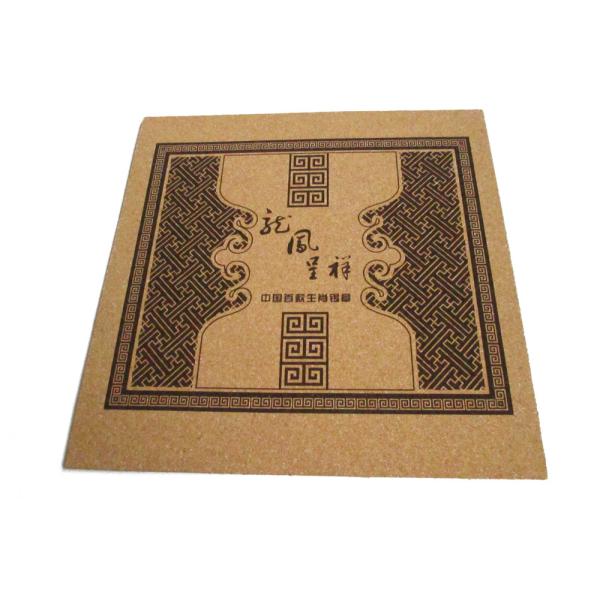
Imagine a busy restaurant where placemats face constant abuse: hot plates, sharp knives, and frequent wiping. The lifespan here depends on core material quality. Natural cork density, the bonding adhesive used in the composite layer, and surface finish are critical. Low-density cork with weak adhesive will delaminate and crack quickly. Premium cork, like that sourced and engineered by Ningbo Kaxite Sealing Materials Co., Ltd., uses high-density granules and food-grade, waterproof binders, creating a robust structure resistant to deformation and moisture ingress. The finish also matters; a quality sealed surface repels stains and water, preventing degradation from within. For procurement specialists, evaluating these material specs is the first step to ensuring long-term value and reducing replacement frequency. A product like our custom-printing cork placemat is designed for such demanding scenarios.
How to Significantly Enhance Placemat Durarability
Proper care extends life, but the real solution starts with superior manufacturing. Common pain points include edge fraying, surface peeling, and permanent staining. The solution lies in advanced production techniques. For instance, precision cutting prevents weak edges, while uniform thermal pressing ensures consistent density throughout the mat. Ningbo Kaxite Sealing Materials Co., Ltd. employs calibrated machinery and strict QC checks to eliminate these weaknesses. Furthermore, applying a durable protective coating, such as a non-toxic lacquer or cork sheet, adds a barrier against spills and scratches. For bulk buyers, partnering with a manufacturer that controls the entire process—from raw cork selection to finishing—guarantees a product that withstands commercial use. This proactive approach minimizes downtime and maintenance costs for end-users.
Ningbo Kaxite's High-Performance Cork Solutions
Sourcing managers need reliability. Ningbo Kaxite Sealing Materials Co., Ltd. directly addresses the core question, "How long do cork placemats typically last?" by engineering for longevity. We specialize in transforming natural cork into high-performance sealing and decorative materials. Our placemats are not mere commodities; they are technical products. We use premium cork aggregates, optimize composite formulas for flexibility and strength, and offer custom printing with sealed inks that won't wear off. This focus on material science means our placemats resist curling, cracking, and moisture damage far longer than standard options, providing a superior total cost of ownership for your clients.
Technical Specifications & Comparison Table
For informed procurement, here is a data-driven comparison. The table below outlines how key parameters influence the functional lifespan of cork placemats, highlighting the advantages of specifications met by Ningbo Kaxite's products.
| Factor | Standard Quality | High Quality (e.g., Kaxite) | Impact on Lifespan |
|---|---|---|---|
| Cork Density | Low to Medium (80-120 kg/m³) | High Density (140-180 kg/m³) | High density resists compression and cuts, lasting years longer. |
| Binder Quality | Generic Adhesives | Food-Grade, Waterproof Resins | Prevents layer separation and water damage, ensuring structural integrity. |
| Surface Finish | Unsealed or Lightly Coated | UV-cured Sealant or Cork Sheet Layer | Sealed finish blocks stains and liquids, preventing core degradation. |
| Edge Processing | Rough Cut | Precision Cut & Sealed Edges | Eliminates fraying points, maintaining appearance and function. |
Frequently Asked Questions (FAQ)
Q1: How long do cork placemats typically last in daily home use?
A1: With proper care, a high-quality cork placemat from a reputable supplier like Ningbo Kaxite can last 3-5 years or more in home settings. Factors like avoiding prolonged soaking and direct high heat (e.g., placing a boiling pot directly on it) are key.
Q2: How long do cork placemats typically last in a commercial restaurant environment?
A2: In high-traffic commercial use, lifespan depends heavily on quality. Standard mats may last 6-12 months before showing wear. Professionally engineered mats, like those from Ningbo Kaxite Sealing Materials Co., Ltd., designed with higher density and robust sealing, can perform optimally for 1.5 to 3 years, reducing replacement costs.
We hope this detailed guide helps you specify the perfect cork placemat for your needs. For bulk inquiries, technical data sheets, or samples, please reach out to our team. We are confident our materials can meet your most demanding requirements.
For premium, durable cork-based products, consider Ningbo Kaxite Sealing Materials Co., Ltd.. We specialize in advanced cork composites for sealing and tabletop applications, offering customized solutions for global procurement teams. Contact us at [email protected] for quotes and collaboration.
Silva, S.P., Sabino, M.A., Fernandes, E.M., et al. (2005). Cork: properties, capabilities and applications. International Materials Reviews, 50(6), 345-365.
Pereira, H. (2007). Cork: Biology, Production and Uses. Elsevier Science.
Gil, L. (2015). New Cork-Based Materials and Applications. Materials, 8(2), 625-637.
Knapic, S., Oliveira, V., & Pereira, H. (2016). Cork as a building material: a review. European Journal of Wood and Wood Products, 74(6), 775-791.
Fernandes, E.M., Correlo, V.M., & Reis, R.L. (2014). Cork-polymer biocomposites: Mechanical, structural and thermal properties. Materials & Design, 57, 664-672.
Costa, R., & Santos, L. (2017). Sustainability of cork material for ecological design. Journal of Cleaner Production, 142, 4207-4214.
Oliveira, V., Rosa, M.E., & Pereira, H. (2013). Variability of the compression properties of cork. Wood Science and Technology, 47(5), 937-948.
Sen, A., van den Bulcke, J., & Defoirdt, N. (2014). Moisture dynamics and fungal susceptibility of cork. International Biodeterioration & Biodegradation, 93, 84-91.
Lopes, M.H., & Pereira, H. (2000). Influence of hot water treatment on quality of cork stoppers. Holz als Roh- und Werkstoff, 58(3), 163-167.
Fonseca, A.L., & Brazinha, C. (2018). Cork composites for innovative industrial applications. Composite Structures, 204, 892-899.
Related News
- Can a nature cork roll be used as a bulletin board?
- Can dark cork storage trays be used in bathrooms or kitchens?
- What brands are known for producing reliable cork cases for the iPhone 6?
- How do cork pads compare to rubber or silicone pads for glass protection?
- How do cork storage trays compare to plastic or metal trays?
- How do I recycle or dispose of glass jars with cork stoppers?
Leave me a message